When I Was Five

This week it’s 29 years ago that I spent a week in the children’s hospital with a collapsed trachea. It closed up on the night of April 28, 1991, the night after we’d celebrated my mother’s birthday, two months before my own fifth birthday. I was unquiet all night or so I’m told, getting up to go to the bathroom a dozen times. Eventually, my parents discovered what was going on and I was rushed to the hospital.

Thankfully, my trachea opened again within a day or two. I don’t know whether I had to be on a ventilator. In fact, I remember very little of these first few days. Then, on May 3, I had surgery to take out my tonsils and adenoids. That surgery had been scheduled for May 21 at another hospital anyway, but the children’s hospital could fit me in earlier now that I was there anyway.

After surgery, I had to stay in the hospital for another few days because I had a breathing tube inserted. That is, I’m not 100% sure the breathing tube was before or after surgery. I remember trying to talk through my tube, which was pretty much impossible.

This was probably also the time in hospital that my parents brought me their supermarket’s brand of peanut butter to eat, as I wouldn’t eat the premium brand the hospital had. Can you tell I was spoiled or autistic or both?

Finally, I got home on May 7. I was already a calendar freak, so I actually remember this without having been told.

As I write this, my inner five-year-old is trying to speak up, but she can’t. I don’t know whether this hospital stay was particularly traumatic for me, even though the going to the bathroom compulsively became a habit of mine in my teens. I may have made Lisel (that’s my inner five-year-old) up, because after all I remember this particular hospital stay so well.

I do think falling ill in early 1992, was more of an adverse childhood experience for Lisel (or me, if you think Lisel is made up). I remember I had some form of the flu, but in my own memory, it wasn’t entirely medically explained. My parents will probably say I’m trying to find clues that aren’t there so am making them up. I mean, they never talked about this experience when, in my teens, I was trying to remember when my negative mood started. They claim, as did I at the time, that it started when I was seven and having to learn Braille. In other words, I was going blind and I knew it but refused to accept it, so was becoming defiant to show a middle finger to the world. It’s easy to say it doesn’t matter. In a way, it doesn’t, but too often, I feel my parents are hiding the truth from me as a way of denying that I had significant mental health issues before the all-important age of seven. I mean, if my problems started at seven, I cannot possibly be autistic or have a dissociative disorder or anything originating in early childhood, right? Besides, I could have been old enough to be manipulative.

Am I being manipulative indeed? Or am I an early childhood trauma survivor? I don’t know and I’m not sure Lisel knows the answer.

Joining in with V.J.’s Weekly Challenge.

How COVID-19 Changed My Outlook on 2020

Yes, I’ve said it before, but can you believe it’s May already? Four months have passed since the beginning of 2020. Time flies when you’re having fun, they say. Well, time also flies (and drags at the same time) when in a pandemic. Today I’m joining in with Finish the Sentence Friday (which is open all week), for which the question this week is how the pandemic changed your word of the year.

In January, I chose the word Wellbeing as my word of the year for 2020. I was at the time already a bit angsty about it, as I was in a bit of a hypochondriac phase and thought that if I chose this word, I’d die this year or something. Some kind of reverse law of attraction.

Still, so far, my word is still pretty true. I am taking preventative measures to hopefully keep the coronavirus out of my body. Just yesterday, my staff started taking everyone’s temp twice daily with a no-contact thermometer. Since the virus hit the home below mine, I have been a little more scared. At the same time, I still often avoid thinking about the pandemic too much. Actually, I realize that, as the month of April continued, I included fewer and fewer references to the pandemic in my posts.

I had a few hopes for 2020 too. The first one was to keep my marriage strong. I felt I needed to learn to travel to my husband for this, as I thought ultimately living apart wouldn’t be very good for our marriage otherwise. While I still feel I need to learn to travel to him independently once the crisis is over, I have learned that our marriage can survive a time of not seeing each other. It’s hard, but it’s doable.

Honestly, I must say the pandemic has given me a clearer focus on what matters most. I try to appreciate my husband more. After all, he isn’t a given. One day one of us might catch the virus. Besides, we can’t see each other now and it isn’t altogether logical that a marriage survives this.

On my other goals, I did pretty well so far. I’m actually loving it. I don’t know whether the crisis is the reason I’m doing so well, but I’m pretty sure it’s one of the factors.

Gratitude List (May 2, 2020) #TToT

It’s been forever since I did a gratitude post. Right now I’m feeling a little frustrated with the fact that I am blind. I want to participate to the fullest in the social media thing, but it seems images are often required and I can’t do them. Other blind people apparently can, but I can’t. Anyway, to cheer myself up, I’m taking part in Ten Things of Thankful or #TToT. Here’s what I’ve been grateful for lately.

1. The beautiful weather last week. Okay, it’s been raining a lot this week, but last week-end, it was sunny and warm. I loved it!

2. Being able to take regular walks in spite of the bad weather this week. Somehow, my staff and I managed to find time inbetween rainstorms to go for some walks. Yesterday and today, I even took some late evening walks after most of the other clients were in bed.

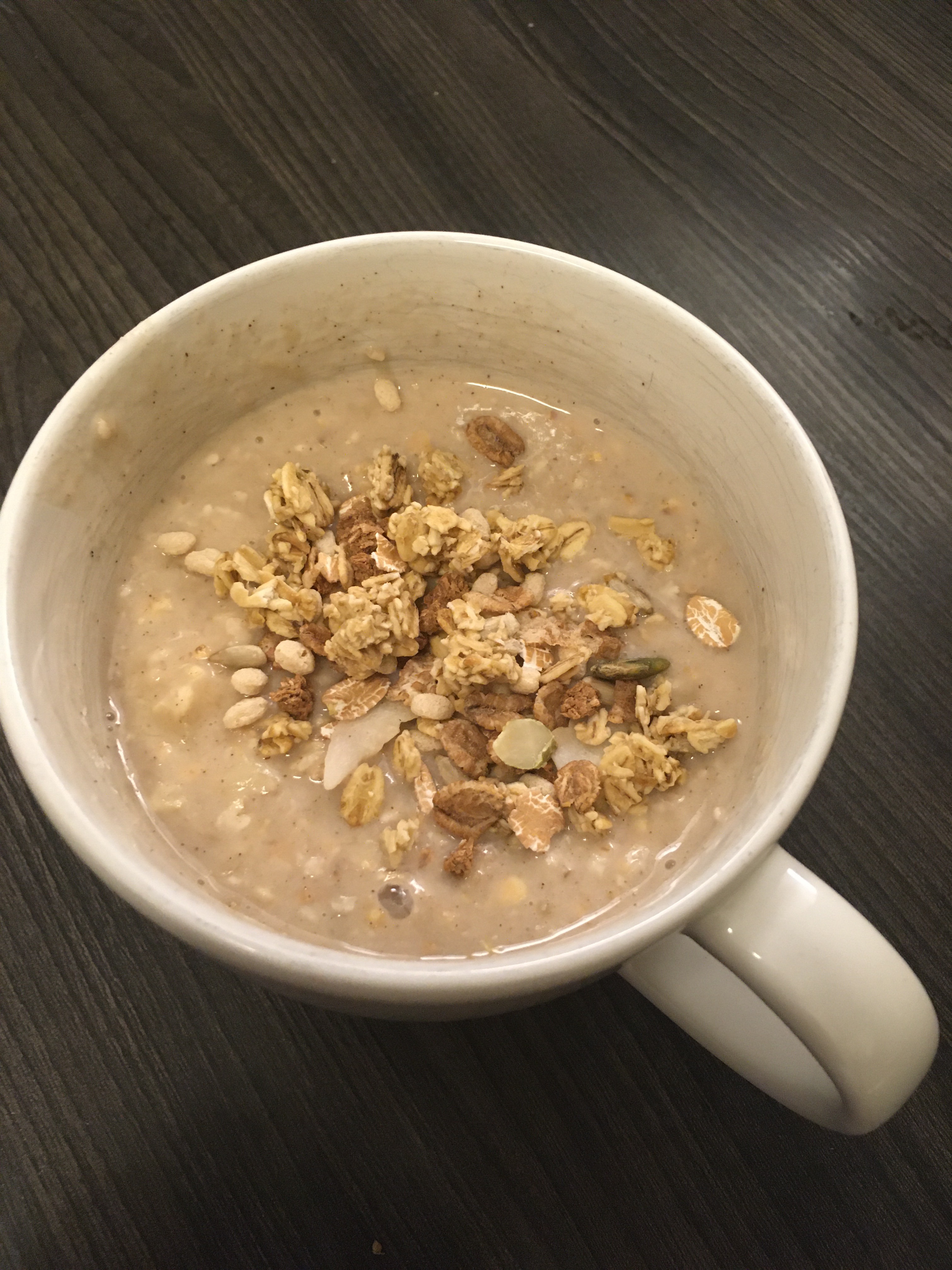
3. Making plans for more activities I can do with my day activity staff. On Monday, we will be trying out a basic oatmeal recipe with banana. I remember my sister ate oatmeal for breakfast when she was little and I didn’t like it. I hope I like it with the banana added. I’ve also looked into overnight oats recipes. I definitely like that.

4. The orange puff pastry we ate with our coffee for King’s day on Monday.

5. Getting crunchy muesli for breakfast. It took the staff some time before we found the right one, the one with four kinds of nuts and crunchy muesli, not granola. Yes, I’m picky like that.

6. My teddy bear getting washed. I thought it’d gotten a hole in its fur, but it turned out to be just dirty. After I finish this blog post, I’m going to cuddle up with it in my bed.

7. My computer. I’m really enjoying using it. I know, I’ve had it for ten months already, but up till this week almost always chose my phone to do most things on. I’m now actually loving writing this post in good ol’ Notepad.

8. Having finished the #AtoZChallenge. I’m definitely proud of myself for actually getting it all done.

9. Keeping my writing mojo now that the challenge is over with. I don’t know for how long I’ll be motivated to keep writing, but we’ll see.

10. Being more alert in general. Okay, I think I may be a little overalert, but then again that’s a lot better than being tired and depressed.

What have you been thankful for lately?

Mother As Place of Attachment

It’s already been eighteen months since I last wrote about what I read in The Emotionally Absent Mother. Still, the book hasn’t just sat there. I struggled to move on from Mother As Source. The next section is titled Mother As Place of Attachment. Somehow, this is a really hard section. I don’t really know why. I mean, yes, part of the reason I struggle to move on in writing about this book, is that I do it publicly and what if my parents read this? Then again, I don’t really care. I’m in groups on Facebook for childhood emotional neglect and emotional abuse survivors too. Though the member list of private groups isn’t available to non-members, I’m pretty sure they know somehow. Honestly, regarding this, I care more about my husband’s opinion than my parents’.

But there’s something specifically about this section that is hard. I’m not even sure what. Maybe it’s just that I don’t have a lot of early memories of my mother. I attribute this to my father being the homemaker and primary caretaker in our household. But fathers can “mother” too.

The first question asked in the section on your mother as place of attachment, is to rate your sense of connectedness to your mother on a scale of 1 to 10. The next question is how your sense of connectedness evolved over the years.

Well, with my mother, I am generally at a 5. I don’t feel she “gets” me, but we do get along okay. Like I said when discussing mother as source, I don’t feel that I’m made of her, but she isn’t from another planet either. Or maybe she’s from Venus. I mean, we’re not constantly disconnected.

Over the years, my sense of connectedness to my mother has stayed the same. I never quite felt like we had a strong bond, but I didn’t feel totally alienated either.

My father is a different story. We had a strong connection, maybe around 8, when I was a child. Now we’re at a 3 at best. Like I said in my mother as source post, as a child, I saw my father as the embodiment of intelligence, success and well what other positive characteristics are there really? When I got to question his having sole ownership of the truth at around age 15, things started to change. Or did things change earlier on? I’m not sure.

Another question is about bodily contact. This is where I get to question whether the schism occurred earlier than age 15. When I was a young child, my father definitely did give both my sister and me lots of opportunities for bodily contact. I remember when my sister and I were little, my father would wrap us in a towel and drag us to our bedroom. He called this “swordfish” and my sister always asked for “sordsish”.

My mother says that, around age 7 or 8, I stopped wanting to sit in my parents’ lap. From then on, bodily contact like hugging or good-night kisses was very ritualistic. I remember around age 11, being forced to read a certain number of pages in Braille if I wanted a good-night kiss. This at the time felt very distressing. I haven’t studied emotional development except in the context of intellectual disability, so I have really no idea whether it’s normal to still want good-night kisses at that age. I guess not.

As a side note, I did initiate physical contact such as hand-holding with practically every adult until I was at least 12. In my psych eval report from age 11, the ed psych notes that I claim not to need a cane but grab her hand immediately anyway. That first bit was no doubt related to my difficult accepting my blindness, but I don’t think the second bit is fully. Even as an adult, I truly crave physical contact and am a bit indiscriminate in who can give it to me. I mean, I am pretty clear that no male staff can provide me with physical comfort (or help me with personal care). With regards to female staff though (and the entire current staff of my home is female), I do accept physical comfort. I honestly don’t know how my husband feels about this.

PoCoLo
Keep Calm and Carry On Linking Sunday

Distracted

Wow, can you believe it’s May already? I completed the #AtoZChallenge rather well actually if I can say so myself. Now I want to continue writing regularly for the month of May at least.

Today I’m joining in with Five Minute Friday, for which the prompt today is Distraction. At first, this prompt struck a chord, but I didn’t know why. Then I thought…

I want to live more productively. I also want to live more mindfully. These two seem contradictory at first, but honestly, if you get distracted by a thousand other things whilst being “productive”, you’re not mindful and not productive.

I want to stick to a regular writing routine. That doesn’t mean I need to write actually high-quality posts everyday. Of course, if my post is scrambled and going off on a thousand tangents, it may not be as easy to read. However, my writing will improve even if I freewrite. That’s why I try to join in with FMF today.

Then again, I’ve started this post a few times already and then stopped after the first sentence or two. I thought my post didn’t matter. Wasn’t good enough. Wasn’t real “content”. But then again, when I started this blog, I meant for it to be my space to let you hear my inner voice. So no matter how distracted I am, I will continue to write. That will ultimately led me to being more mindful and more productive at least in my blogging life. And hopefully in life in general.

ZZZ: The Role of Sleep in Self-Care #AtoZChallenge

Welcome to the last post in the #AtoZChallenge. For my letter Z post, I have, each year that I got to it, used ZZZ at least among other things. And yes, it’s totally fitting with the self-care theme too. Sleep is so important! Today I’m going to explain a bit about how you can take better care of your sleep hygiene and how sleeping issues can signal other problems.

Most people have some sleeping issues at times. I have had quite a few nights in which I fell asleep late recently.

When I was a child or teen, anxiety would often keep me awake. Since I didn’t get any help for my anxiety then, the issue grew until I had to use sleeping pills for a while at age 20. When I moved into independent living, my insomnia grew worse and it was one contributing factor to my suicidal crisis three months in. The first medication I got, was again a sleeping pill.

Now let me be very clear: sleeping pills are not to be used long-term. When I got my first script in 2006, my GP said to take it no more than two to three times a week. I was taking sleeping pills for a few months early in my psychiatric hospital stay, but I eventually decided less sleep without pills was better than less sleep with pills. I did take sleeping pills on an as-needed basis for a while after that. However, except in extreme cases of severe mental illness keeping you awake a lot, you ultimately need to find other solutions. So learn to practise proper sleep hygiene. I honestly don’t do too well on this now that I write about it.

For example, one tip is to use your bed for sleeping only. Though I do that, I tend to nap a lot too. I am learning to get up after at most an hour, so that I won’t disrupt my night-time sleep.

Also, it is recommended to turn off electronics at least an hour before bedtime. I’ve heard this is because the blue light of your smartphone or computer screen can stimulate the brain to stay awake. As I always keep my screen curtain on, this isn’t an issue for me and it may not be with dark mode either. However, I do experience that keeping very busy shortly before bedtime keeps my brain awake.

Some people find that hearing some white noise or soft music can help them sleep. I usually turn on calming music when I’m struggling to fall asleep, but eventually turn it back off as it seems to lead to a more restless sleep.

Having a soft toy in bed does help me too. Occasionally, I diffuse some lavender essential oil. There’s no scientific proof that it works, but it may help.

In addition to insomnia, sleeping too much is also an issue. I find that I sleep way too much when I’m depressed. This, of course, in turn worsens my depression.

Lastly, waking up unrefreshed can happen even when you get the right amount of sleep for you. This can be caused by a number of factors, including medications you may be taking or sleep disorders such as sleep apnea. If this happens a lot, it may be time to see your doctor. Then again, doctors can be incredibly dismissive where it comes to fatigue.

Yoga and Other Movement-Based Self-Care Practices #AtoZChallenge

Welcome to day 25 in the #AtoZChallenge. Wowah, can you believe after today there’s just one more day in April? Time does seem to fly.

Today I want to write about yoga and other movement-based approaches to self-care. I know, I already discussed exercise briefly a few weeks ago. However, there are other benefits to yoga too.

If you are not a yoga person, that’s totally okay. Maybe you think it’s a little too alternative for you. Or maybe, like me, you believe you don’t have the physical flexibility or balance to do it. Well, let me tell you (and myself!) that yoga truly has some benefits that aren’t spiritual at all and that anyone can do it. You may need to modify the poses. For example, when I go into tree pose (putting one leg up to your other thigh), I always touch a wall with one hand. I just don’t have the balance to do the “proper” pose and never will.

Yoga is good for both your mind and body. As well as being good for flexibility and balance, it helps you develop deep breathing, calms the mind and can even help with pain relief.

There are many kinds of yoga. Hatha yoga is what most people in the western world see as the regular kind of yoga. Maybe I didn’t do it properly but it never quite felt like a workout except for my flexibility. There are however also types of yoga that are actually a real workout, such as power yoga. However, I don’t recommend you try those if you’re a beginner or starting back freshly after a while. No matter how eager you are to get moving in these times of lockdown, you’d much better start slow.

In addition to yoga, there are other types of movement that will help you get in physical shape. For example, pilates is a way of working your muscles. Dancing (even just hopping with music on) counts as well.

How do you get moving?

Top Ten Books Younger Me Would Have Loved

I’m a day late joining in with Top Ten Tuesday (#TTT), for which the theme this week is books your younger self would have loved. I wasn’t much of a reader as a child. I loved being read to, but hated reading myself, especially in Braille. I was fourteen when I first discovered reading for pleasure through Caja Cazemier’s books.

I didn’t know enough English to read any of these books at the appropriate age. Actually, I didn’t know enough English to actually understand most books much until I was at least fifteen. Even then, only classics were available in accessible formats here in the Netherlands. For this list, I’m pretending that either younger me knew enough English or the books were available in Dutch. Most of these books weren’t published when I was young anyway.

1. Peter’s Asparagus by Angela Nicole Krause. This is a chapter book about a young boy with Asperger’s (autism). I read it in early 2014 and loved it. Of course, younger me didn’t know I am autistic and Asperger’s wasn’t even added to the DSM as a diagnosis till 1994, when I was eight. Still, well, my inner children find it incredibly validating.

2. A Boy Called Bat by Elana K. Arnold. This is a book for slightly older children on the same topic. I read it in like 2018 and really feel it would’ve been a delightful read for younger me, even though it isn’t as relatable as the above one.

3. Deaf Child Crossing by Marlee Matlin. I didn’t finish this one, but I think my younger self would have loved to read it.

4. Lila and Hadley by Kody Keplinger. Okay, I see a theme emerge here. This one wasn’t published till a few weeks back and I haven’t read it. I want to, but it’s nowhere to be found in Dutch eBook stores. This one would definitely have encouraged younger me.

5. Amina’s Voice by Hena Khan. As a child and tween, I loved learning about different cultures. There was a whole series of children’s books about different countries and cultures out there back then, but as far as I know, the authors weren’t from those cultures. Khan is Pakistani-American and I loved her book. See my review.

6. Pictures of Me by Marilee Haynes. I read this one over New Year’s and loved it. It’d for sure be a comforting read to fifth-grader me.

7. Wonder by R.J. Palacio. I am 75% done with this one and think it’d for sure have given younger me some perspective.

8. Unspeakable by Abbie Rushton. Okay, I’m branching out into young adult books now. I really loved this one when I read it some five years ago and teen me would have loved it too.

9. Scars Like Wings by Erin Stewart. This would definitely have comforted teen me that she’s not alone in having problems. See my review.

10. Diagnosis Asparagus by Catherine O’Halloran. Okay, there are no doubt a ton of other books in the fiction category that younger me would have loved, but I just had to include this one. This one provides a teen’s perspective on being diagnosed with Asperger’s.

As a bonus, I’m going to mention Freaks, Geeks and Asperger Syndrome by Luke Jackson. That one was published around 2003, when I was self-diagnosed with Asperger’s. I would have loved it if my parents had allowed me to read it then.

What books would you wish your younger self had had access to?

X-Patient: Psychiatric Rehabilitation and the Recovery Movement #AtoZChallenge

Okay, welcome to my letter X post in the #AtoZChallenge. I’m not really motivated for this one, but I don’t want to give up on the challenge either. My topic today doesn’t really fit in with the rest, but well. Today I’m writing about what it is like to be an ex-psychiatric patient. In the anti-psychiatry movement, some people choose to write this without the E, so it counts.

When I first heard of psychiatric rehabilitation around a year into my psychiatric hospital stay, I hated the entire concept. It was all based on training people to be more independent whether they wanted to or could do this at all. I knew already that I needed long-term care, so I was like: “Didn’t I just complete 18 months in a training home only to have it fail?”

Then, a few years later, I heard of the recovery movement. Unlike psychiatric rehabilitation, this is entirely patient-led. I signed up to participate in a recovery course. What surprised me immediately was the fact that my mental hospital chose to only allow those staying there as inpatients on the course. They later started a course for outpatients too. I loved this course. Going into long-term care wasn’t frowned upon but seen as a means of getting my life back on track. Unfortunately, that’s not how most professionals, at least on my last unit, saw it.

A few weeks ago, I watched a short video on a Center for Consultation and Expertise case in which the recovery viewpoint was misapplied to an autistic man. Indeed, I’ve never felt that concepts like “rehabilitation” apply to autistics. I mean, the idea that we all want a meaningful life, is good. However, considering a meaningful life as the same as independent living, is in my opinion rather misguided.

Weighted Blankets: Sensory Activities for Self-Care #AtoZChallenge

Welcome to my 23rd post in the #AtoZChallenge. For the letter W, I choose to write about weighted blankets and other sensory equipment that can help you take good care of you.

I don’t own a wweighted blanket myself. At my old day activities, a staff member made one for use in the sensory room though. It wasn’t ideal, as the weighted compartments wouldn’t stay in place. I loved it though.

I remember clearly how I discovered the good deep pressure can do for me. I was at the first day center I went to after leaving the psych hospital in 2017 and the staff were talking deep pressure as it related to another client. I was at the time already struggling seriously at this day center and at a point where I was looking for another place, but the staff were still trying to be helpful. I asked them whether I could try some weighted products. They handed me a weighted turtoise soft toy. From then on, I’d often have it in my lap during mealtimes and when I was stressed.

Later, once already at my previous day center, I got a weighted unicorn soft toy for Christmas. It was probably originally intended as a door stopper that keeps a door from accidentally banging shut. This one is filled with sand rather than pebbles and it is not wide enough to cover my entire lap. However, it’s cool.

Other sensory products can help with stress relief too. I have a wobbly pad (not sure that’s the correct word) to sit on. I also have a fitness ball that I generally just sit or lie on.

A few months ago, I discovered fidget toys. I think the hype about them a few years ago was exaggerated, but they do help some.

There are tons of other sensory products that can help you calm down or relieve stress. I’m pretty sure I haven’t discovered all that is available.