Childhood Creative Endeavors #AtoZChallenge

Hi everyone and welcome to my letter C post in the #AtoZChallenge. Today, I initially wanted to write about cardmaking, but I don’t feel like that now. Instead, I’m going to talk about my creative endeavors as a child.

As a young child, I had a bit of useable vision that allowed me to use colors sort of appropriately (that is, as appropriately as a sighted child my age could). I loved learning about the names of unusual colors. I remember, in particular, learning that the sixth color of the rainbow is indigo, which I was fascinated by.

I could do some basic drawing too. In Kindergarten, I went to mainstream school with hardly any accommodations. I remember having to color inside the lines of a piece of paper, giving each little shape within the drawing a different color and not leaving any white. When, several years later, I looked at it, I saw considerable white. I have no idea how I compared to the other kids though.

By the age of eight, I’d lost the ability to tell most shades of green and blue apart, but I continued to love drawing until I was about age twelve. Then, I realized I’d lost so much vision that it’d make no sense. Even so, before then, my drawings up till that age remained comparable to a Kindergartner’s in quality.

When I went to special education, I was taught other creative activities. I remember making at least a dozen origami frogs in second grade. However, my teacher did at one point write on my report card that she wished she were two teachers so that she could teach together. In other words, I required so much attention that she’d really need to split herself in half to be able to teach the class too.

My parents bought a pottery kiln when I was about eleven, so I also tried my hand at ceramics. I wasn’t too good at it, leaving fingerprints on my work all the time, but at least I enjoyed the process.

Writing also was a lifelong passion of mine. I can’t, in fact, remember a time when I didn’t enjoy writing. At first, I’d make up stories to go along with my drawings. As a tween and teen, I wrote stories that were somewhat or very much related to my real life. My greatest achievement is a work in progress, a young adult novel by the working title of “The Black Queen” about a teen whose mother has multiple sclerosis. This story, though it had autobiographical elements, was inspired by a conversation I overheard about a classmate.

Did you love creative activities as a child?

Report Cards and Progress Reports

Today’s topic for Throwback Thursday is report cards and progress reports. I am going to write mostly about traditional report cards in school, not the many psychological reports I had written about me during my childhood and adolescence.

Looking back, I was a good student academically, but it didn’t show on my report cards during elementary school. I attended special education and my teachers didn’t really believe I was more than just average intellectually. In fact, when I had a nationally standardized test in the sixth grade, the school’s principal called my parents in utter disbelief to tell them I had gotten a very high score. My father was like, duh, I told you so.

My behavior did get reported on. Though I had severe social and emotional challenges, I always got average ratings on those things that mattered to the teachers. I remember one day feeling disappointed when my rating on “correct behavior” had been lowered from the previous report card even though as far as I knew I hadn’t made mistakes about addressing the teachers formally.

In high school, I did get actual grades. Not letters here in the Netherlands, but numbers between one (worst) and ten (perfect). In my first year at grammar school, I got a lot of tens. These did get my classmates envious, so sometimes I’d argue for a lower grade. For instance, I had a ten on a drawing theory test and I hadn’t done any of the other drawing assignments because, well, I’m blind. Initially, I got a ten on my report card because that was the only grade I had. My classmates protested and my father and I agreed. Then the grade got lowered to an eight, reflecting the fact that I’d gotten a ten on that test and a six (barely passing) on drawing in general just for participating in the class.

Once in my third year, I was rebelling and hardly studying at all, so I did earn a few ones. One time, in my fifth year in high school (eleventh grade), I got a one in French for not doing an assignment because I’d had to do it with a partner and I hadn’t been able to find a partner, because I’d felt too anxious to ask anyone.

I wasn’t really punished harshly for failing grades or rewarded for good grades, but I did know I was expected to excel. Often, my parents made me do extra work, particularly before I was mainstreamed at grammar school.

My best subjects in elementary school were math and geography. In high school, those changed to languages, because high school math requires much more non-verbal intelligence and insight, something I don’t have. My best grade on my final high school exam was in English.

Now, as an adult, I do have an English-language blog, but I don’t think I learned to blog in high school. After all, despite the fact that grammar school is the highest level high school, I really wasn’t all that good at English after graduation. Other than English, I don’t use anything I learned in school really. I mean, during my year in special ed secondary school, textile arts was my worst subject and now I like to do macrame. Go figure.

Unconsciously Incompetent #SoCS

When I was in college studying applied psychology (it was really an orientation year to Bachelor’s of social work or related fields), my tutor had an interesting theory about how we learn by first being unconsciously incompetent. Then we move on to being consciously incompetent, by which she meant we are aware of our lack of knowledge and skill. Then, after years of college, we move on to being consciously competent. Once being experienced in the workforce, we then become unconsciously competent, which means we no longer need to be aware of our competence, since it’s become muscle memory.

I reached the stage of conscious incompetence when my tutor told me flat out that she was passing me for communication skills only if I promised never to enter the field of social work, psychology or any related field of study or work again. Thankfully, I was aware that my communication skills exam had really gone badly just before she told me, so I didn’t just need to be dragged into conscious incompetence.

I think I might need a similar experience with macrame. I started practising on Thursday and, though I managed the square knot, spiral knot and lark’s head knot quite easily eventually, I am pretty sure I’m still unconsciously incompetent. In other words, my work is horribly ugly but I think it will do.

The only thing is, because I sort of know I might never reach the stage of even conscious competence, I am too scared to show my work online for judgment. After all, as much as I am self-conscious about it, I also would really like this to work out!

Similarly, though I knew before that horribly messed-up communication skills exam at least on some subconscious level that I’m not suited to become a social worker or psychologist, I wanted to be one. That’s probably why I went into linguistics, which, though it isn’t necessarily within the helping profession, is still a communicative field of study. I only went into it to have a student psychologist tell a newspaper that “a blind autistic who wants to study something communicative” is going to have a pretty hard time of it, when they were promoting their autism buddy program. That pretty much sent me into conscious incompetence as soon as I read it, which thankfully was six weeks into the academic year. I guess that’s what happened the time the first person to comment on my question about macrame told me it would be really hard too. Only that’s before I’d started. I’m not sure that’s conscious incompetence though. It looks rather like low self-esteem.

This post was written for Stream of Consciousness Saturday, with the prompt of a word containing “Comp”.

Things That Made Me Smile (March 14, 2022) #WeeklySmile

Hi all. I’m joining the Weekly Smile today. I don’t promise this will be a weekly feature, of course, but the hashtag is #WeeklySmile. I could really use a bit of cheer today, so I’m going to share some little things that gave me joy lately. Hopefully writing about them will make me smile now too.

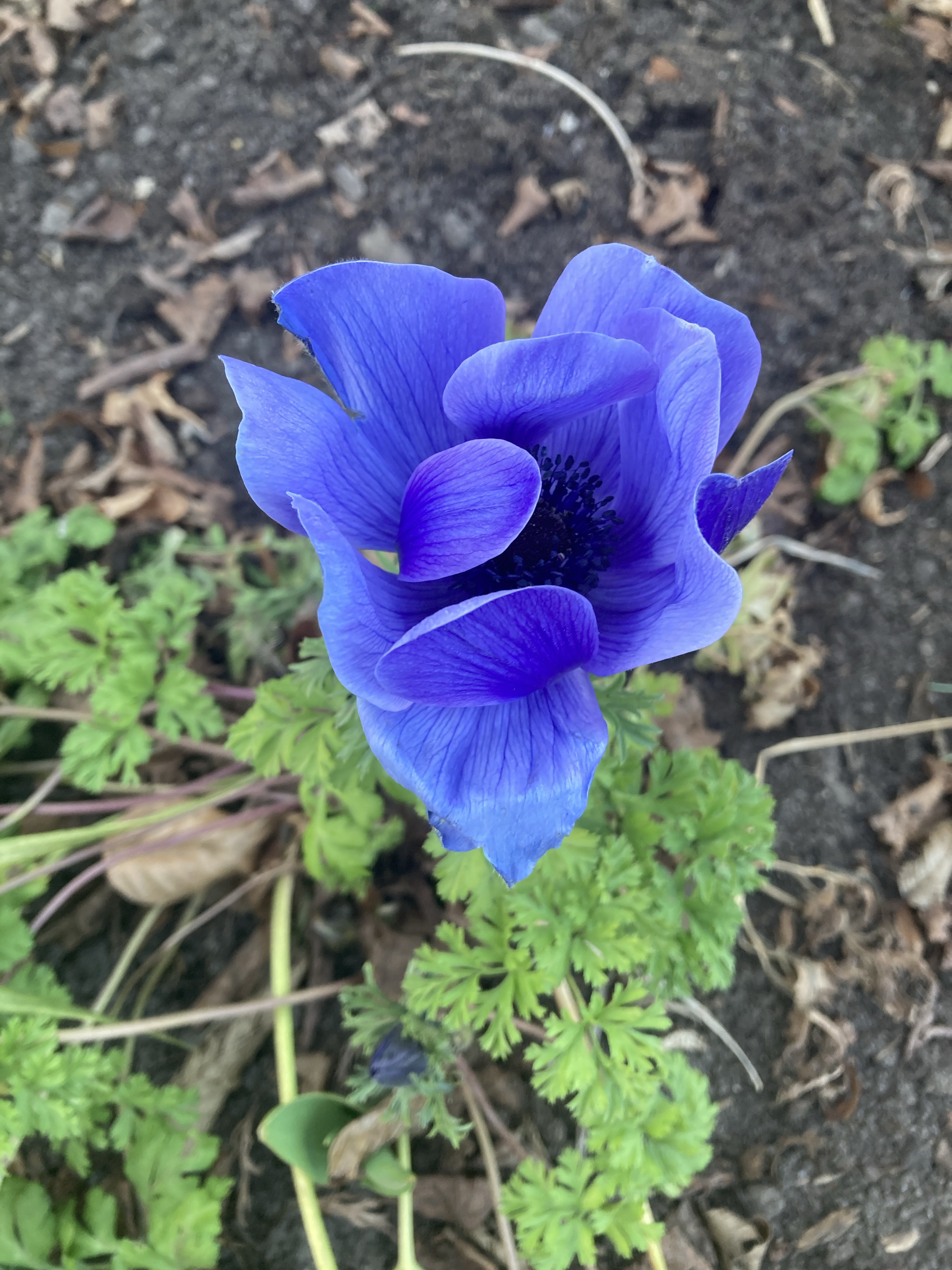
First up are flowers once again. Last Thursday as well as yesterday, I went for a walk and took some pictures of flowers I came across on my way. The below picture is of an anemone we came across yesterday. We initially called it a giant crocus, but I found out it’s an anemone by running the picture through some plant identification apps.

That’s my second little joy: I just love learning about all sorts of different plants and running my pictures through identification apps. I haven’t yet found the perfect plant identification app after having tried out several, but that’s okay.

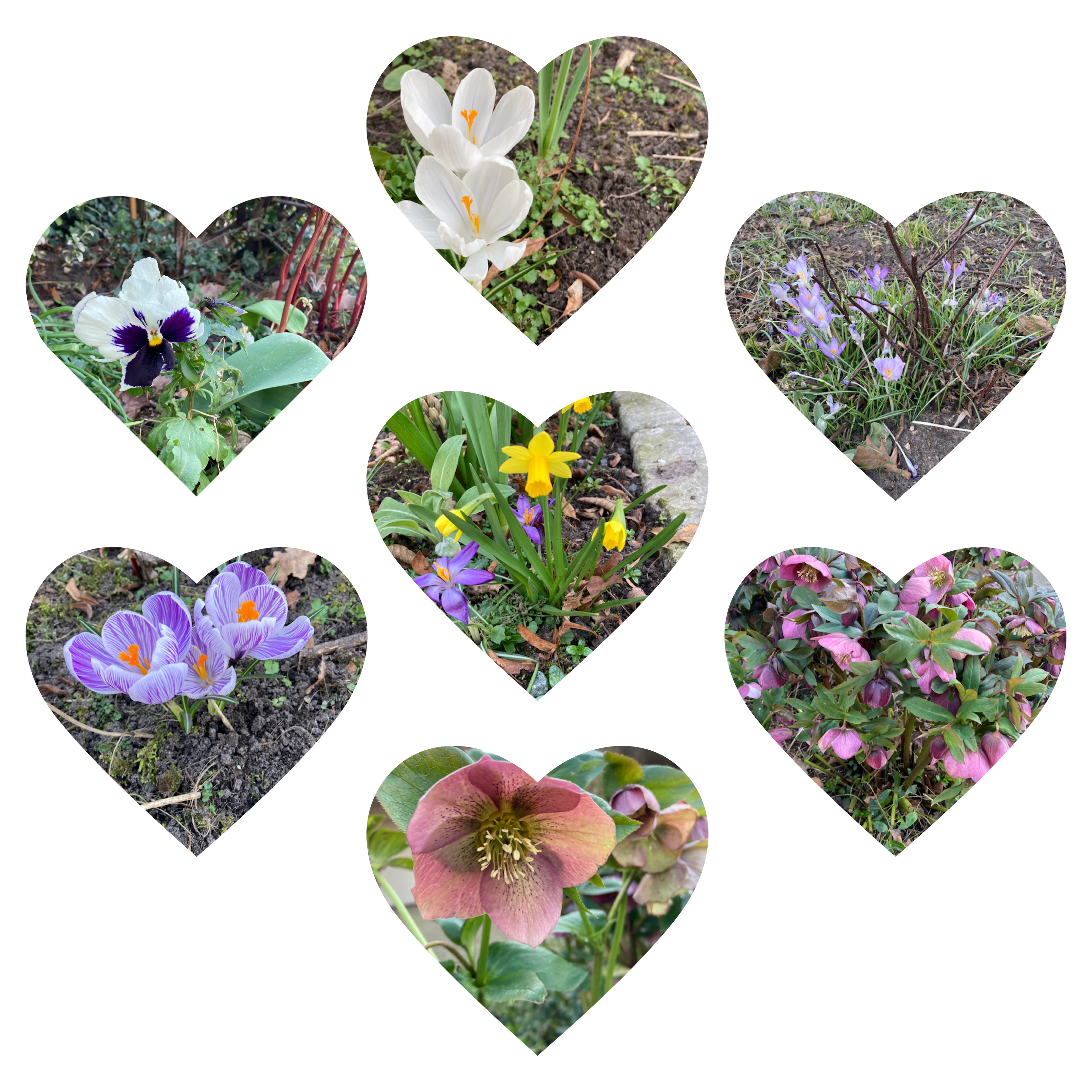
Finally, a thing that’s been making me smile for days: discovering an app that will allow me (with some help) to make collages and mosaics with my photos. The app is called PhotoGrid and, though some parts of the app are free, I decided to try out the premium membership right away and didn’t cancel when my trial period (which admittedly is only three days) was over. The below collage, my staff and I made with most of the photos we’d taken while going for a walk on Thursday. I’m linking this post to Mosaic Monday. Hope I did it right.

One of my staff later suggested I use this collage as my cover photo on Facebook, so I did. I had never had a cover photo before.

It may seem weird that I, being blind, like photography. However, with the image description tools, including now the plant identification apps, on my phone, I think it’s a great way of getting acquainted with my surroundings.

A Sunday With the Theme of Self-Esteem

Hi all. The past 24 hours have truly been a mixed bag of emotions. I started obsessing over wanting to start another new craft. Yes, another! Somehow, I decided on macrame and got all obsessed about learning its techniques before even having any cords. Then I decided to ask in a Facebook group whether you need to be coordinated in both hands in order to be able to do macrame. The first commenter basically said not only that, but you also most likely won’t be able to feel your way around the knots.

This was late last night, past midnight actually. I went to bed feeling awful about myself. After all, the reason I wanted a new craft is not that there’s nothing more to learn about polymer clay, but that I’m somehow convinced that I’ve reached my full potential.

By morning, I found that other people had been more encouraging of me trying macrame or even card making. You know, remember I’d said I tried that back in 2013? These people said so what if my work doesn’t look good, if I enjoyed the craft. That’s not entirely my kind of attitude, since I do want to be able to share what I make here or on my personal Facebook page at least without feeling like I have to be ashamed of myself.

I have been trying to work on some polymer clay projects in progress again later today by sanding some beads and charms. It felt kind of okay. I also watched some more YouTube videos on polymer clay, but they made me feel like I’ll be taking forever to understand the concepts. Then again, this is even more the case if I start another craft entirely. Guess I’ll just stick with polymer clay and try to be more patient with myself.

As a side note, one person did say that, if I can tie my shoelaces, I can do macrame. That kind of discouraged me at first, since I can’t tie my shoes. Make that couldn’t. At least, after three tries, I was successful at tying my shoelaces while my shoes were in front of me on the table. Then I tried several more times, more or less successfully. I don’t think I want to really be able to tie my own shoes, but it was an interesting boost to my self-confidence.

Sunday Ramble: Technology and the Future

Hi all. I’m feeling kind of off today. I’m not sure it’s all in my head or I’m suffering with the early symptoms of a mild case of COVID. I haven’t had another lateral flow test, as I don’t feel worse than I did yesterday – in fact, I feel slightly better. On Tuesday, I’ll have a PCR test, so unless I develop really telling symptoms, none of which I have so far, I’ll wait and see until then.

Anyway, for my blog post today, I’m answering E.M.’s Sunday Ramble questions. Her topic for this week is technology and the future. Here are her questions.

1. Are there any applications on your mobile device, tablets, etc. that you cannot live without? Feel free to ramble about them! Maybe we will learn new apps that will become important in our own lives.
I am going with the more unusual apps here, as I doubt I’ll be inspiring anyone else to download Facebook or a web browser (I use Edge even on my iPhone, by the way) if they haven’t already. Apps I truly love on my iPhone include the diary app Day One. I previously reviewed Diarium, another diary app, but have since gone back to using Day One mostly because it allows me to have multiple diaries.

Other apps include MyNoise, an app that allows users to select soundscapes, the task management app Microsoft To Do and Seeing AI, an app that describes images. It most recently guessed my age in a photo to be 44 though. 😒 Admittedly, I pulled a rather odd face in a forced attempt to smile. And just so you know, no, I’m not going to post the photo here. 🙂

2. Do you prefer Apple or Android?
Apple for sure! It is far more advanced with respect to accessibility for the blind.

3. Windows OS or MacOS?
Windows. I tried a Mac some years ago, thinking it’d be easy to use with my being an iPhone user already, but I couldn’t get used to it. The only advantage of MacOS is that it comes with a built-in screen reader, like iOS. For Windows, you have to buy (or get insurance to pay for) JAWS.

4. What do you wish that you would have placed in a time capsule 15+ years ago to have access to now?
I answered a similar question already on another blog a few weeks back: I’d bring back the disability-related story-sharing websites we had in the early 2000s, like Tell-Us-Your-Story.com. I also would’ve put Diaryland’s diaryrings into the time capsule, but then I’d have hacked the concept and applied it to today’s blogs. Webrings are cool! I think the concept still exists, but hardly anyone participates nowadays.

5. When you think of the what the world will look like 50 years from now, what does that future look like through your eyes? Go as sci-fi and/or fantasy as you would like and ramble on however you wish to ramble When you think of the what the world will look like 50 years from now, what does that future look like through your eyes? Go as sci-fi and/or fantasy as you would like and ramble on however you wish to ramble.
I have absolutely no idea. I did a post on this topic some six years ago on my old blog, but I mostly focused on what my life would be like when I was in my late seventies. I really hope that image description and the like will be very much improved, so that the blind will be able to “see” this way. There already are glasses, such as the Orcam or Envision Glasses, which will describe things a person is looking at. I haven’t tried those, but if they evolve more, and they likely will, I’d love to try those someday.

What do you wish you could’ve put into a time capsule to take with you from 15+ years ago?

Mentors and Role Models

Today’s topic for Throwback Thursday is mentors and role models. Of course, last week, I already shared about my high school tutor, who was a mentor when I was a teen. Today, I’m going to share about other role models.

One of my first role models was my paternal grandmother. She was a fiercely independent, self-determined woman. In 1973, a year after women were legally equal to men here in the Netherlands, she divorced my grandpa. She went to college to become a social worker, eventually becoming the head of social work at the psychiatric institution in her area. In the mid-1990s, in her early 70s, she founded a senior citizens’ living complex, where she lived for nearly 20 years until she needed to go into a care home. She died in 2018 at the age of 94.

One clear memory I have of my grandmother that has stuck with me throughout life and which perhaps unintentionally inspired me, is her comment about her work as a social worker with troubled young people. She told me that, when some young people don’t want to go home to their parents, she had to sometimes honor the teens’ wishes rather than the parents’. Even though I was 19 when first going against my parents’ wishes, and their wish wasn’t for me to live with them, the point was that my opinion mattered even if I was “crazy”.

Later, when I was a teen and young adult, I sought out role models who shared some of my experiences. One of my first role models in this category was someone I met through an E-mail list for my eye condition. She was in her early thirties when we first met online and I was seventeen. Besides blindness, we had some other experiences in common. We eagerly read each other’s online diaries back in the day. She is still a Facebook friend of mine, but, because she has moved on to become more or less successful at life and work and I haven’t, we don’t share the same life experiences anymore.

Some people I considered inspiring, I never even talked to, such as Cal Montgomery, a disability activist whose article, “Critic of the Dawn”, I first read in like 2006.

Currently, indeed, what I look for in an inspiring person or role model is shared experience. That being the case, I consider many of the people I’m on E-mail lists or in Facebook groups with to be inspiring. Then though, our interactions are more based on equality, where any of us can be the inspiration for the others.

I don’t think that I quite have what it takes to be a mentor myself. Though I can provide people with inspiration and information, I don’t really have my life together enough to be a role model. This saddens me, thinking about the fact that I’m older now than the woman I met at seventeen was when we first met.

What do you look for in a role model?

Sunday Ramble: Books

E.M. Kingston started a prompt called Sunday Ramble a few weeks ago and today’s topic is “books”. The idea of the Sunday Ramble is that she poses five questions on the topic and you’re allowed to ramble as you please. By this she seems to mean that you don’t need to answer the questions in order, but can turn them into an essay too. I am just going to answer her questions though. Here they are.

1. Do you prefer digital, paperback, or hard bound books?
This is a no-brainer: digital! The reason is simple: I am blind and cannot read print. Back in the days before eBooks became accessible with screen readers, when I’d still have to digitalize my own books, I preferred hard bound books because they were easier to place on the scanner. Then again, I never liked the process of scanning my own books.

2. Do you have a library full of books or just your favorite tales?
Library of books! I have a Bookshare membership, which is like a library service for the print disabled which lets you download an almost unlimited number of books for $50 per year. You can also keep them as long as you’re a member of the service as far as I’m aware. I currently have roughly 260 books downloaded off there. That is, I have 263 books in Voice Dream Reader, the app I use to access Bookshare books, but that includes some PDFs I downloaded elsewhere and DAISY books from the Dutch library for the blind too.

In addition to using Bookshare, I occasionally buy Kindle books or eBooks off Apple Books. I also like to use BookBub to get free books on Kindle or Apple Books. So if the question had been about number of books bought rather than number of books I have on my shelves, the answer would be quite different, since most books I get either free through BookBub or via my Bookshare membership.

3. Harry Potter, Narnia, or Twilight? (You can choose all three or pick and choose.)
Uhm, am I going to get laughed at if I say I haven’t read any of these at all? If I have to choose though, I’m going with Narnia because it’s Christian-based.

4. Do you like when books are turned into movies? Why or why not?
I don’t really ever watch movies, so I consider that a no.

5. What is a book that you have read over and over again?
I hardly ever reread books now. As a teen though, in the days of scanning books, I had fewer books to choose from. That is, of course I was a member of the Dutch library for the blind then too, but I didn’t like listening to audiobooks. Anyway, I could read Caja Cazemier’s Dutch young adult novels over and over again. My favorite was probably Iris, about a girl who runs away from her mother and is placed in a youth home.

#WeekendCoffeeShare (December 18, 2021)

Hi everyone on this cloudy Saturday afternoon. It’s been a few weeks since I joined in with #WeekendCoffeeShare, so I thought I’d link up again. As I’m starting this post, I haven’t yet had my afternoon coffee. I’m going to take a break for that when I finish this paragraph, so if you’d like a cup yourself, I can get you one too. We have an assortment of cookies and may still have a few mini Mars candy bars left too. Let’s have a cup of coffee and let’s talk.

If we were having coffee, first I’d tell you I had a good talk with the behavior specialist on Monday. We discussed a few things, including my desire to be made aware of the contents of the paperwork that went to the authorities deciding on my one-on-one. Those visiting just for the Coffee Share won’t know this, but it got approved for two more years to come, yay! However, I’d still like to know what was said about me, just because it’s about me.

We also discussed my food issues, for which a referral has finally been made to the dietitian. I really hope the dietitian can help me get some clarity on what (not) to eat during the day, because currently every opportunity to eat is an opportunity for inner conflict and chaos. Finally, we discussed my wish for a physical day planner using Braille-labeled activity cards to choose from.

If we were having coffee, I’d tell you that the blindness agency came by on Thursday to lend us a Braille label writer and several pairs of colored NoIR filter glasses (special sunglasses for those with low vision). I will be trying out the sunglasses over the coming weeks and will be using the label writer to type up the aforementioned activity cards.

If we were having coffee, I’d moan about my adaptive footwear again. Shoe Guy finally decided my orthopedic shoes aren’t fitting and can’t be made fitting, so he’s going to make me new ones all over again. He finally brought back my new walking shoes, that my husband bought me a few months ago. Now though, my left arch support insole got a bump in it that I can’t get out of it. Bottom line: I still can’t walk comfortably! Ugh!

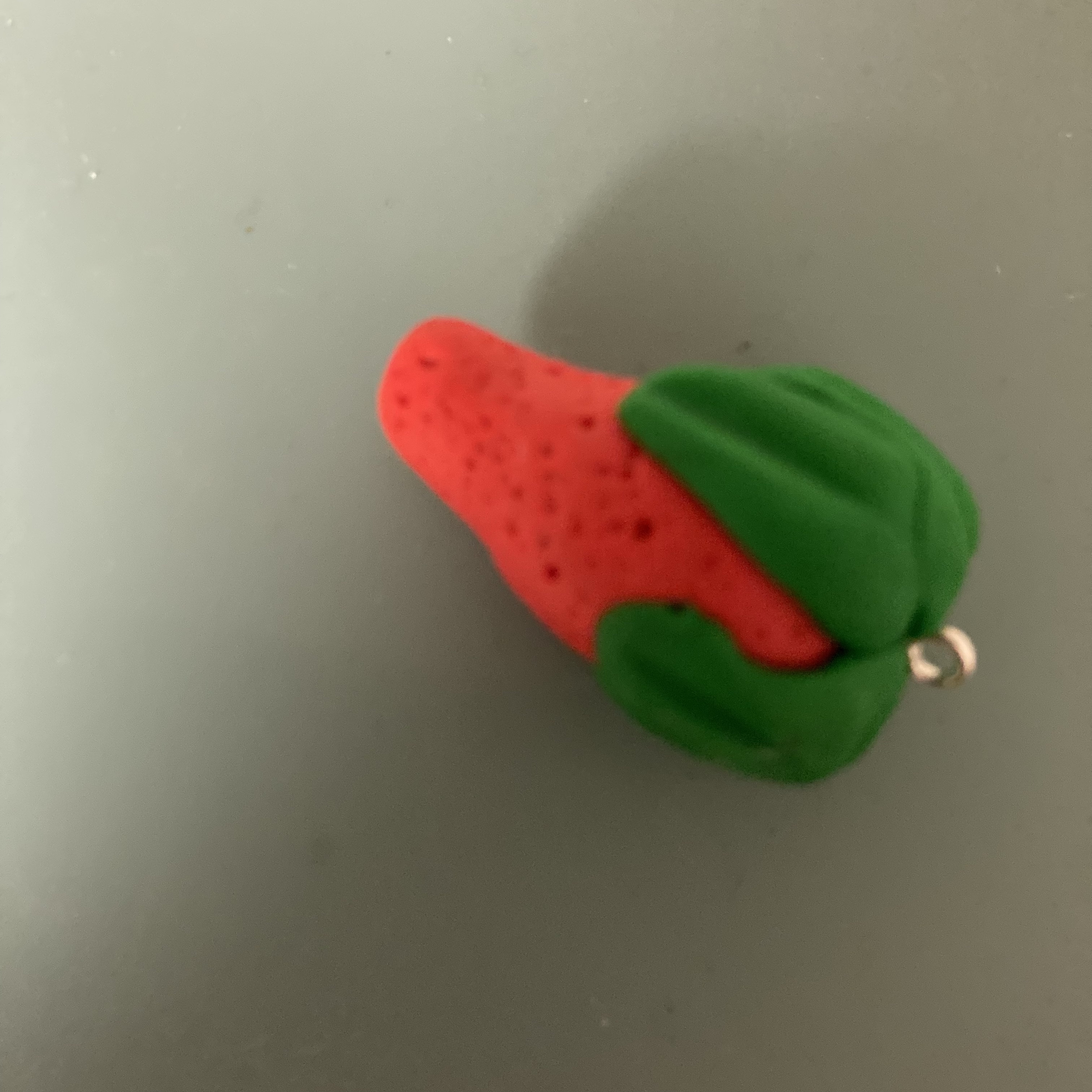
If we were having coffee, I’d end on a positive note by telling you about all the creative work I’ve been doing over the past couple of days. I made some lovely polymer clay charms on Thursday based on tutorials I saw on YouTube. Can you guess what the below charm is supposed to be? Facebook’s automatic alt text guessed it correctly!

I also made a Christmas tree and snowman out of polymer clay. This evening, I’m going to add both to a larger mixed media Christmas ornament. Lastly, I finally decided to save my scrap clay rather than throw it away. I made some randomly-colored beads out of it yesterday.

How have you been?

This Is “Profound Autism”?: Reframing the Discussion Around Complex Care Needs

A few days ago, there was a discussion on the Autism Science Foundation’s Facebook page in which parents of autistic adults with complex care needs were describing their children with the hasthag #ThisIsProfoundAutism. I asked to reframe the discussion to include people with multiple disabilities including autism in general, because it is rarely (but not never!) autism, no matter how severe, alone that causes a person to be completely dependent on caretakers. I then explained that due to the combination of my disabilities, I need 24-hour care, including one-on-one for most of the day.

Not surprisingly, I was quickly met with the question whether I was saying I needed 24-hour help with basic tasks such as eating, bathing, dressing myself, etc. Well, the Autism Science Foundation page is a public Facebook page and I didn’t want the people on my friends list (including immediate family) who don’t know this, to judge me for it, but the short answer is yes. While I, like presumably most “profoundly autistic” people who don’t have physical disabilities, am physically capable of eating and dressing myself for the most part with some difficulty, my executive dysfunction means I still need help with them. As for bathing, well, I basically need someone to wash me, because, while I can physically hold a washcloth in my hand, I don’t have the organizational skills to actually work out the ritual without a ton of supervision and even then it’d lead to a lot of meltdowns.

I did, incidentally, point out that I recognize intellectual disability as a valid additional disability that needs to be taken into account when I asked to reframe the discussion. After all, that’s most likely what’s causing these autistic adults to be unable to understand instruction and to be completely dependent. For me, it’s a combination of executive dysfunction, which is a direct autism symptom, blindness, mild cerebral palsy, and other things.

I also do recognize that the need for support with severe challenging behavior is not the same as the need for help with basic personal care. One does not exclude or necessarily include the other and one is not more valid than the other. I, for one, am somewhat more independent in terms of eating, dressing and bathing than my severely intellectually disabled fellow clients. I am a lot more dependent where it comes to the effects of my challenging behavior.

I also do not mean to say that autism on its own cannot possibly cause a person to need a lot of care. It can. I am reminded of a girl I read about on Dutch social media many years ago, who indeed had hardly any functional communication skills but did have an IQ above 85. She, unlike me, didn’t have any additional disabilities. She was completely left behind in the care system: she was too severely disabled for traditional child and adolescent mental health services, but her IQ was too high for intellectual disability services. Really, I should not have called for reframing the discussion to include those with multiple disabilities, but those with complex care needs in general.

That being said, I strongly disagree with those people who say that just because I can write, means I should have ignored the conversation, since it clearly wasn’t meant for me. The fact that I can write, does not make me not dependent on care providers and does not mean policy or lack thereof won’t affect me. I am autistic and that, along with my blindness and other disabilities, causes me to need the extensive care I get now.