Young At 40 Yet Old At 36

Hi all! A few weeks ago, my spouse sent me a YouTube short about millennials’ reactions to the idea of midlife. According to the American Psychological Association, or that’s what the YouTuber said, midlife starts at 36.

Then I read a blog post today in which the author, now retired, reflects on how she imagined retirement to be when she was still young… at 40.

I am 38. Does this mean I’m in midlife or does it mean I’m still young? It probably depends on your perspective.

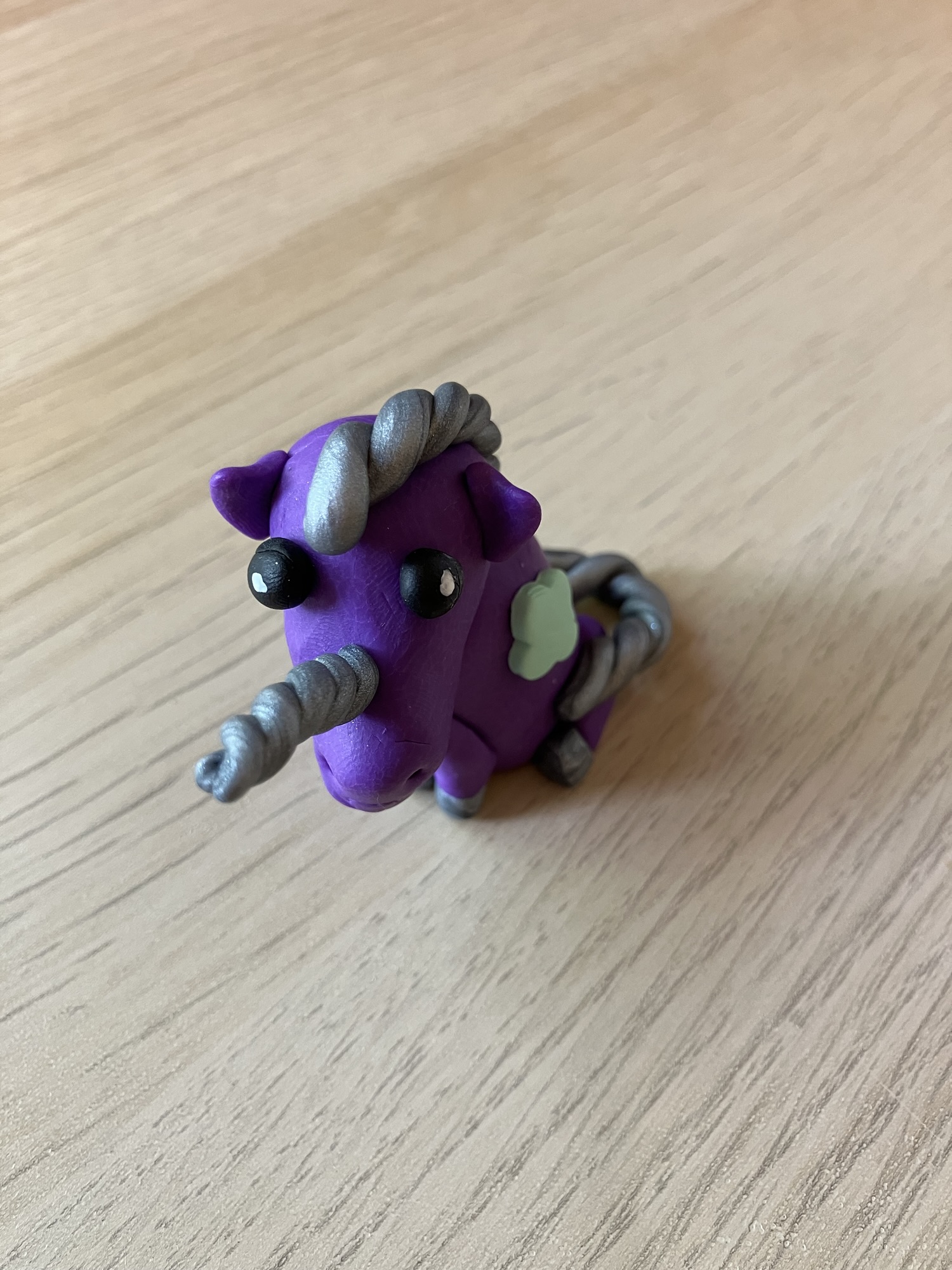
After all, with respect to my daily life, since I don’t work or study and since I’m childfree, it allows me the same freedom a retiree would have. I also enjoy many things older people enjoy, such as crafting. That is, often younger women do craft, but it’s more for their kids.

With respect to my health, it’s a mixed bag. I am physically healthier than I was five years ago thanks to weight loss and moving more. I however do notice the effects of my disabilities (and probably my history of obesity too), in that I’m probably less fit than many women my age. For one thing, I do find that my knees hurt regularly.

All this being said, age is in many respects just a number for me. Sometimes, I feel like a lady in her seventies, while at other times, I feel quite childlike, both in a positive and a negative way.

Statistically speaking, I do realize I’m at midlife. This sometimes causes me to worry about aging, but then again I always had this worry that I’d die young. That’s not necessarily specific to midlife. I am pretty sure, in fact, that now that I’m physically fitter, the worry is less about myself. That doesn’t mean the worry has gone, but now it’s more of an existential dread regarding the world as a whole. I don’t think one is easier to deal with for me than the other.

I’m linking up with Talking About It Tuesday and #WWWhimsy.

Abandonment Wounds: What Will Happen If I Can No Longer Mask?

I’ve been struggling with attachment issues a lot lately. Not related to a specific person this time. I mean, yes, like I said on Wednesday, four of my “favorites” among the staff are either on leave or will be leaving (be it temporarily or permanetly) soon. That’s not the problem, since I’ve learned the hard way to expand my list of “favorites” when necessary. It’s in my best interest too to avoid a situation like the one with my assigned staff in Raalte, who was leaving and left me with just two other trusted staff.

The issue I’ve been dealing with lately, is much more existential: the knowledge that, if I’m truly myself, I’m unacceptable. Not because I’m some kind of criminal. I’m not. Rather, I’m an outcast. And while I won’t be in the prison system for that, being shoved around care home after care home while not having family to advocate for me, will be equally horrid.

I have been struggling with memories of the circumstances surrounding that assigned staff leaving. A few months before she left, I sent her a rather dramatic E-mail about how no-one will be in my life forever. Well, my spouse says we’ll always be in each other’s life, but truthfully we can’t know that. Besides, when we lived together, there were just a little too many situations in which my spouse (understandably) was disappointed in me that are however things I couldn’t help. For clarity’s sake: I don’t blame my spouse, but maybe with my being multiply-disabled, I’m not suited for “traditional” long-term relationships. Ha, now I’m reminded that my spouse often reminds me that I said when we were choosing to be a couple, that I didn’t want a traditional relationship.

Of course, the reason I’m undesirable by society’s standards isn’t my fault. Like, I can’t help being disabled. But just because it isn’t something I choose, doesn’t make it any less real or hurtful. In fact, it hurts more because I can’t choose not to be me.

I mean, I’ve masked more or less successfully for many years. Mostly less successfully, but my parents prevented me from landing in the care system at a much earlier age than I did by claiming the police and other people who thought I was disturbed, were just stupid. They were masters at manipulating the system. I am not.

Back to my assigned staff in Raalte. She was the first to take my wish to leave seriously. I assume she genuinely felt that the intensive support home could better serve me than the care facility, but I also assume she had a team and a manager to deal with and it remains a fact that some of her coworkers couldn’t cope with my behavior. Which was, for the record, much less challenging than it is now.

It genuinely scares me to think of what will happen if (when?) I can no longer mask at all. There was this news feature sometime in 1997 or 1998 about a girl, aged about sixteen, who was too intelligent for intellectual disability services but who still couldn’t cope in adolescent mental health services and was, as a result, restrained long-term. After her family sought media attention, she was transferred to a treatment center for youth with mild intellectual disability and severe challenging behavior. I don’t know what became of her.

Last week, when I had several severe outbursts related to my most recent frustration, I begged my support coordinator to ask the behavior specialist to involve the Center for Consultation and Expertise (CCE) again. I really want to get the ball rolling on getting them involved before it’s too late and I’m being kicked out again, like the last time they were involved in 2018. In this sense, a consultation might help more this time, because at this point, as far as I know, staff aren’t yet so much at their wit’s end that they see the situation as unresolvable. But I’m scared of what will happen if they do get to this point, like apparently some staff in Raalte were.

Health Anxiety

Hi everyone. Today in her Sunday Poser, Sadje asks us whether we deal with health anxiety. Health anxiety is excessive worry about one’s physical health. People who suffer from it, interpret normal bodily sensations or minor ailments as a sign of serious illness, such as cancer. There are people with health anxiety who are constantly running to the doctor, but also those who bury their heads in the sand and worry in silence.

As for whether I myself suffer from health anxiety, I used to suffer pretty badly. I could be a mix of the head in the sand type and the running to the doctor type. When I was nineteen, I remember having pretty bad anxiety one night and concluding I had some serious thing going on. My sister was in my room trying to comfort me, but not being able to figure out why I was having the symptoms I was having (most likely, a panic attack), drove me crazy. I don’t know why I didn’t peruse Dr. Google, but I didn’t. The next day, I called my GP, who wasn’t fully comforted either, particularly when she learned I have hydrocephalus. Long story short, three weeks later I got the all-clear on my shunt from a neurologist, but I never figured out what those weird symptoms were.

I also had bad health anxiety when living on my own in 2007. I, being the type for objectivity, at one point purchased a talking thermometer, so that at least I could take my body temp. After all, my parents used to have a rule about staying home from school: if you don’t run a fever, you aren’t sick.

Thankfully, most of my health anxiety went away once I was admitted to the psych hospital. I still worried about my health sometimes, but it wasn’t significantly distressing. My health anxiety didn’t return once I was kicked out of the hospital to live semi-independently with my spouse.

One thing I struggle with, is knowing when a symptom is significant enough to go to the doctor for or even when it’s abnormal. I for this reason can go months with a symptom before I actually ask my staff to call the doctor.

Since owning an Apple Watch, I don’t freak out when its values are abnormal. Like, back when I first used it in 2022, my oxygen levels often were way below the minimum normal value of 95%. Now they are usually high enough and I have had them checked with an actual oximeter several times. I might’ve had sleep apnea back then, but then again my night-time breathing rate according to my Apple Watch is usually higher than average, not lower. In any case, I am not one to consult my doctor just because my smartwatch says I might be ill. Maybe that’s burying my head in the sand, but I do feel fine generally.

2024: The Year in Review

Hi everyone. It’s the last day of the year and this means doing a review of the past year. I realize I wrote about my 2024 on Saturday already, but I’d like to do a proper review today.

The year started out pretty tough, because I had some issues with my assigned staff, now this side of the home’s support coordinator. I won’t go into detail, but let’s just say he isn’t the most socially adept and his attempts at gaining my trust went horribly wrong. This is the reason he isn’t the one making decisions for me or having meetings with me about my care.

I have had some issues with getting proper care over the past year in general, like when the behavior specialist decided to do the minute-by-minute compensatory system when I was in distress during my time without one-on-one. The reason was the idea that I would need more and more care if they didn’t do this. That is, that’s what my then support coordinator said, but I figured out that the actual reason was the idea that I’d purposefully work myself up in order to get more care. This is simply not true: I pretty regularly tell my staff that they can leave early if I’m doing well, but I just can’t plan my distress to suit my one-on-one hours.

Over the summer, I had some issues with the fact that there were especially many unfamiliar temp workers assigned to my one-on-one care. I mean, I realize that there are more temp workers over the summer when the regular staff are on vacation, but the fact that most of them were assigned to me, frustrated me.

There have been other frustrating aspects to my care, but I’m so glad my support coordinator and two new assigned staff are trying to build a trust-based relationship with me rather than telling me I’m just a negative nagger.

In other departments, the year was a mixed bag too. I definitely didn’t do as well as I’d hoped with my movement, crafting or blogging. In fact, I honestly did worse than I did last year. I did, however, try cooking and baking more often.

Another positive is the fact that I am fully off my PRN tranquilizer and my topiramate and am now on a significantly lower dosage of aripiprazole (my antipsychotic) than I was last year. I also started therapy. First, I tried play therapy, but that wasn’t a success from the get-go. I now am in the early stages of movement therapy based on the Sherborne method.

In general, when I look back at 2024 and compare it to 2023, I can see how in some ways I did worse this year. This feels a bit disappointing and I’m not sure why it is. It may be because of my having significantly tapered my medication. I hope that whether this is the case or not, it won’t get worse in 2025.

That being said, I do feel that I’m starting to develop a tiny bit of trust in my staff and that wasn’t the case in 2023 at all. Here’s hoping I can continue on this journey next year.

This year was a true year of ups and downs in other areas, such as my marriage, too. Thankfully, I’m feeling optimistic that my spouse and I will make it through stronger. We’re both confident that we’ll always be soulmates!

In the health department, I did okay. I gained a little weight, but not so much that it’s worrisome to my dietitian. I remember telling her recently that I hadn’t gained weight last year over the holiday season, but I’m pretty sure that wasn’t correct. As such, I hope that, if I’ve gained weight over this holiday season, I can lose it again.

One last positive: I finally got suitable orthopedic shoes, yay! They still get damage often due to my drop foot, but thankfully not to the point that they can’t be fixed.

How My Body Has Changed As I Got Older

Hi all! This week, there are many interesting writing prompts in the Writer’s Workshop. I am choosing to write about ways my body has changed as I’ve gotten older.

I’m now 38 and I consider this an age at which positive changes can still happen. That is, of course you’re never too old to start a healthier lifestyle, but at a certain age, I assume it will not have as much effect as when you’re younger. In fact, I’ve heard that smokers have until age 35 to quit or their lungs will never be as healthy as those of non-smokers. Thank goodness I’ve never smoked.

In my case, my thirties so far were the decade of getting healthier in many ways. At age 30, I weighed 80kg (176lbs), which is over 20kg overweight for my height. I slowly started losing weight then and got to 55kg )121lbs) last year. Since then, I’ve gained some weight back on, but I’m barely 1kg overweight now at 59kg. I agreed with my dietitian that I should not gain any more weight, but the 55kg I weighed last year is also the lower border of my goal weight.

Weight aside, I got slightly fitter. When I weighed 80kg, my spouse proposed we do a brisk walk for just over half an hour each day to get the weight off, but I could barely do fifteen minutes. Now I must say I don’t usually walk as fast as that brisk walk should’ve been, but then again I couldn’t keep up with my spouse back then either and now I can walk for an hour sometimes.

I do feel that my flexibility and strength have decreased a bit. Not that I ever was flexible or strong at all. In fact, my spouse jokes that a brick is more flexible than me. However, when we tried a game of Twister at the home recently, I noticed I was hardly able to stand on all fours even in a simple position. I’m pretty sure I used to be able to do this.

My mobility also has slightly decreased. I fall when I wear anything other than my orthopedic shoes. I also used to think my shoes get damage a lot easier from the way I walk. That is until I recently looked at the shoes I wore at my wedding and saw these were damaged too just from one day.

When I got married, I was 25 and about at the weight I’m now at. I recently tried on my wedding dress just for the fun of it. The skirt fit, but the top was too tight.

With respect to appearance, I’m told I haven’t changed much over the years. That is, my spouse found my first grey hair when I was 31 and I now have quite a few, but my hair still looks dark overall. I don’t have many wrinkles either. In fact, it feels as though my frown wrinkle has decreased. That probably isn’t possible, so maybe I’m just not bothered by it as much as I used to be. I’m also grateful to report that my hands, which are among the body parts I feel most positive about, are still pretty smooth.

Overall, I don’t think there’s been an age at which I was happier with my body than now. That is, I do get frustrated with my impaired mobility and flexibility. However, when I was thirty, I was probably less fit overall and I wasn’t happy with my appearance at all. Now I feel content enough with my body to wear nice clothes and occasionally jewelry. I in fact reserve my loose-fitting sweaters and fleece vests for when I’m sick now.

Tapering My Meds… in 2034?

Hi all! One of this week’s Writer’s Workshop prompts is to write a post based on the word “medications”. I will probably have another med review with the intellectual disability physician in a few weeks. The aim for me has always been to taper my medications. This will probably take until 2034 and this time my use of the year 2034 is only partially a joke. After all, when I said that “everything will be okay in 2034” and explained to the physician that I always say “2034” when I mean “never” (because of the fact that the book by this title is about World War III), the doctor didn’t understand the joke. She actually seriously said that I’ll be on the right med regimen by 2034.

Like I said, I’ll have another meeting with her to discuss tapering my meds in a few weeks I think. Although I’d really love to decrease my medication dosage sooner rather than later, I do realize that I’ve been struggling more than usual lately. I haven’t shared about this on the blog much, but over the past several weeks, I’ve had emotional outbursts almost every evening. Part of the reason is the fact that there were quite a few temp workers assigned to me. Thankfully, as of yesterday, it was agreed that the staff will no longer send unfamiliar temp workers to me. I am very happy about this.

However, I am also concerned that the temp workers might just be the reason my already irritable brain chose to act out. In other words, it could definitely have been the case that my latest med taper wasn’t all that sensible. For this reason, I have pretty much made up my mind that I will not take another step until January or so. That way, I’ll be able to give the new agreement about no unfamiliar temp workers a fair chance. All I can hope for is that, if I tell the physician I want a break, it won’t end up being an end to it all.

After all, I do still experience significant side effects from my medication, like what I think could be a movement side effect from my antipsychotic (significant tremors and twitches) and I don’t want this to end up being permanent. This is another reason I don’t want to seriously wait for 2034 to be off my antipsychotic. By 2034, I’ll be 48 and that’s too young for crippling movement disorders.

Regrets

Hi everyone. Yesterday, Sadje asked in her Sunday Poser what regrets we have about not doing, being or having something in our life.

I could share that I regret not having finished college or not having lived independently longer, but I don’t. I mean, I know my “choice” to land in the psych ward caused me to be practically abandoned by my family of origin, but I wouldn’t have my spouse now if I hadn’t gotten myself admitted. In fact, I might not have been here to write about regrets, as I was actively suicidal at the time. You could argue that I wouldn’t have died anyway. Even if death weren’t the result of my continuing to muddle through, I would have more than likely caused irreversible damage to the relationships that matter. I honestly, after all, can’t believe my parents wouldn’t have abandoned me if I’d spiraled more seriously out of control. And I’m pretty sure, like I said, that my now spouse, whom I’d just met, wouldn’t have stuck by me then either.

This doesn’t mean there isn’t a voice in me that wishes I’d done some things differently. However, as long as I live, there’s always a moment to do things differently now. For instance, if I really wish I’d finished college, I could always enroll into an Open University program.

Likewise, I do sometimes wonder whether I could’ve been more independent if this or that about my life had been different. Then again, if I really want to be more independent, I can take steps, no matter how small, to achieve it. The proverbial deep end doesn’t work for me, since that was what I got when living independently and going to university. However, I can always take steps towards improving my life.

I, as many of you know, do regret having moved out of Raalte and into the intensive support home. That, now, I see as a lesson: I want to stay here at my current home, because even if it isn’t perfect, the grass isn’t greener anywhere else. Like one of my staff sometimes says, some places don’t even have grass.


I’m linking up with Senior Salon Pit Stop #338.

How I Coped With Losing My “Job”

Hi everyone. This week, one of the prompts for Writer’s Workshop is to write an essay titled “How I coped with losing my job”. I don’t do well writing fictional essays and have never had a “real” job, in the sense of a paid position or even volunteer work. I did, however, once “lose my job”, in that I got told the day center I went to couldn’t keep me there anymore.

This happened sometime in January of 2018 at my first day center with my current care agency. They had had me there for eight months, in two different groups, but when I was struggling to cope at the second group, they could no longer serve me or so they said.

I felt really distressed about this. The most frustrating aspect was the fact that they blamed me for no longer being suited to the center, while in reality, three new clients had been accepted into my group and no additional staff had been hired. I remember the reason they said it was me being the problem, not the new clients, was the fact that I’d been having meltdowns shortly before they arrived. Now I know that any anticipated change will cause me distress and that doesn’t mean I’m just a problem client. However, in hindsight, I’m pretty sure they wanted me gone sooner rather than later all along, for the simple reason that I don’t have an intellectual disability.

Thankfully, I wasn’t told to leave on the spot, but got time to find a new place. I initially had no clue how to, but did remember that, in 2010, I had been helped by the Center for Consultation and Expertise (CCE). I told the staff that I wanted to involve them again.

This was a bit of a hassle, as my community psychiatric nurse from the mental health agency said I’m far too high-functioning for the CCE. I applied nonetheless and got an orientation meeting in May of 2018.

In the end, I didn’t need the CCE for finding a new day center, but the consultation was what led me to accept that living independently with my partner wasn’t working and I needed long-term care.

I did feel intensely frustrated, like I said, at being “fired” from this day center. However, in the end, I don’t blame the staff, who were just powerless in the face of my challenging behavior. I think the manager, who didn’t look beyond my psychiatric diagnoses, is partly responsible. So was the psychologist from the psychiatric hospital, who more or less made the manager accept me on partly false premises.

Exploring “Safe Ground” in a Less Than Optimal Care System

I’ve been exploring the concept of “safe ground”. This is a buzzword in the long-term care sector, particularly in the care of people with severe challenging behavior. It is used to describe the idea that people are unconditionally accepted in their care homes and will not be kicked out for their behavior.

I’ve been feeling drawn to this idea, because I’ve been kicked out of services, or out of the particular service I used, for my behavior several times.

One video I watched on the topic of “safe ground” explored a care home for the most severely challenging individuals. As in, there are only 24 places in the entire country. I don’t know why I was drawn to this video, because I’m not nearly the most challenging resident on grounds here, let alone among the top 24 of the country. In fact, I would say that at least one of my fellow residents here at my home is more challenging than me.

There are two concepts to unpack here, which may or may not be related. The first is, why do I identify so strongly with the most difficult of clients in the care system when I’m probably somewhere in the middle? The second is, is “safe ground” only the idea that people won’t be kicked out for their behavior, or is it more generally speaking unconditional acceptance of clients with their unique needs?

I’ll explore the second concept now. I think “safe ground” means more than just not kicking out clients, and in this respect, it’s relevant to me. I think it means (or should mean) seeing the unmet needs behind challenging behavior. Seeing the person rather than the client. I still think that, even if I don’t end up being kicked out of here for my behavior, there’s still a world to win here. I am hopeful that, when the things we discussed a few weeks ago at the meeting between my support coordinator, behavior specialist and me, will be implemented, we’ll get close.

That being said, it’s still 2024 and this means no optimal care for anyone. I think one of the things I wish people would admit is that they’re having to deal with a strained system rather than blaming the client for their challenging behavior.

I ran into this yesterday, because there’s yet another change in staff hours, and yet the other support coordinator claimed everyone gets the attention they need. No, that’s not true, or it depends on how you define “need”. After all, most of us do mostly get our needs for physical care met, by which I mean we get dressed, showered and have something to eat. Most of us however are still routinely left to fend for ourselves when we’re struggling emotionally. I and the more challenging fellow client are the lucky exceptions to this rule. Even so, I would not call my care optimal. That isn’t going to happen and that’s sort of okay, but it makes a massive difference whether staff blame me or they blame the system. In other words, are we talking about things we as clients shouldn’t expect or things they cannot offer? The end result is the same, in that we have unmet care needs, but the latter is a lot more empathetic towards us.

Memoirs and Biographies

This week, there are many interesting prompts for the Writer’s Workshop. I am still thinking I might write on a different prompt tomorrow, but usually I don’t get to it. Today, I’m choosing the prompt about memoirs, biographies or reference books. They are, after all, my favorite genre to read.

I was not an avid reader as a child. Still am not a voracious reader, but I did discover the love of reading through memoirs and autobiographies. When I was in my late teens, I briefly was a member of the UK’s national library for the blind. They sent me Braille books. Yes, the clunky hardcover volumes (often eight or more per book).

I usually chose memoirs. Among my favorites were Planet of the Blind by Stephen Kuusisto and Emma and I by Sheila Hocken.

The first is an autobiography by a person blind from the same eye condition I have. If I’m correct, Kuusisto had some vision as a child but lost it later on, like I did too.

The second, which is the first in several books, talks mostly about the author’s experience of getting a guide dog.

I eventually got kicked off the library service for losing two volumes of a book, I’m not sure which one, in the mail back to them. However, this experience is probably what got me to love memoirs and autobiographies.

I currently often read foster care memoirs. My favorite authors are Casey Watson and Maggie Hartley. Cathy Glass is good too, but she stopped writing.

I recently discovered a new-to-me foster care memoirist, Louise Allen. That’s not entirely correct: I had heard of her a while ago, but because her books have horribly nondescript titles like Jacob’s Story, I didn’t fancy reading them. Now I am currently reading Jacob’s Story and think it’s fascinating. I must say though that the book is really a crossover between fiction and memoir, since the author writes from perspectives other than her own too. That makes it all the more intriguing, but I’m not entirely sure the books would count as memoirs.