Frustrations in My Creative Work #AtoZChallenge

Hi everyone and welcome to my letter F post in the #AtoZChallenge. I didn’t change my mind, so today I’m writing about the things that frustrate me about being a creative.

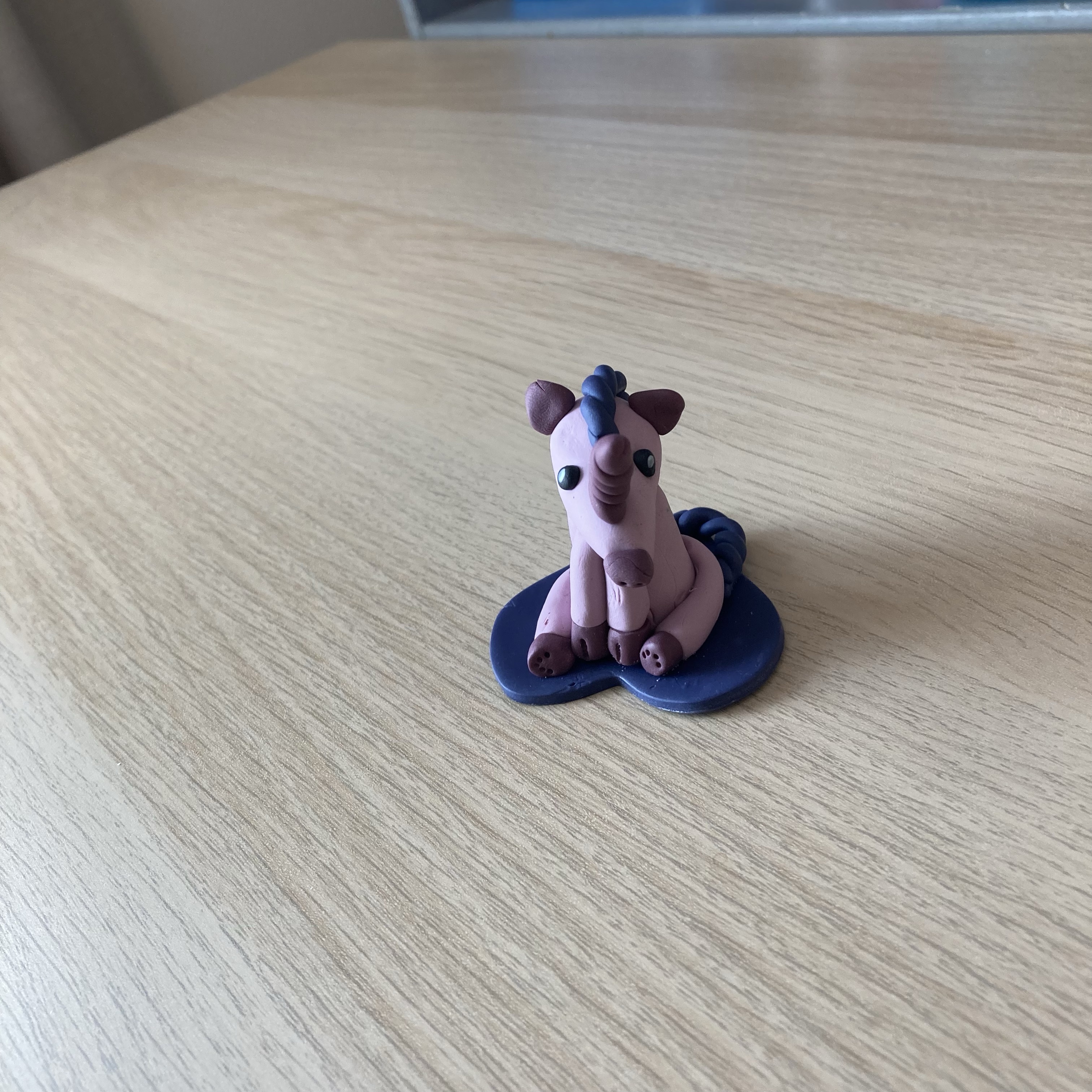
The first thing that frustrates me, is the learning curve. This may contradict what I wrote yesterday about enjoying learning about other people’s creative processes. However, what I mean is the fact that it takes a lot of practice before I become even remotely proficient at a skill. This has been especially true for my crafty endeavors and less so in the area of my writing. I am both a bit of a perfectionist and quite impatient, like I said in my letter A post. This means that, if I had it my way, I’d be able to create perfect polymer clay sculptures right away rather than now, after nine months of practice, still barely having moved beyond the absolute beginner stage.

The second thing that frustrates me, is the comparison trap. This is related to the first and may once again contradict the point I made yesterday about loving to share my work. Indeed, I love to share my work, but knowing how others have moved far further along in their journey towards perfection within a certain timeframe than I have, can be quite frustrating.

Similarly, negative feedback can be quite frustrating to me. I am not that thick-skinned, to be honest and get easily discouraged.

Lastly, it is particularly frustrating especially with my polymer clay when I’ve worked on a project for a while and then once it comes out of the oven, it isn’t as I’d expected. Whether that is due to some mistake I made or some problem while baking – which I consider largely out of my control even though I really know it isn’t -, doesn’t really matter to me.

Excitement: Things I Enjoy About My Creative Work #AtoZChallenge

Hi everyone and welcome to my letter E post in the #AtoZChallenge. There are many E words related to creativity, but I decided to share the things I enjoy about being creative. I chose the word “Excitement” for my post title, because that was the title of the prompt in The Year of You for Creatives that inspired this idea. Now, of course, I can no longer cheat and use another “Ex” word for the letter X, but I try to avoid that at all cost anyway. Tomorrow, if I don’t make up my mind before then, I’m going to share about my creativity-related frustrations.

The first thing I enjoy about being a creative, is learning about other artists’ creative process. I love watching and reading tutorials on the various crafts I enjoy and they truly inspire me. This is more of a recent development, since doing soap making in 2016. Before then, I’d just create what I wanted without any sort of tutorial. This, however, often led to disastrous results.

Another thing I love about my creative work, is shopping for new supplies. Either that or just looking for supplies online without actually buying them. I have a huge wishlist of things I want to buy someday. About a month ago, I decided to put some of them on my online birthday wishlist rather than buying them myself. My birthday isn’t until the end of June, so this is quite the exercise in patience.

A thing I especially love about all of my creative endeavors, is being able to share them online. I am in groups on Facebook for pretty much every craft I dabble in currently (and maybe even some I don’t anymore). I cannot really imagine being creative without sharing my work at all.

Lastly, something I am currently very excited about is finding new techniques to try with my crafts. For instance, today I tried to mix a color with polymer clay using my precision kitchen scale (yay, I finally bought one!). Knowing it turned out as I wanted to (for which, in the case of a color, I of course rely on my staff) is pure delight.

Deadlines: How I Cope with Time Pressure As a Creative #AtoZChallenge

Hi everyone and welcome to my letter D post in the #AtoZChallenge. Today, I was a little uninspired, so I looked to The Year of You for Creatives by Hannah Braime for inspiration. Several of her prompts ask about dealing with deadlines.

Of course, I usually create what I want to create when I want to create it, so I don’t have that many deadlines. I also don’t usually have that many unfinished projects lying around, except for polymer clay pieces waiting to go in the oven. After all, most of my projects can be done within one morning, afternoon or evening.

That being said, even small projects may have deadlines, for example when I want to create something for someone’s birthday or when a staff is leaving. Then, though I do usually start planning for my projects a while in advance, I prefer to finish them close to the deadline.

Deadlines for larger projects are both motivating and stressful for me in my creative process. I sometimes cope with the stress by having a smaller back-up project ready to finish should I not be able to meet my deadline for the larger project. For example, when I wanted to make a necklace with polymer clay beads for a fellow client’s birthday, I started months in advance, but, as the deadline approached, I got stressed. Then, I decided to have store-bought plastic beads for another necklace ready that I could string on a wire should I not be able to finish all my polymer clay beads on time. I finished the project I’d originally intended right on time though.

Most of my current larger projects don’t have deadlines. One though, in particular, does: the mobile I’m creating for the baby my sister is expecting. My sister is due in mid-May, so I don’t really have forever anymore. I tend to procrastinate about creating pieces for that one a lot, even though creating the pieces themselves should be fairly easy. Maybe, like with the necklace for the fellow client’s birthday, I won’t be truly motivated until the baby’s due date comes real close.

With my blogging, too, I don’t usually write my blog posts in advance and today didn’t even have a topic in mind until the actual day the post was due. I usually don’t, but then again normally I can write what I want when I want to. Not so with the A-to-Z. After all, I committed to writing 26 posts in the month of April and at least right now fully intend on completing the challenge. I have many challenges in the past that I gave up on, such as #Write28Days and the 31-day writing challenge (even though I actually paid $10 to participate). With the A-to-Z, the situation, somehow, feels different.

Childhood Creative Endeavors #AtoZChallenge

Hi everyone and welcome to my letter C post in the #AtoZChallenge. Today, I initially wanted to write about cardmaking, but I don’t feel like that now. Instead, I’m going to talk about my creative endeavors as a child.

As a young child, I had a bit of useable vision that allowed me to use colors sort of appropriately (that is, as appropriately as a sighted child my age could). I loved learning about the names of unusual colors. I remember, in particular, learning that the sixth color of the rainbow is indigo, which I was fascinated by.

I could do some basic drawing too. In Kindergarten, I went to mainstream school with hardly any accommodations. I remember having to color inside the lines of a piece of paper, giving each little shape within the drawing a different color and not leaving any white. When, several years later, I looked at it, I saw considerable white. I have no idea how I compared to the other kids though.

By the age of eight, I’d lost the ability to tell most shades of green and blue apart, but I continued to love drawing until I was about age twelve. Then, I realized I’d lost so much vision that it’d make no sense. Even so, before then, my drawings up till that age remained comparable to a Kindergartner’s in quality.

When I went to special education, I was taught other creative activities. I remember making at least a dozen origami frogs in second grade. However, my teacher did at one point write on my report card that she wished she were two teachers so that she could teach together. In other words, I required so much attention that she’d really need to split herself in half to be able to teach the class too.

My parents bought a pottery kiln when I was about eleven, so I also tried my hand at ceramics. I wasn’t too good at it, leaving fingerprints on my work all the time, but at least I enjoyed the process.

Writing also was a lifelong passion of mine. I can’t, in fact, remember a time when I didn’t enjoy writing. At first, I’d make up stories to go along with my drawings. As a tween and teen, I wrote stories that were somewhat or very much related to my real life. My greatest achievement is a work in progress, a young adult novel by the working title of “The Black Queen” about a teen whose mother has multiple sclerosis. This story, though it had autobiographical elements, was inspired by a conversation I overheard about a classmate.

Did you love creative activities as a child?

Artistic Self-Discovery: Am I Even an Artist? #AtoZChallenge

Hi and welcome to day one in the #AtoZChallenge. I have been uncertain as to what topic to choose for my first post. Last year, I chose to use my letter A post as an opportunity to introduce my topic. Today, I’m doing something similar. My topic this year is creative self-discovery and self-expression. A question that’s always been on my mind though, is: “Am I even an artist?”

When I joined some groups for creatives and artists on Facebook, I initially wasn’t sure whether they would be for just visual artists like those using paint or drawing as their primary medium. I mean, even “mixed-media” art usually includes some aspect of visual art. Thankfully, the members of most groups have been able to reassure me that, as a polymer clay hobbyist, I am more than welcome.

Then comes the question of quality. I mean, does my work have to meet certain standards to be considered art. I am still in many ways a beginner and, in all of the creative pursuits I have made, never got beyond that level, if I even got beyond the level of a 3-year-old.
Then I am reminded of Julia Cameron’s words in The Artist’s Way that you need to be a bad artist before you can be a good artist. In other words, no-one really is naturally good at art. She in fact seems to go as far as to say everyone has the ability to be creative within them.

The thing is, I am both rather impatient and perfectionistic. This combination means I feel easily discouraged by negative feedback on my first attempts at something creative. I really want to skip the “bad artist” phase and, especially when I know other people move on from that stage more quickly than I do, I feel disappointed in myself.

That being said, I realize now there is a reason Julia Cameron says you shouldn’t show your Morning Pages to anyone and shouldn’t even reread them yourself until week eight of the program. Wanting to share your creativity too soon, may lead to negative feedback and this in turn may lead, as it has with me, to discouragement.

I am learning this as I start to explore macrame, first learning the knots quite well before I’ll even think of showing anything online. That way, I am still trying, might still fail, but the chances are less that I’ll make a fool out of myself on Facebook.

To get back to the question that sparked this post: yes, I am am artist, just like I am indeed a writer even though it’s been nearly seven years since that one little piece I got published in an anthology. And even if I had nothing published in print, I’d still be a writer. Similarly, just because I don’t sell my artistic creations, doesn’t mean I’m not an artist.

Report Cards and Progress Reports

Today’s topic for Throwback Thursday is report cards and progress reports. I am going to write mostly about traditional report cards in school, not the many psychological reports I had written about me during my childhood and adolescence.

Looking back, I was a good student academically, but it didn’t show on my report cards during elementary school. I attended special education and my teachers didn’t really believe I was more than just average intellectually. In fact, when I had a nationally standardized test in the sixth grade, the school’s principal called my parents in utter disbelief to tell them I had gotten a very high score. My father was like, duh, I told you so.

My behavior did get reported on. Though I had severe social and emotional challenges, I always got average ratings on those things that mattered to the teachers. I remember one day feeling disappointed when my rating on “correct behavior” had been lowered from the previous report card even though as far as I knew I hadn’t made mistakes about addressing the teachers formally.

In high school, I did get actual grades. Not letters here in the Netherlands, but numbers between one (worst) and ten (perfect). In my first year at grammar school, I got a lot of tens. These did get my classmates envious, so sometimes I’d argue for a lower grade. For instance, I had a ten on a drawing theory test and I hadn’t done any of the other drawing assignments because, well, I’m blind. Initially, I got a ten on my report card because that was the only grade I had. My classmates protested and my father and I agreed. Then the grade got lowered to an eight, reflecting the fact that I’d gotten a ten on that test and a six (barely passing) on drawing in general just for participating in the class.

Once in my third year, I was rebelling and hardly studying at all, so I did earn a few ones. One time, in my fifth year in high school (eleventh grade), I got a one in French for not doing an assignment because I’d had to do it with a partner and I hadn’t been able to find a partner, because I’d felt too anxious to ask anyone.

I wasn’t really punished harshly for failing grades or rewarded for good grades, but I did know I was expected to excel. Often, my parents made me do extra work, particularly before I was mainstreamed at grammar school.

My best subjects in elementary school were math and geography. In high school, those changed to languages, because high school math requires much more non-verbal intelligence and insight, something I don’t have. My best grade on my final high school exam was in English.

Now, as an adult, I do have an English-language blog, but I don’t think I learned to blog in high school. After all, despite the fact that grammar school is the highest level high school, I really wasn’t all that good at English after graduation. Other than English, I don’t use anything I learned in school really. I mean, during my year in special ed secondary school, textile arts was my worst subject and now I like to do macrame. Go figure.

A Letter to Myself Five Years Ago

Today, I stumbled upon a journaling prompt that asked me to write a letter to myself five years ago. I’m pretty sure I’ve done something similar to this at least a couple of times before. In fact, when I searched this blog for letters, I saw that I’d written A letter explaining my life at the time in early 2020, a letter to my younger self in general in October of 2018 and even a letter from my (then) future self in 2019.

Those who know the timeline of my life, of course, will not be surprised that I am going to pick this prompt anyway, as the “five years ago” part of the prompt is particularly significant. After all, it was weeks before I’d be kicked out of the mental hospital. I am not going to bore you with a timeline of the past five years in this letter. Instead, I’m trying to provide some new insights.

Raalte, March 27, 2022

Dear Astrid,

It is tempting to start this letter with a cliché, such as, “How are you?” However, I know how you are. You are struggling greatly with self-doubt and uncertainty. Fear of abandonment and attachment loss. You’d rather avoid taking the next step in your life, leaving the familiar behind to step into unfamiliar territory. Even though you’d rather not admit it, your psychologist is right that you’re scared of needing to become independent.

I want to let you know I understand. Independence is scary. The unfamiliar, leaving the psychiatric institution to go live with your husband, is even scarier. I understand you’d rather stay with unsupportive people you know, ie. in the psych hospital, than live with a supportive person, ie. your husband, under circumstances you don’t know.

And, to be honest, if I had a choice back when I was you, I’d not have chosen to live with my husband. The thing is, you don’t have a choice. Not yet. But you will, at some point.

Please, for my sake, hold on for a bit. Do what your psychologist tells you, but also stand up for your right to proper day activities and community support. It will be hard, living in the community with your husband. But things will get easier.

I am writing from a care facility. In 2019, I was approved for long-term care based on blindness. I also have extra one-on-one support. Please don’t tell your psychologist all of this, as she’s going to time travel right ahead to me and make sure my funding gets taken away. This is just between you and me, so that you know things will improve. I know they will get worse first, but please do hold on.

Looking to you, I do see that you struggle to let go of the familiar, even when it isn’t good for you. I sometimes think I face the opposite issue, chasing perfection rather than being content with what I have now. It’s a true balancing act.

I also want to let you know that, as much as you’d like to make your own choices, being allowed to make those choices also can be a burden. The fact that, now, I am free to stay in the care facility for as long as I want or leave when I want, is quite scary, I must admit. In that sense, your psychologist was probably right about my dependent personality disorder features.

I wish I could tell you that your attachment issues would be over by now. They aren’t. I’m still struggling with them, worse even than I was when I was you. However, I do have a supportive mental health treatment team now,for which I’m forever grateful.

In summary, please do believe in yourself. You have every right to feel that you need more support than your psychologist says you need. You just won’t get it yet. Eventually though, you will.

With love,

Your future self

Joy in March

Hi all. It’s time to reflect on my one word for this year again. I am joining the Word of the Year linky, as well as Lisa’s One Word linky. As those who’ve visited me in January or February will know, my word for this year is JOY.

I had quite a few moments of pure joy this past month. Being able to go outside without a jacket for the first time this year, for example. I loved the beautiful weather! I also loved being able to take beautiful flower photos, especially when I could snap them myself.

In the creative area, I’ve struggled to find pure joy. I mean, I’ve been frustrated by a need to be productive rather than merely enjoy my creative process. As such, I’ve often been tempted to get discouraged and, as a result, give up too quickly. This is the case with my macrame, of course, but also with my polymer clay. When I felt I couldn’t take my work to the next level, I would rather easily let it go completely instead of enjoying the craft.

An area in which I’ve done really well with respect to finding joy, is food. Two weeks ago, the dietitian had me and my staff do a mindful eating exercise. We were given a slice of a tangerine in a bowl and first had to merely look at it while pretending we were astronauts stranded on a faraway planet. Then, we could touch it, smell it, lay it on our lips and finally take a tiny bite. All the while, we had to rate how edible we considered this food, given that this was alien food so we had no idea what it was. Once we had taken the tiny bite, we were supposed to wait for how long it’d take for the taste to completely leave our mouths.

The point of the exercise is, of course, that, as a recovering bulimic, I am still tempted to eat, say, a bag of candies all one after the other without even tasting them. The idea of this exercise is to counter this by actually being aware of every little bite or piece of candy and its feel, taste, etc. I have since been quite able to implement this when having treats.

I also have been able to enjoy my marriage more. I am less plagued by thoughts that my husband will leave me than I was some months and certainly years ago. I try to truly, fully focus on my husband when we talk on the phone in the evening. It’s still hard, because I either am losing my hearing or my headphones are failing. Thankfully, I’m going to Lobith again tomorrow, so will be visiting my husband in real life again. It’s been a while!

How have you been doing with your word for 2022?

Illness or Injury

Today’s topic for Throwback Thursday is, as Lauren describes it, “Ouchies, owies and boo boos”. In other words, we’re asked to share our experiences of illness or injury when we were growing up. Now is an interesting time for this, as I’ve just recovered from the worst symptoms of COVID. Even though I had a mild case of it, I am tempted to take back my assertion that it’s “just a bad cold” even in my case. I’m still exhausted by 9PM, or at least was yesterday, and today just a walk around the day center had me horribly out of breath. Forget the elliptical, which I told my husband yesterday that I’d try to go onto today. Anyway, that’s as far as my current state of illness is concerned. Now, let me share about my childhood illnesses and injuries.

As a young child, until I had my tonsils and adenoids out as a Kindergartner, I was prone to colds and the flu. I can’t remember whether my parents let me stay home for most of these illnesses. Later though, we clearly had the rule that, if I ran a fever, I was sick and had to stay home. Otherwise, I wasn’t sick and had to go to school. Not that I remember ever “playing sick”.

I don’t think I was ever given medicine, such as painkillers, unless it was obvious from outward signs that I was sick either. I mean, I do remember having to take paracetamol as a child, but not for a headache or toothache. We did have a licorice-flavored cough syrup, but I only took it when my parents directed me to. In fact, it wasn’t until I was in my mid-twenties that I first learned to ask for medication myself. For the brief time that I lived independently and could take over-the-counter medications when I felt like it, I didn’t either unless a support worker directed me to. In fact, I remember buying a talking thermometer back then because I was feeling weak often and, relying on my parents’ rule that you had to have a fever to be sick, I wanted to know my body temp.

Similarly, I wasn’t taken to the doctor for minor illnesses or injuries usually, unless my parents decided they were enough of an outward abnormality to be taken seriously. I remember my father took me to the doctor one day when I was about fourteen because I had bad eczema on my neck. I didn’t see the need, but apparently it was so ugly that my father wanted me to get treated.

When I was about seventeen, I made my first appointment to see my GP by myself. I had a horrible earache, which turned out nothing to be the doctor could do much about, by the way. However, my parents said I also had to ask about getting treatment for my toenail fungus, which I didn’t consider particularly bothersome at the time. To be fair, I do now see they were right to be worried about my toenail fungus, even though it took me fifteen more years to finally get it treated properly. However, overall, I’d had it with their message that my outward appearance alone dictates when I should get help (medical or otherwise) and this was probably my first small act of rebellion. I never quite learned to gauge when I can trust my body’s signals (or my mind’s interpretation of them) and when I can’t. I’m finding that, for this reason, even up till this day, I rely mostly on other people’s judgment.

#IWSG: Feeling Conflicted About Writing

IWSG

Hi everyone. It’s the first Wednesday of the month and this means it’s time for the Insecure Writer’s Support Group (#IWSG) to meet. I didn’t do as well on my writing in February as I’d hoped. In part, I blame COVID, because over the last week of the month, I felt too blah to write much. I’m still not feeling 100%. Truthfully though, that’s not all. I’ve also just not felt as inspired as I’d hoped.

I’m feeling really disappointed in myself with the fact that I didn’t complete #Write28Days. I know the idea of keeping a landing page was frustrating me from the get-go, but I could have written the posts and not linked them up, I guess. Instead, I gave up after three or four days only.

With this being the case, I’m feeling kind of conflicted about whether to sign up for the A to Z Challenge in April. It was a huge success in both 2020 and 2021 and I know from those years that I can make it work. That being said, I’m so scared of yet another failure and disappointment.

This gets me to this month’s optional question, which is about feeling conflicted about adding a scene to a story or writing a story at all. Since I write autobiographical non-fiction, I feel this sense of conflict all the time. When I was younger, I didn’t feel it much at all, but this led to extreme oversharing. For instance, I remember in 2007, when I’d been in the psych hospital for a month, posting the graphic details of my suicidal crisis to my blog. I later felt the need to erase the most triggering aspects.

Other than that, I’ve not felt conflict about adding scenes into stories or writing a story at all. I mean, my fiction, which I also wrote during my teens and early twenties mostly, was also hugely personal. However, at the time, like I said, I wasn’t really concerned with this.

If you write personal stories, how do you find the right balance between oversharing and not sharing enough?