#WeekendCoffeeShare (August 21, 2026)

Hi everyone. I’m once again joining in with #WeekendCoffeeShare. I just had my last cup of coffee for the day. I drank it out of my 40th birthday mug. That is, one of my two 40th birthday mugs, the one with the unicorn. I also had a slice of homemade cake with it. There’s still some cake left. Let’s have a drink and let’s catch up.

If we were having coffee, first I’d talk about the weather. Was it seriously blazing hot last week? Now the daytime temperature barely gets above 20°C and it’s been raining most of the week. I tell myself it’s good for nature and at least it’s better than the tropical temps we used to have.

If we were having coffee, next I’d share that I’m still going strong with my movement goal on my Apple Watch. Yesterday I just about met it because it had been raining all day. I did try to do some stretching and other non-cardio exercise yesterday and today. Boy, does one of the probably rather weak muscles in my upper arm hurt now!

If we were having coffee, then I’d tell you that I did several culinary activities again over the week. On Wednesday, I made another vegan curry. I forgot to take a picture, but it was very tasty.

Yesterday, a staff wanted to make overnight oats because it’s in my day schedule. That day schedule is one thing that needs to be looked at before I move, but that’s a topic for another post. Let’s just say activity-based planning doesn’t work the way I’d envisioned it. Anyway, I said I wanted to make homemade granola. I pulled out a recipe, but didn’t know that there were annoying ads in the way that made it hard for the staff to read the recipe. Plus, this staff rarely cooks or bakes. Thankfully, another staff was able to step in, though it took me having a meltdown and the first staff restraining me before this happened. I finally did make the granola.

The staff apparently got interested, because today when he was assigned to me again and it was too rainy to go outside, he proposed to do a baking activity. We went into the storage room to look for ingredients and asked a more culinary savvy staff for advice. That’s how we got to baking the aforementioned cake. The original recipe called for vanilla, but we didn’t have that on hand, so I improvised and added cinnamon instead. The cake was good, though it was a little too dry for my liking.

If we were having coffee, I’d also tell you that I’ve been hyperfocusing on more fancy things to cook and bake too. For example, earlier in the week or maybe it was last week when making the vegan mango mousse, I found a recipe for a vegan and gluten-free cake. Yesterday, a staff tried to order the ingredients so that I could bake it tomorrow, but the online grocery store the care home orders from didn’t have most of what we needed. That led to a drive to the next town (like I said, it was raining all day, so no bike ride) for the needed ingredients.

Then of course I already baked a cake today. Besides, the one I originally wanted to make tomorrow could best be prepared in a food processor and I still don’t have one. I thought of ordering one yesterday, because Bol delivers the next day, but the day center which serves as the institution’s package collection point was closed today. For this reason, I decided to postpone baking the fancy cake. Thankfully, all ingredients have a long shelf life.

If we were having coffee, finally I’d share that there’s no progress on the moving front yet. I met with the behavior specialist again on Monday to discuss some concerns. This was a good meeting. Mainly, she reassured me that I’m not required to accept whatever new place the bureaucrats decide will be suitable. Like, obviously I can’t turn down a place because of a minor detail (I always jokingly use the color of the carpet as an example), but so far all the criteria I’ve specified sound reasonable to her.

Spoiler Alert: Disabled People Are People!: Reflections on Involuntary Care

Hi all. As those who read my most recent post know, I had my Care and Force Act meeting yesterday. For those not familiar with this, this is the law governing when people with intellectual disability, dementia or brain injury can be subjected to “involuntary care”, such as restraint, seclusion and forced medication but also when restrictions can be placed on how a person lives their life. For example, it regulates the circumstances under which people can be prohibited from using electronics.

My own Care and Force Act plan only relates to measures like restraint, seclusion and forced medication. These three have more strict guidelines than other measures like prohibiting someone from using electronics. With these, it’s always “involuntary care” regardless of whether the person shows resistance or not. This is actually a reason I recently found out that my antidepressant prescription is “involuntary care”, because it does not follow medical protocols on when it should and should not be prescribed. This does not mean I will go off of it, by the way.

The meeting with the client confidante and my home’s behavior specialist went pretty well. I attended it without a staff, because at the last moment the staff who could attend it with me was switched and I didn’t like the one they assigned me.

The confidante however was quite critical, which I liked but the behavior specialist didn’t. There are three plans involving restrictive measures, all within the stricter category: two for restraint and one for seclusion. The one on my antidepressant hasn’t been written yet. I had E-mailed the behavior specialist in advance with a lot of feedback on the plans. Particularly, they were far too generic. For example, it is written in them that I can be restrained when in “high distress” and that this will prevent me becoming physically aggressive towards staff. The first part of this statement is horribly nonspecific and the second is frankly wrong: I actually rarely if ever become physical when not being restrained and the order is reversed, in that I am restrained first for verbal irritability and this leads to furhter aggression from me.

The behavior specialist got quite uncomfortable with the critical comments from the confidante. After all, she pretty much told it like it is: if I were to file a complaint, there’d likely be several grounds for it being upheld. She also quite clearly said that restraining or secluding someone without a proper plan is deprivation of liberty. I liked this validation, because it shows that well, just because I’m a client doesn’t mean the staff can do as they please. Actually, when the behavior specialist claimed this side of the home being locked isn’t for me (which I frankly believe isn’t true), the confidante quite bluntly suggested I get a key. This is unrealistic in my opinion, but it does show that staff can’t randomly be locking people in just for the sake of it.

Today, I had a horrible argument with the staff who’d been initially assigned to attend the meeting with me. It wasn’t even about me: another resident had eloped and she was threatening to refuse him access to his electronics after he was taken back here. I didn’t actually want to go into this client’s situation, as it’s honestly none of my business. All I wanted to do is raise awareness of the fact that just because someone is intellectually disabled doesn’t mean they don’t get to live their life as they want. This particular staff has a rather ableist attitude towards care, literally having told me that she gets to decide most things about me because she’s the staff. The reason for this comment was my telling her that we were going to take a shorter walk than she wanted. This is another example of the not-so-strict measures, because deciding that I have to take a certain walk is restricting me from living the way I want to live. Not that this particular situation would’ve been one I’d make a fuss of if not for the fact that I was literally in pain and had already been going on two longer walks that day.

Unfortunately, the Care and Force Act is a bit vague in terms of what does and does not count as involuntary care. For example, a home’s front door being locked at night doesn’t necessarily count, because it is not disproportionate and affects every client equally. That being said, there is some push towards open doors and I can see why. After all, like I said when a staff used as a reason for the front door being locked at all times that regular front doors are locked too, regular house residents have a key.

After digesting the meeting, I E-mailed the behavior specialist that I understand that it takes quite a drastic attitude change to actually fully validate this home’s client’s rights and that I don’t expect this to happen overnight (or before I move out of here). I however do want to make sure that we’re making progress and at the very least it doesn’t get worse.

#WeekendCoffeeShare (August 8, 2026)

Hi everyone. I’m joining #WeekendCoffeeShare again. I initially wanted to write this post yesterday, but got distracted by a lot of other things. As I start typing this, it’s nearly 8:30PM, so I’ve had all of my drinks except for maybe soon a cup of tea. Feel free to grab a cup of your favorite beverage though and let’s chat.

If we were having coffee, first I’d talk about the weather. It’s been hot for most of the week, but thankfully not blazing hot. My best friend says the weather trend is for temps to go down, but when I look at my iPhone’s Weather app, temps above 30°C are in the forecast again for next week. Night-time temps are lowering, thankfully. In fact, last night the temperature dropped to single digits. Unfortunately, it’s still too warm for my liking in my room at night.

If we were having coffee, next I’d tell you that due to the warm weather as well as overthinking, I haven’t been sleeping all that well lately. At least half of the nights this past week, I didn’t sleep until 3AM or later. Thankfully, last night I slept okay.

If we were having coffee, then I’d tell you I did thankfully still meet my movement goal on my Apple Watch each day. Well, except for today so far, but I still have time. I find that biking feels less bothersome in hot weather than walking, probably because I ride an eBike. Our home’s side-by-side bike has been waiting to get fixed forever, but thankfully the nearby day center allowed us to borrow its bike. On that one, I rode to the next town twice.

Once, I bought some supplies for making iced tea. I bought a large tea container and an ice cube tray. The staff bought jugs. I also finally bought a water bottle, because I want to hydrate more. I don’t have loose-leaf tea yet, so no iced tea has been made so far.

If we were having coffee, then I’d share that I did engage in a few culinary activities this week. Like I shared on Wednesday, I made a cabbage and potato dish for my side of the home.

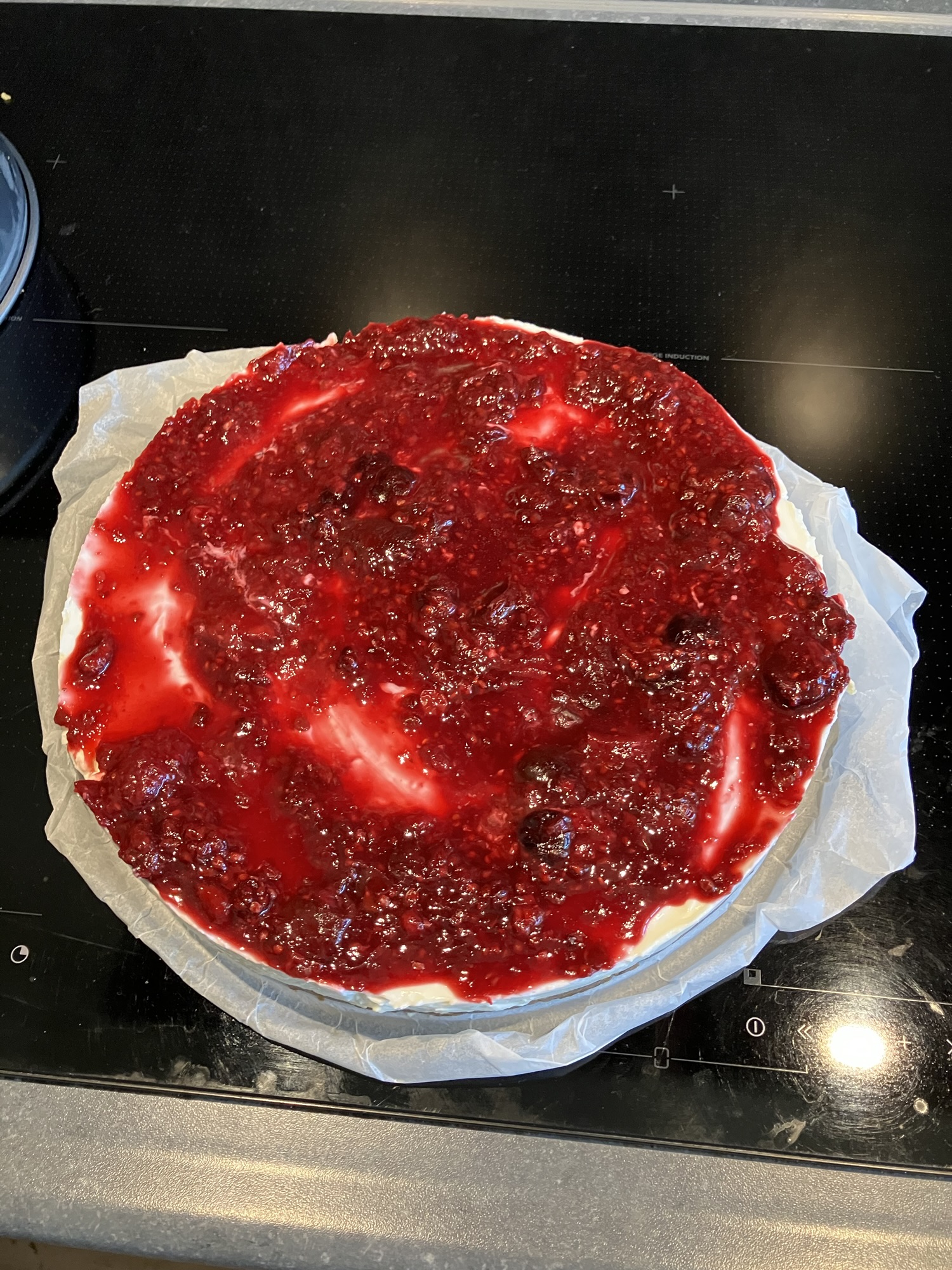
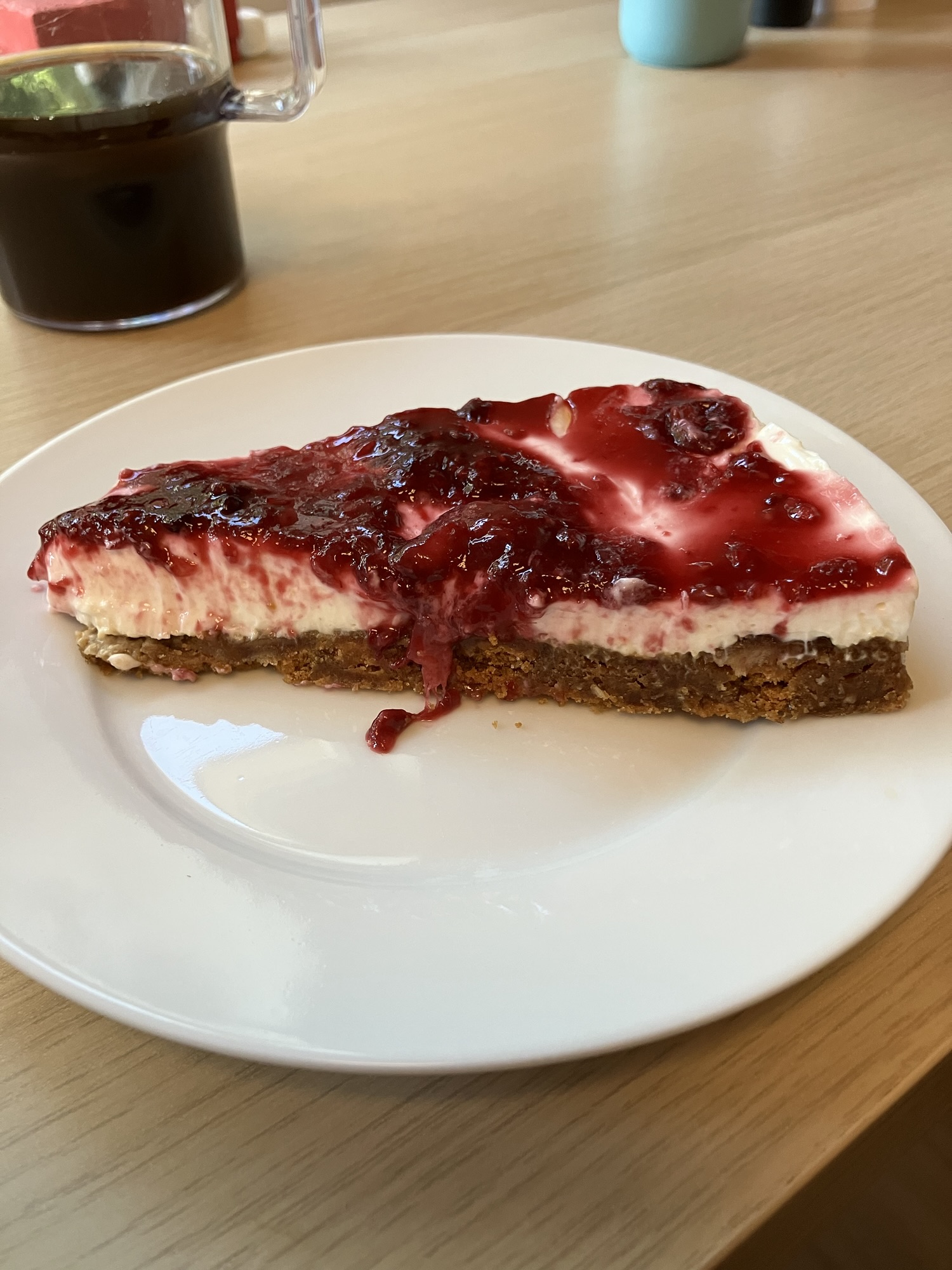
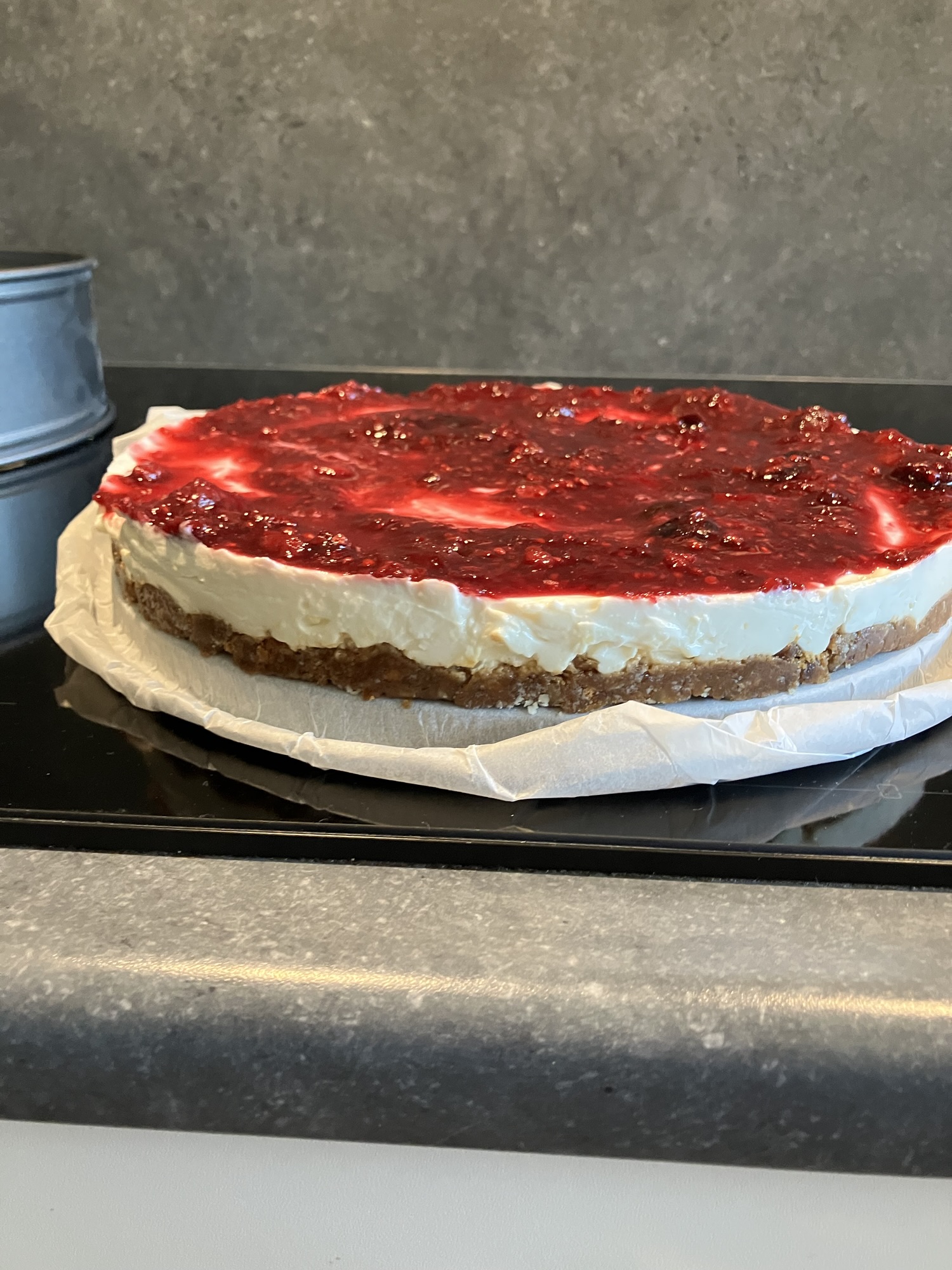
Today, I made a no-bake cheesecake. I’d always somehow believed that no-bake is easier than baking, but it’s not. I spent over an hour trying to make the bottom, then struggled with the filling layer too. I in part blame the recipe, which wasn’t nearly detailed enough for my needs and said we needed to make the bottom in a blender. I have been saying I want to buy a food processor for months but never got down to it. Now I honestly wish I’d had one. In the end, we made the dough using a stick mixer. The cheesecake turned out quite good after all, but I certainly will get myself a food processor soon.

If we were having coffee, I’d tell you I finally saw the results of my bloodwork on Monday. I’d had my annual blood test several weeks prior and have had access to my medical records for a few weeks too but somehow the GP hadn’t given me access to this part of the records. Everything was within the normal range except for a measure of kidney function that’s always low for me. My egfr was 67 this time. I in part blame the hot weather and my lack of proper hydration, so that’s why I have been wanting to hydrate more. I say this each summer, but hopefully with the water bottle I’ll finally get it done. My blood glucose, cholesterol and triglycerides were all excellent.

If we were having coffee, finally I’d share that, on Monday, I’ll have a meeting on my Care and Force Act plan, which details the circumstances under which I can be restrained, this home being locked, etc. I could write a novel on all the things I don’t like about the plan. I won’t now, because I want to end on a semi-positive note. Please wish me luck on the meeting.

Oh wait, if we were having coffee I’d share that I finally figured out a way to display my images in a gallery while still accessible with my screen reader. Please share any (gentle) feedback with me on how this looks visually.

July 2026 In Review

Hi everyone. It’s the last day of the month and this means it’s time for my monthly recap. July was most of all a hot month weather-wise. It had its highs and lows, but wasn’t as eventful as May or June had been. I consider that an okay thing.

The first half of the month was an uncertain time. I learned in mid-June that I was going to be moving out of this care home, but wasn’t sure of the details. I mean, for all I knew, I could be kicked out to a crisis unit or onto the streets.

It didn’t help that my aggressive behavior got a bit worse in early July. I had another major incident on July 10, in which among other things I told a staff she’d be facing a complaint. I never followed through, because she backed down with her restraint quite quickly. Later, I was told that the way the situation escalated would’ve in fact warranted me being restrained. I’m not entirely sure how much my support coordinator, who told me this, knew about the order of events, because well cause and effect were reversed: I spiraled out of control after the staff tried to restrain me, not the other way around. This particular staff has quite a harsh support approach, so I maintain that it need not have escalated into a restraint-worthy situation.

I will finally have a meeting to discuss my Care and Force Act plan on August 10. My support coordinator will be off work then, but the behavior specialist will attend, as will an independent client confidante. I will hopefully be able to make it crystal clear then that restraint is not a way to de-escalate a situation for me nor is it something that’ll teach me a lesson. Rather, its purpose is solely to keep me from causing significant harm to myself or others.

On July 16, I finally met with the behavior specialist, team leader and my support coordinator and assigned staff to discuss my moving out of this care home. It turned out that there are no plans of single-handedly terminating my care. As I read my housing profile, which will be sent on to the care finding people, I did realize that for some staff, the situation is however rather urgent. It isn’t like this surprises me, but it does kind of contradict the rather fluffy letter I received from the behavior specialist on July 16.

Today, I received a phone call from independent client support. The agency the substitute behavior specialist had recommended, didn’t feel like they could help me, but the one with the client confidante on involuntary care did. I was happy to find out that the same client supporter I’d spoken with several years ago regarding my move from the intensive support home to my current care home, was able to pick up my case.

In other news, today my now ex-wife and I received the letter that our divorce has been finalized. This means we’ll probably soon be talking selling the house. Otherwise, it doesn’t change much.

Over the month of July, I did engage in a few crafty and culinary activities. On Wednesday, I cooked the absolute blandest pasta pesto ever. I cooked it for my fellow residents too, but was so underwhelmed with the result myself that I didn’t even care to ask whether the others liked it. This did motivate me to learn more about the details of cooking beyond blindly following recipes.

Asserting My Rights

Hi everyone. Yesterday’s WordPress daily prompt was interesting. It asked us to explain what freedom means. I was originally inspired to write a post about human, civil and disability rights as they apply to my situation, but got distracted by family matters.

After last week being dragged to my room by both arms by two staff for the crime of being in the living room outside of my allocated one-on-one time and appearing (slightly) in distress, I decided to contact the client confidante on involuntary care. I remember writing about the Care and Force Act when it was just being introduced and being offended at the fact that it applies to anyone receiving care due to an intellectual disability (including acquired brain injury) or neurocognitive disorder (like Alzheimer’s, Huntington’s, etc.), not just institutionalized people. Like, under the old law, you had to be detained in an institution first before anything could be done against your (or your guardian’s in the case of being incapacitated) will. Now even those still living independently can receive “involuntary care”. And just for clarity’s sake: “involuntary care” is a euphemism for anything being done against your will, including being locked in or out of a room, forced medication, etc. As an example, if someone with dementia constantly leaves the stove on, they can be involuntarily locked out of the kitchen. Yes, even in their own homes!

However, after speaking to the confidante, I realized the Care and Force Act isn’t a free pass to do as you please if you happen to be a care provider. In fact, I’m now pretty sure that it’s indeed giving the client more rather than fewer rights, at least if they (or their guardian) knows how to assert those rights. And I know now!

Yesterday, the client confidante came by to discuss last week’s incident with me. I had given both staff involved one chance to talk it over with me before. The one leading the “involuntary care” wouldn’t budge and told me she’d talked it over with the behavior specialist, team leader and my assigned staff. She kept claiming forcing me to my room was in the other clients’ best interest. I learned yesterday that the Care and Force Act isn’t about best interest, but about “significant disadvantage”. This means that someone (either the client involved or someone else) has to be at risk of suffering significant harm (in any form, including psychological) if the “involuntary care” isn’t provided. It also requires that “involuntary care” be the last resort. In this case, the staff asked me verbally to go to my room twice, then threatened to ask her coworker to “help” then gestured to her and then they dragged me to my room. That’s not a matter of last resort!

The other staff involved used to be one of my most trusted staff. She initially blamed her coworker for forcing her into a quick decision, until I learned that they’d talked it over before I even went into the living room. Then she finally half-heartedly apologized.

This incident, however, was only the final straw again. After talking to the client confidante and being informed of my rights, I feel that a can of worms was opened of things that staff (used to) do against my will.

For example, this home is locked as a measure of “involuntary care” for two fellow clients at risk of eloping. This is in itself a questionable measure, but the thing affecting me is my being given a black-or-white choice between the door being opened at every hint that I want to leave or my not being allowed to leave the home without explicit permission at all. A similar thing is staff constantly telling me they aren’t allowed to force me into activities as an excuse to lay back at my every hint that I don’t want to do a certain activity.

Another example is the client portal with my records. I have requested access to it multiple times but the question has always been flat out ignored.

I called the confidante this morning requesting that I be allowed to E-mail her with my further concerns/questions. I did so this afternoon. Earlier this evening, fear hit me hard. What if the powers-that-be decide to give me a choice between consenting to whatever they please and being kicked out? This happened once in the psychiatric hospital and well shotgun consent but they got it.

Same when the social worker threatened to declare me incapable of decision-making and make my parents my guardian unless I signed application forms for a home everyone should’ve known I didn’t meet the criteria for. I sent the confidante another E-mail this evening asking whether the institution could legally do this and, if so, whether there’d be any chance that my parents or sister would be appointed as guardians rather than my wife, especially after our divorce.

The confidante will E-mail my support coordinator asking her to schedule a meeting between her, the behavior specialist and me with the confidante leading the process. She told me I’m allowed to file a formal complaint after that. I’ll give it some thought, but that causes me intense fear too. After all, even if no-one can legally threaten me with forced discharge or guardianship, that doesn’t mean they won’t try.

Institutional Abuse: Abuse in the Care System #AtoZChallenge

Hi everyone and welcome to my letter I post in the #AtoZChallenge. Today I want to talk about trauma that I for one didn’t experience in childhood: trauma and particularly abuse experienced in the care system. I’m struggling majorly with this, as just this evening I had an aggressive meltdown that led to me being thrown to the ground by one staff and another staff admitting that the only reason I’m not being locked up or physically restrained is the fact that I’m not strong enough.

I want to say here that my choice of words is a bit tricky. Is it “abuse” if the client was themself aggressive, even if it was “just” verbally? I am struggling intensely with the fact that, on the one hand, my wife never locked me into a room or threw me to the ground even though I was quite a nasty person to her at times when we were living together, but on the other, there are just two staff to ten clients here. I try to understand that staff are people too and not necessarily worse people than others are. My wife sometimes said that the staff at the intensive support home were ill-intentioned at best, but I doubt it. My point is, people are part of a system. When that system is purposefully created to oppress some people, yes, the “low-key” oppressors are to blame too, but that doesn’t make them personally bad people. Many unfortunately don’t realize how much they’re accustomed to using (and abusing) their power. In fact, where it comes to care staff, most don’t even have a clue that they’re higher up in the pecking order than us clients are.

That doesn’t mean that the (ab)use of power doesn’t affect us. I mean, I was once, at the intensive support home, told that if I were dragged to my room, I had probably asked for it with my behavior. The thing is, even if I had, that doesn’t make being physically dragged not traumatic. Similarly, I can totally understand why the staff this evening threw me to the ground (I’m not even 100% sure he intended on me landing on my head), but that doesn’t mean my head doesn’t hurt.

One last thing I want to discuss, is the fact that institutional abuse may technically be a staff’s action (or inaction), but it is the result of a long line of decisions made by management, the Care Office or other funding agency and ultimately the government. It is not the client “choosing” to be restrained/locked up/drugged/etc. with their behavior and, like I said, the staff are the ones doing it, but if the government chooses a lock or shot is cheaper than support, they are the ones ultimately responsible.

I Don’t Owe Anyone a Grateful Heart

Hi all. Today’s prompt for Reena’s Xploration Challenge is quite fitting. Reena asks us to ponder the paradox of gratitude and resistance.

Sometimes, by being grateful, we can bring about change. I am reminded of a story in one of the Chicken Soup for the Soul books in which nurses on one floor were irritated with another floor’s nurses for their constant negativity. Instead of fueling the conflict by becoming negative themselves, the nurses wrote a lengthy gratitude letter to their colleagues. I am not sure whether this was exactly what the story was about, but this was at least the message I took from it. The fact that the one group of nurses focused on the positive rather than giving in to the other group’s toxicity, turned the situation around for the better.

At other times though, particularly when there’s a power difference between two people or groups of people, gratitude becomes passive resignation. In this case, while it can be helpful in the short term to the oppressed person to keep a positive outlook, if the oppressor takes gratitude as acceptance, in the long run nothing will change.

I will give an example from my own life. Regular readers of my blog know that I’ve been accused of having a negative attitude by many people in positions of power, such as my care staff and treatment providers in various care settings. An example is being told I ought to be happy that anybody wants to work here at all. Well, no. While it’d be easier for me in the short term if I could just accept the umpteenth random stranger for my one-on-one care, in the long run it’d mean I’d always get assigned the random temp worker because regular staff would rather support the others and chill out with other regular staff while they can. Besides, even if it’d cost me less effort to resign than it costs me to rebel, I don’t owe my staff a positive attitude. If there’s anyone for whose sake I should have a grateful attitude, it’s myself.

It doesn’t mean I don’t struggle with this whole idea. I feel intense guilt whenever a staff throws some variation of “be happy anyone wants to work here” at me. I am also constantly reminded in my head of my assigned staff at the intensive support home, who was disappointed in me for never having a perfect day even when they’d followed my day schedule completely and had always assigned me regular staff. Which, for the record, never happened.

I, for clarity’s sake, don’t think violent resistance is the answer. When I have a meltdown over some rule I disagree with, being aggressive will always end in me being restrained. However, there’s a whole world between aggression and passivity. And sometimes, unfortunately, the people in positions of power are so caught up in their reality of being the ones to decide, that they (either willfully or not) ignore my less obvious attempts at resistance.

For example, last week I was trying to resist the “one chance” rule about orienting new staff. I tried going along with what the staff wanted, but this only led to further abuses of the rule. I tried talking sense into the staff, but this didn’t work either. Finally, on Saturday, I had the most massive meltdown. I am not proud of my behavior at all. In fact, I really wish I could’ve solved the issue without being aggressive, if for no other reason, then because the staff are far stronger than me and I ended up being restrained. In the end, I thankfully finally got a meeting with the behavior specialist on Monday and the rule got ditched. Now all I can hope for is that my main message, that I have to consent to every individual rule or agreement affecting me unless the behavior specialist uses the Care and Force Act, got through to everyone.

#WeekendCoffeeShare (July 26, 2025)

Hi everyone. I’m once again joining #WeekendCoffeeShare. It’s 9:45PM, so all I’ll have to drink before going to bed is water. I don’t mind though and hope you don’t either. Let’s have a drink and let’s catch up.

If we were having coffee, first I’d talk about the weather. It’s been raining all week, but temperature-wise, it’s been nice. We had daytime highs in the low 20s Celsius most days. Today, the temperature rose to 25°C. I hadn’t expected it to rain, so didn’t take a jacket with me when driving to Apeldoorn with my spouse. Thankfully, it only rained when we were in the car or somewhere else inside.

If we were having coffee, next I’d share that my spouse and I may not be divorcing after all. It’s a long story that is too personal to share on a public blog. The short version is that I sent an impulsive text last week asking my spouse to finally make arrangements, because I wanted to live independently. The reason for the text had nothing to do with my spouse, but it did get things set in motion. As it turns out though, it’s probably not practically in our best interest to divorce.

If we were having coffee, I’d go into the reason for said text: one of my “favorites” among the staff is leaving and this is at a time when I’m struggling significantly with most other staff seeming at once not to agree on any way to support me but somehow agreeing that I’m a pain in the neck. At least on a weekly basis, I hear stuff like “You can’t go anywhere anyway” or “Your spouse doesn’t want you in this state” when I’m being restrained or otherwise having my autonomy taken away.

Furthermore, it looks like my staff have decided that neither I myself nor my spouse have my best interest in mind, while in that order, we’re the ones most adamantly advocating for me. However, I saw impulsive comments my spouse made after we found out divorce may not be an option cited in my report. This wouldn’t have been such a big deal, had staff also objectively reported their own comments, like all the “You can’t go anywhere anyway” stuff. The way it sounds now, my spouse sounds like the bad one.

One of my assigned staff even got me to agree on getting more information about guardianship because she somehow feels that a person who doesn’t know me but knows the law is better able to make decisions for me. I have yet to tell my staff no on this one.

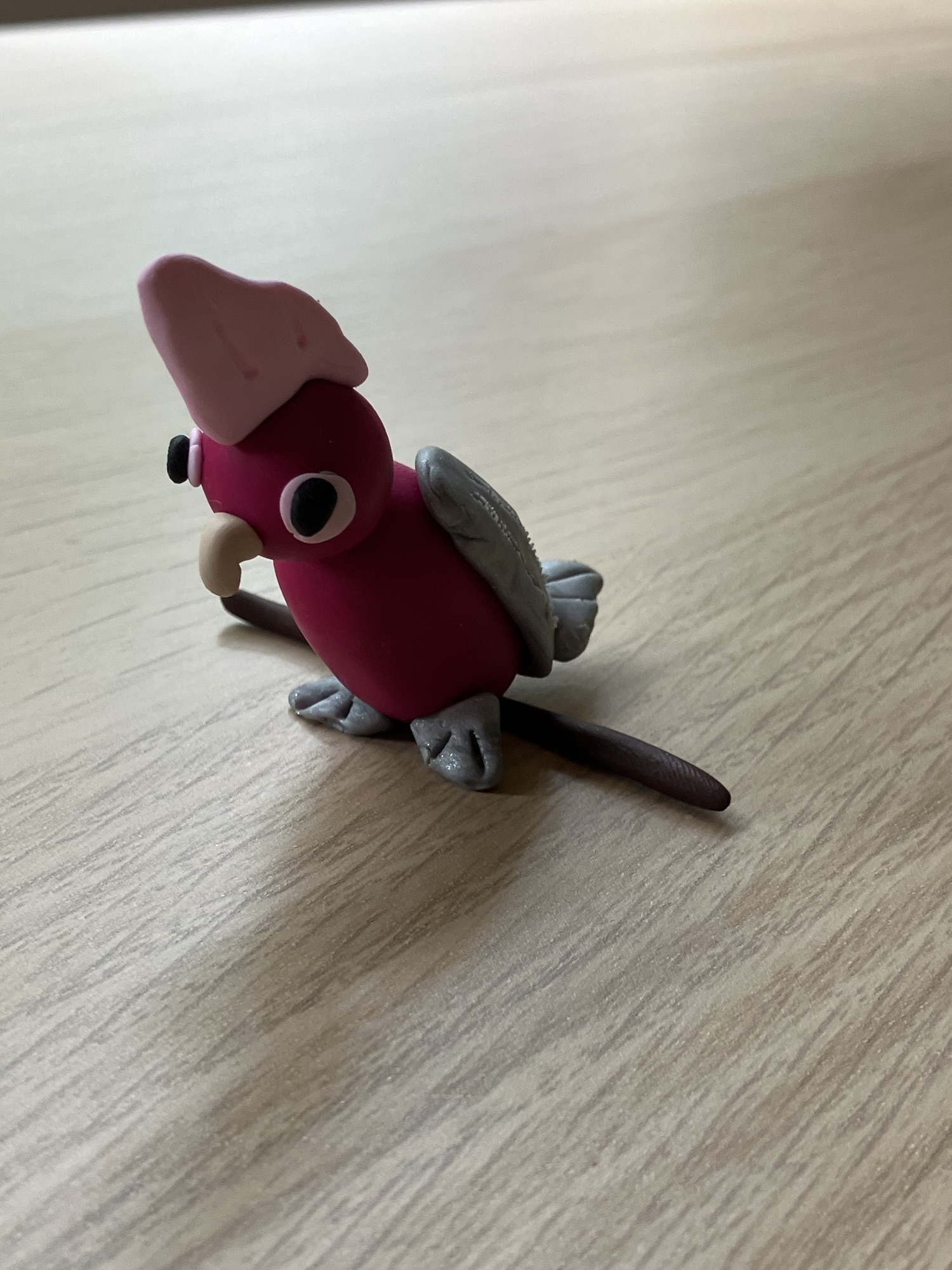
If we were having coffee, I’d share that I did finally work with polymer clay again. I made a parrot for the staff who’s leaving, because this staff has two parrots. We have plans for making her other one out of polymer clay sometime this coming week.

If we were having coffee, lastly I’d share that I’ve been obsessing over recipes and cooking again. Like I said yesterday, I made a curry for myself and my fellow residents on Tuesday. The staff who helped me with it, proposed we do cooking again this coming Tuesday. This time, I chose a pasta bake. I’ve also been making smoothies and overnight oats recently.

I have an app on both my PC and iPhone to organize my recipes. It’s called Recipe Keeper and I’m half convinced it’s spyware like TikTok. Other than that, its only drawback is the fact that somehow I can’t have my password manager remember the password. This has me paranoid too. However, it’s the only app that’s available on both iOS and Windows that is remotely useable for me.

Some Might Say It’s Wrong to Be Angry

Some might say it’s wrong to be angry. I was actually told when I was in fourth grade that I was “angry too quickly”. What my parents and the professionals meant is that my expression of my emotions, whether I was actually feeling angry or not, was wrong given the situation.

That’s not the same. An emotional expression isn’t the same as the emotion that someone is actually feeling.

Besides, I strongly disagree with the idea that emotions can be “right” or “wrong” even given the circumstances. I have always felt that the idea behind dialectical behavior therapy of deciphering whether an emotion you’re feeling is justified in that situation or not, and, if not, acting opposite, is incredibly invalidating.

It’s never wrong to feel angry. Or sad. Or happy for that matter. Yes, it can be wrong to express your emotions in a certain way, such as when you become disproportionately aggressive. Even then, your emotions aren’t wrong. And, at least in my case, the emotion I’m actually feeling isn’t usually anger.

Like, when, last week, I became physically aggressive towards a staff by trying to hit him, I wasn’t angry. I was panicking because the staff was restraining me for the relatively minor offense of trying to grab a small object that he thought I was going to throw to the ground. That assumption may’ve been correct, but that doesn’t mean my feeling of utter panic when grabbed by both arms, was wrong. For what it’s worth, I feel that restraining someone for fear of them damaging an easily replacable object, is out of proportion.

It’s easy to say that people are wrong for being angry, when in reality you can’t know what’s in their minds, so whether they actually feel anger at all. It’s also easy to think that a person trying to throw objects is disturbing the peace for the other people around so you, as a staff member, are justified to do whatever it takes to prevent them. However, just because it’s easy doesn’t mean it’s right.

I’m sharing this post with Missy’s MAD Challenge for this week. The prompt is the phrase “Some might say it’s wrong to…”.

Book Review: Will You Help Me? by Maggie Hartley

Hi everyone. As regular readers of this blog will know, I love memoirs. I particularly love books about fostering and special education. I however hadn’t read such a book in a few months, but last week, I decided to buy Will You Help Me? by foster care memoirist Maggie Hartley. Here’s my review.

Book Description

‘Please help me,’ he said in a small voice. ‘Will you help me?’

Six-year-old Ralph has only been in the care system for three days and has already been rejected by three different foster carers. After hitting a teacher at his school and causing mayhem since he arrived four months ago, staff are unable to get a hold of his mum and her partner.

Social Services are called and when Ralph turns up at Maggie’s house, she knows immediately it’s going to be a challenge. Within a couple of hours, Ralph has trashed Maggie’s house and spit on her face. After a nightmare first day though, Maggie notices that Ralph is limping and a hospital check reveals broken limbs and several injuries that are months and years old. Can Maggie help this troubled little boy who has been rejected by everyone in his life find his forever home?

From Britain’s most-loved foster carer, a new powerful true story of abuse, family and hope.

My Review

Most foster care memoirs I’ve read are on the predictable side and this one isn’t terribly twisty either. However, it’s less predictable than other memoirs I’ve read.

This book also made me feel a rollercoaster of emotions. I could relate to Ralph in some ways and this made me root for him even more than I otherwise would have. The book describes Ralph being restrained (in a cuddly way) several times. This triggered me, because I too have experienced being physically restrained. It was, however, good to feel the feels when it’s someone else being talked about.

This book reminds me of the time I read Who Will Love Me Now?, also by Maggie Hartley, which I (reviewed in 2020. I think I love both books equally.