#WeekendCoffeeShare (August 15, 2025)

Hi everyone on this warm Friday evening. I’m joining #WeekendCoffeeShare. I usually do mine on Saturday, but I’m motivated to write now so let’s make use of it. I just had my evening soft drink and a single-serving bag of chips. I’d recommend you’d grab something to drink if you were here. Let’s chat.

If we were having coffee, first I’d talk about the weather. It’s been hot all week. In fact, I’m pretty sure we have a local heatwave, meaning five days in a row of daytime temps above 25°C, of which three with daytime temps of 30°C or above. I haven’t checked the news in months and don’t want to check it now, but I don’t think it’s a national heatwave.

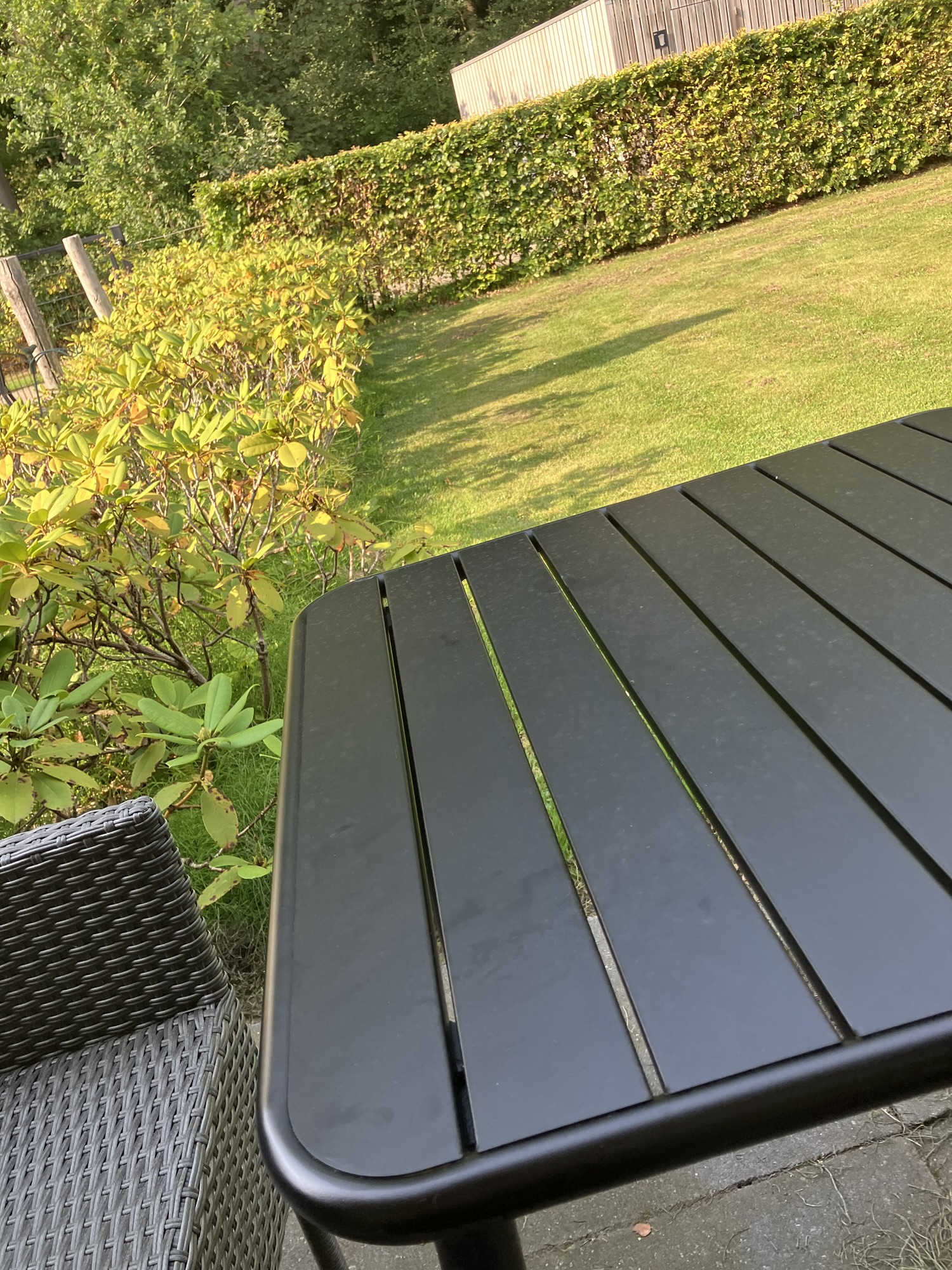
If we were having coffee, then I’d share that, thanks to the nice weather, I was able to eat outside three or four times this past week. Did I share my spouse gifted me a new outside table, because I’d broken the one I’d gotten last year? My spouse had ordered it online and had had it delivered to the institution. We hadn’t seen each other since, so yesterday after a lot of pestering, I decided to snap a picture. I rarely take pictures fully independently, so if this one’s unclear, I apologize.

If we were having coffee, then I’d tell you I’m still going strong with my movement and exercise goals on my Apple Watch. On Saturday, I did in fact break my active calorie record. Yesterday, I broke a record with the longest bike ride. My Apple Watch also said I burned the most calories during a cycling workout, but I doubt that’s true.

If we were having coffee, next I’d announce my participation in the Walk on Sunshine on October 4. It’s a walk to raise money for the Dutch cerebral palsy charity CPNederland. The goal is to walk at sunrise. Sunrise is at 7:45AM that day and the staff usually don’t get here until 7:30, but one of the staff agreed to come here early and do the walk with me. I signed up for the 5km walk, because that’s a challenge for me particularly in the morning, but not impossible.

If we were having coffee, lastly I’d tell you all that I’m still struggling. I experience a ton of trust issues towards my staff and am not sure these are entirely unfounded. Like, today my spouse and I were on the phone during my entire late afternoon activity and, though it was nice to talk to my spouse, I worried that the staff are going to cut my care hours because of it. After all, for some time they tried to make my spouse visit me each Sunday so that they could cut my hours.

Honestly, I think I’d be much more independent if I knew that, when I have a bad day or a bad moment, I can always get some extra support. In this sense, my psychologist back in the mental hospital was right that anxiety is part of the reason for my dependence. However, her subsequent actions to “treat” me, ie. kicking me out of the hospital into independent living with minimal support, actually worsened my situation. So did my staff’s decision back last year about my having to compensate for every moment I needed extra support due to distress. These and other strategies, while intended to encourage self-reliance, actually achieved the very opposite. After all, my abilities fluctuate and my mental state doesn’t adhere to a day schedule, so that I’m only in distress when I have one-on-one. No, I don’t purposefully work myself up in order to get more support, but my mistrust of my staff’s continued actual support does lead to distress.

Growing Up Emotionally

Today’s Ragtag Daily Prompt is “when I grow up”. I’m going to be forty next year, so by most standards, I’m considered to have “grown up”. Only by the model that includes life experiences such as working, buying a house, etc., I’m not necessarily truly an adult. After all, though my spouse and I own a house together, buying it was mostly done out of necessity so that I could go into long-term care. I’ve never worked, not even had a side job as a teen.

That being said, in many respects I’m still young at heart. I know everyone my age says so to be cool, but I don’t mean it in a positive way. Rather, I mean it to say that emotionally I’m very vulnerable. Like I shared when discussing emotional development as it relates to intellectual disability (and autism) in 2023, on many subscales of the emotional development assessment used here in the Netherlands, I’m considered an infant or toddler. That doesn’t mean I can’t grow.

When I grow emotionally, I’d like to become more regulated. My psychiatrist used to say that I’d likely experience less emotional dysregulation after age thirty. I’m not sure that’s true in my case. In fact, I’m pretty sure it’s not true. The frequency and severity of my meltdowns has increased, though the duration has lessened significantly. I no longer experience outbursts that last all day. That, I mostly attribute to my staff’s proactive attitude.

I’d also like to be more independent. The problem with this, however, is the fact that my energy level varies significantly from day to day. Because of this, I hardly ever progress in my independence even though I might be able to. The reason is the fact that, if I do something independently once, my staff and others are going to expect me to always be able to do it.

Same for adaptability and emotional regulation: my abilities vary from day to day and sometimes hour to hour. I, for this reason, struggle to really make progress. That doesn’t mean I don’t want to.

Regrets

Hi everyone. Yesterday, Sadje asked in her Sunday Poser what regrets we have about not doing, being or having something in our life.

I could share that I regret not having finished college or not having lived independently longer, but I don’t. I mean, I know my “choice” to land in the psych ward caused me to be practically abandoned by my family of origin, but I wouldn’t have my spouse now if I hadn’t gotten myself admitted. In fact, I might not have been here to write about regrets, as I was actively suicidal at the time. You could argue that I wouldn’t have died anyway. Even if death weren’t the result of my continuing to muddle through, I would have more than likely caused irreversible damage to the relationships that matter. I honestly, after all, can’t believe my parents wouldn’t have abandoned me if I’d spiraled more seriously out of control. And I’m pretty sure, like I said, that my now spouse, whom I’d just met, wouldn’t have stuck by me then either.

This doesn’t mean there isn’t a voice in me that wishes I’d done some things differently. However, as long as I live, there’s always a moment to do things differently now. For instance, if I really wish I’d finished college, I could always enroll into an Open University program.

Likewise, I do sometimes wonder whether I could’ve been more independent if this or that about my life had been different. Then again, if I really want to be more independent, I can take steps, no matter how small, to achieve it. The proverbial deep end doesn’t work for me, since that was what I got when living independently and going to university. However, I can always take steps towards improving my life.

I, as many of you know, do regret having moved out of Raalte and into the intensive support home. That, now, I see as a lesson: I want to stay here at my current home, because even if it isn’t perfect, the grass isn’t greener anywhere else. Like one of my staff sometimes says, some places don’t even have grass.


I’m linking up with Senior Salon Pit Stop #338.

The Downside of Praise

As a child, I was often praised excessively for my achievements. I remember one day, when I did calendar calculation at a family get-together, calculating what day of the week May 3, 1327 (for example), was, my mother exclaimed: “She’s sublime, she’s a genius!” For those who don’t know, many autistic or otherwise developmentally disabled people, including those with lower measured IQs, have this skill as what is stereotypically called a “splinter skill”. Now don’t get me started on the ableism of the term “splinter skill” when applied to people with lower measured IQs, but calendar calculation alone definitely doesn’t make someone, anyone, a genius.

And just so you know, it’s incredibly counterproductive to praise a person for who they are rather than what they do. It is usually better to praise someone for their achievements by naming those achievements as well done rather than praising the person themself. Moreover, any excessive praise, even if you say “you did an awesome job calendar calculating”, can be taken the wrong way.

Besides, many people feel they are praised for something that doesn’t reflect their personal values. For example, when I am praised for completing a personal care task, all I see is pressure to be able to do it independently the next time too. When, however, I am praised for creating something nice out of polymer clay, for my writing or the like, I feel like I’m valued for my contribution to the world.

There is, or so I’ve read, some school of thought that says any praise, whether person-centered or accomplishment-based, should be avoided by parents or carers. This doesn’t mean parents or carers should completely ignore their child’s achievements. Rather, simply pointing them out and engaging with the child about their achievements, will, according to these people, help the child develop a healthy sense of self. Honestly, I am inclined to agree with this.

#WeekendCoffeeShare (December 23, 2023)

Hi everyone. I’m joining in with the #WeekendCoffeeShare once again. As usual, I’ve had my last cup of coffee for the day. We didn’t have chips to go with my soft drink, as for some reason the person ordering our care home groceries had ordered far too little. We are also almost out of desserts and the next delivery of groceries won’t be till this coming Wednesday. It’s going to be a not so luxurious Christmas after all. Speak of first world problems. Let’s have a drink (thankfully I have lots of green tea, including coconut-flavored green tea) and a biscuit (I have cinnamon stars and stroopwafels in my cupboard) and let’s catch up.

If we were having coffee, first I’d talk about the weather. It’s usually uneventful here in the eastern Netherlands, but not so this week. Storm Pia actually hit us hard. In fact, on Thursday, the storm caused a tree to fall over on top of a side-by-side bike here on the cycling path that’s along institution grounds. The staff member steering the bike was hit so hard that she didn’t survive. The client had relatively minor injuries, but I’m pretty sure they’re traumatized for life. I don’t know the staff member myself, thankfully, but it was a warning sign not to go outside in the storm.

We’ve been experiencing heavy rain and wind all week except for Monday. Monday was actually a beautiful day. I went for a 5K walk with a staff member that day.

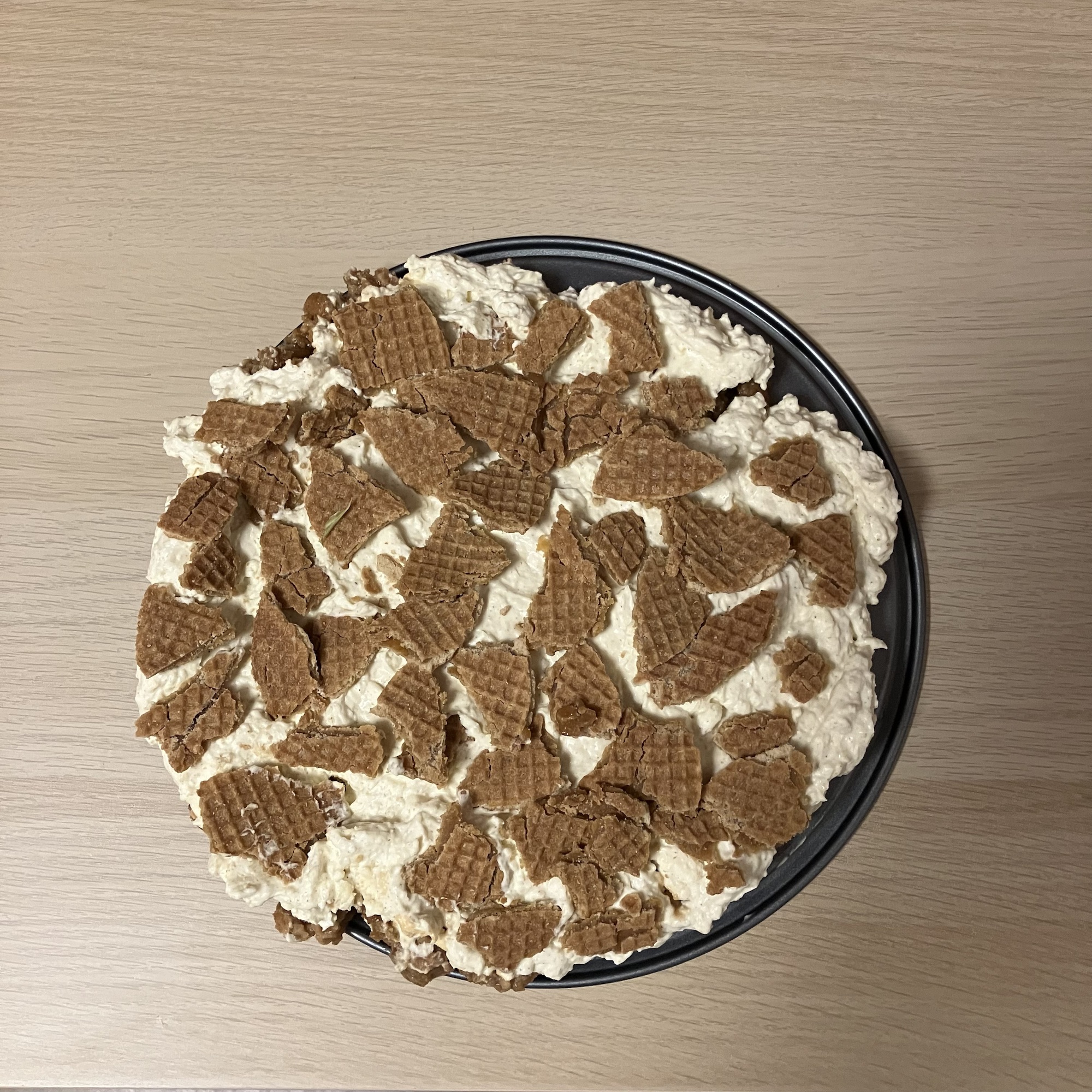
If we were having coffee, next I’d tell you about the stroopwafel cheesecake I made yesterday. I made it because my one-on-one got renewed, something I really hadn’t expected. The cake was extremely sweet and a calorie bomb as they say here but who cares? It was also delicious, after all.

If we were having coffee, I’d share that I’ve really been feeling creatively motivated lately but have been struggling to put this motivation into action. As a result, I haven’t been doing much with my polymer clay lately. I’d really like to change that soon. I did order new clay, because I want to experiment with Cernit and also because some of my Fimo is too crumbly to condition without exerting enormous effort.

If we were having coffee, I’d share that I did come up with the idea of using my two-hour activity time slot for cooking a simple meal for myself and my fellow clients. We could then reheat it in the oven or microwave when it’s dinnertime.

If we were having coffee, I’d tell you my assigned staff asked me to think of goals for my upcoming care plan. He did say that these goals do not need to be all that drastic or anything and that simply having a meaningful life could be a goal in itself. I mean, my staff at the intensive support home have been pushing me to create independence-focused goals but I really don’t care for those given the discrepancy between the fact that technically my body still functions okay but due to overload tasks still cost me tons of energy. I mean what if staff and I set a goal for me to achieve a certain task and I physically achieve it in three months’ time, then staff will always expect me to do it independently because purely physically speaking I can. Then because it costs me tons of energy I’ll end up neglecting it if I don’t have supervision (ie. someone pushing me to do it) and we end up back at square one. And to be honest, I don’t want to have someone supervise my every task that I can do myself just so they can tell me to do it myself and push me far beyond my capacity limits in terms of energy.

If we were having coffee, lastly I’d tell you all that I’m looking to finally turn my room into an actual living space. I’m looking to buy some more furniture and also to possibly decorate it more. Currently, there’s a box full of junk in my room that I could really empty out. I mean, after I’ve finished my crisis signaling plan, because the folder from Raalte is in there. In its place, I’d like to put a second nightstand or small cabinet, so that I can put my claying supplies in there rather than in a box under my bed. I am also looking to put some poster on my wall, probably something not too weird. I mean, I originally wanted to go for a unicorn theme but that’d be all very flashy, which isn’t exactly my style.

Speaking of unicorns, I will be wearing a unicorn-themed Christmas hoodie this year, like last year. It’s a little on the big side now, but not too much so.

Hope you all have a lovely Christmas.

I Am My First Priority: Intentions for Focusing on My Quality of Life

Hi everyone. I paged through The Goddess Journaling Workbook again yesterday and saw the first prompt: “I am my first priority”. Okay, I did write about it already back in 2020, but I think I need to revisit it and set intentions for putting myself first. I know, we are often taught, especially in more conservative circles, that we need to put others first (or after Jesus, but ourselves last, in any case). Then some more leftist folks teach us about self-love as if it’s about essential oils and vegan smoothies. Which it could be, but this is not what I mean. Rather, self-love means being true to our own values over those imposed upon us by others. And that doesn’t need to be selfish.

Now of course I need to determine my values. I’ll narrow those down to what my major point is for being in care, ie. my main goal. This is quality of life. This may be obvious to most people who aren’t involved in the care system and it should be obvious to those who are too, but for many, the presumption of competence or the need to manage daily crisis behavior clouds their vision towards quality of life. In fact, I’ve even seen one care agency state that their aim is to “maintain and where possible promote” quality of life in their clients. Well, this is wording I’d expect to go with “independence”, not “quality of life”, since truthfully, quality of life can always be promoted.

So what does quality of life mean to me? It means that I decide what I spend my limited energy on. This doesn’t mean lazing around all day doing nothing and it doesn’t mean I won’t ever improve on my ADLs at all either. What it means is that I take the lead, focusing on my daily level of energy. I told one of my staff the other day that I would prefer if she doesn’t tell me to do something independently, but rather invites me by asking me whether I want to do it independently. In that case, she’s much more likely to get me to actually do it, as I don’t feel the pressure of her expectation, because I can say “No” if I don’t have the energy at that point.

It also means that I decide what activities to do during my allocated activity time. In my current care home, I have been sometimes not even consciously adapting to staff’s preferences for activities way more than I feel comfortable with. For instance, I’ve been taken on grocery shopping trips for the staff’s personal needs under the guise of an activity more than a few times. I eventually put a halt to that, saying I would only go if I too needed something from the supermarket. Another, even more frequent, example is my playing endless card or dice games because I’m assigned a new temp worker who comes across like they’re just here to pass the time. Yesterday, I was assigned one of those and had had it with dice and card games, so I thought, screw it, we’re making a smoothie. It turned out absolutely delicious!

It also means being intentional with my unsupported times. This means rather than mindless scrolling, doing actual reading, watching or listening online. I fully intend on blogging or at least journaling more often. If I can stop caring about my stats, maybe I can post here more often based on self-help journaling prompts. I didn’t collect those books for nothing, after all.

It means being constructive in my relations to my staff. It means being honest about my needs. For example, if a staff member (usually a new temp worker) causes me emotional flashbacks with something they do or say, rather than just telling them I feel in distress, I will hopefully be able to ask for a more trusted staff to intervene for a few minutes (which isn’t the same as demanding I be supported by all trusted staff).

Finally, I will also be constructive in contributing to my crisis signaling plan once it is revised at the new care home. My plan dates back to sometime in 2021 I believe and was immediately thrown out by my former support coordinator here because “it doesn’t work at this home”. What “works” here, however, doesn’t work for me, but that doesn’t mean my plan will be fully useable at my new care home. I will try to understand the staff’s perspective when updating the plan, but will still put myself first.

I Would Never (Or So I Thought): My Changing Perspective on My Care Needs #31Days2022

Hi everyone. Today’s optional prompt for #31Days2022 is “never”. I am immediately reminded of my shifting perspectives on my care needs over the 17+ years that I’ve been in the care system. Some things I thought I’d never accept, let alone want, in my care, are now things I wish for.

Most notably, in 2008, when I’d been in the psych hospital for about three months, I was being discussed among some autism know-it-alls. When asked what I wanted them to know before the meeting – since I wasn’t present at the meeting itself -, I wrote down that I wanted to be back in the community as much as possible as quickly as possible.

Out of the meeting came the recommendation that I be transferred to an autism treatment facility on psych institution grounds. I eventually ended up going to the orientation visit for the facility and the treatment coordinator and I mutually agreed it wouldn’t be the best place for me, precisely because of what it was: a treatment facility. I didn’t need further training in independence skills, after all, because, due to the combination of my disabilities, this wouldn’t be successful.

At first, I however misunderstood the meeting’s recommendations and thought they wanted me to go into the workhome, which is essentially a long-term living facility for autistics on the same institution grounds. And this is where I started to object in a way I wouldn’t now: I didn’t want to go live on institution grounds long-term.

For the first several years of my experience in the care system, I thought that institutionalization was an excuse for poor care. I am not saying it isn’t, because people who live in the community may need more support than those who live on sheltered institution grounds. In fact, when my current care facility was built in 2015, grouping several community-based care homes together, it was out of a need for budget cuts.

However, that wasn’t the reason I didn’t want to live on institution grounds. Indeed, the reason was the fact that I perceived myself as far more independent than I currently perceive myself. Not just that, but I had a misguided view of the amount of care I could receive.

You see, in 2007, I left an independence training home, where, during the week, the staff/client ratio was usually 2:7. Granted, there was no night shift, not even a sleeping one. I could deal with that at the time and, as a result, thought I could live in a community supported housing facility with staffing available even part of the day. Never mind that this usually meant a much lower staff/client ratio, so that within staffing hours, I would need to share my staff with a larger number of fellow residents.

I also rebelled against living on institution grounds because of my wish that more people could be integrated into society with the right support. Then again, I realized within the past several years that just because I and other people would wish for integration within society, doesn’t mean society wants us in it. For example, institution grounds are just much safer to walk on for people who aren’t safe in traffic, and that happens to include me. Just because I wish all drivers would stop their vehicles when they saw me, with or without my white cane, doesn’t mean they do. And it’s not like they can’t tell I’m disabled when I’m not using my white cane.

Also in 2008 or maybe it was 2009, I saw this documentary about a care agency in the southwest of the Netherlands which had completely done away with institution grounds in 1997, even for the most severely disabled clients. The presenter started out by saying that half (I think) of the clients in another province wanted to go back into institutions. The southwestern agency’s director started talking highly of his agency’s approach, where for instance they call their support workers “personal assistants” and where he at first claimed all clients are successfully integrated within the community. The presenter started showing examples of clients who were drowning, figuratively speaking, in the community. The bottom line of the documentary was that the director made up his mind and invited the presenter to come back a year later to hear his revised approach. I am pretty sure I wouldn’t believe the presenter, saying the clients had obviously not received the right amount of support. But if you need a “personal assistant” by your side all the time in the community while you can roam institution grounds freely by yourself, living in the community isn’t necessarily the obvious choice.

The Wednesday HodgePodge (September 7, 2022)

Hi everyone. It’s Wednesday again, so it’s time for the Wednesday HodgePodge. Here are Joyce’s questions and my answers.

1. Tell us a little bit about the best birthday you’ve ever had.
I honestly can’t decide on any specific one. Birthdays were always stressful when I was a child, but they’ve gotten easier as I got older. Now that I think of it, I’m going to pick last year’s, my 35th, because it wasn’t as loaded as the ones before and I got some of the loveliest presents.

2. In what way(s) have you changed in the last five years?
Five years ago, I was struggling greatly living with my husband. I had already had my first major mental crisis, but not my second or third and I was still trying to uphold the image of myself as the successful psych survivor. As such, the most important way in which I’ve changed over the past five years, is having learned to embrace myself with all my limitations, rather than wanting to prove my capabilities to the world. It’s a delicate balancing act and sometimes I wonder if I’ve swung too far to the dependent side of things. I’m trying to reclaim some of my fierce self-reliance indeed, without losing the self-determination I didn’t have five years ago. For those who don’t know, living with my husband rather than in a care facility wasn’t my choice; instead, I had been kicked out of a psych hospital in May of 2017 for allegedly misusing care. I am so glad my community support team and I eventually came to the conclusion that I needed to be in long-term care after all. Now I need to find the balance between passive dependency and stubborn self-reliance.

3. What’s your favorite thing about the street on which you live?
The fact that the care facility is right at the end of the street, overseeing the meadow, so it’s relatively quiet.

4. The Hodgepodge lands on National Beer Day…are you a beer drinker? What’s a recipe you make that lists beer as one of the ingredients? If not beer, how about yeast?
I can’t stand beer, doesn’t matter whether it’s alcohol in it. I honestly don’t know any recipe with beer or yeast in it. That being said, my father used to make bread from scratch, including “waking” the yeast for the dough. That expression always made me laugh.

5. As I grow older I would like to be a woman (or man, if there are any men in the HP today) who…
Practises expressing gratitude everyday.

6. Insert your own random thought here.
Speaking of my answer to #2, I had an interesting conversation with the student staff today. I have as soon as I came here expressed that I’d prefer not to be helped with my personal care by male staff. When discussing this with this student staff a few days ago, I said that I could try to do my personal care myself if there’s no female staff available. This staff either understood this to mean that, if he works on my side of the home, I’ll do my personal care by myself, or I thought he understood it this way. Rather, I had meant it if no female staff are available at all.

It may seem weird that, if I can do my personal care by myself if absolutely necessary, I may want help with it sometimes or most times. The reason has to do with the fact that doing my personal care costs me a lot of energy without giving me much satisfaction at all. I don’t personally feel that self-reliance is an end goal in itself, so I get help with my personal care. Thankfully, my staff agree. Then again, I can’t expect there to always be a female staff in the home, so when there isn’t, I make the choice to invest the extra energy into my personal care in order to preserve my dignity as a married woman.

A Courageous Choice

I was a shy, withdrawn teen who was loyal to my parents even though they didn’t have my best interest in mind. I mean, if they’d had their way, I’d have gone to university and lived on my own straight out of high school in 2005, even though I could barely take care of myself. That had been their attitude towards raising “responsible” children ever since I was a little girl: if I couldn’t – or in their opinion was too strong-willed to – learn a skill as a child, I’d learn it as an adult by myself. Or not. In any case, there was no safety net.

Though I do indeed feel that children benefit from learning by doing themselves, this was not how it worked in my family. I don’t blame my parents for not having the patience to teach me self-care skills, given that I got frustrated very easily, but I do hold them responsible for not having accepted the help they could have gotten. Though it might not have led to me becoming as independent as they’d want me to be, my current situation is about as far from that goal as can be. Then again, my parents hold me responsible for that. And I, in a sense, do too.

I was reminded of this situation when I read a journaling prompt that asked me to reflect on a courageous choice I made as a teen that’s still helping me today. I immediately thought of the choice to go into blindness training rather than straight to university once I’d graduated high school. Though this decision itself did not by far lead to the self-awareness I needed to try to get into long-term care, it was my first step into the care system. And, of course, as my parents predicted, I never fully got out.

Back in June of 2005, when I accepted the blindness training center psychologist’s offer to put me on the waiting list for the basic training program, I still had my head deep in the sand about my lack of independence skills. The psychologist did not. He suggested I go to a training home after finishing the program. He probably knew that, like many young people blind from birth, and especially those from families like mine who value academics over life skills, I wouldn’t be ready to move into independent living after a four-month, basic program. I wasn’t. I never would be. Till this day, I’m not sure whether this is my blindness or my autism or my mild cerebral palsy or what. I believe strongly that, with multiple disabilities, the whole is more than the sum of its parts. Thankfully, the authorities approving my long-term care funding, eventually agreed.

Confronting My Dependent Shadow Side

This afternoon, I downloaded a small collection of shadow work-based journaling prompts. One of them is to write about the time I felt most offended by someone. What did that person say or do? And more important, what was my reaction? I am encouraged to focus mostly on the emotions involved rather than the mere facts.

The first thing that came to mind, was my former psychologist diagnosing me with dependent personality disorder. This, though, didn’t really offend me: it scared me. After all, she claimed not just that I was being passive and clingy, as people with DPD often are, but that I was misusing care. I, obviously, disagreed and feared losing my care because of her diagnosis. This, indeed, did happen about six months later.

The moment I felt most offended though, was the moment in June of last year when my husband said he thought I might have DPD. He may’ve forgotten that this was the exact diagnosis my psychologist had given me in order to kick me out of the psych hospital, since he did not propose I move back in with him. His reasoning was, however, the fact that, even with one-on-one support for most of the day, I still struggle.

I felt intensely triggered and scared again, but also angry. However, I wasn’t necessarily angry with him, but with my own dependent side. After all, maybe, just maybe, he is right indeed.

Deep down, I do know it is crazy to want – to feel I need – one-on-one attention all of the time. I don’t even want it, truthfully. Right now, I’m very content being by myself. But then again, why do I feel so anxious some of the time when my staff leave? Why can’t I make simple choices? Why do I need my husband to take responsibility for any major parts of my life? These are telltale DPD criteria!

I am not even scared of the diagnosis itself. Diagnoses are just labels. But I am scared of losing the care I have now, like I did in 2017. And then the little voice, my independent part, is telling me that I coped just fine. I mean, I know I took two overdoses of medication during my first six months of living with my husband, but wasn’t that just manipulation?

Couldn’t I have a much better, much richer life if I unlearned this intense fear of needing to fend for myself? Yes, yes, yes, I could! But does unlearning this fear mean being given a kick in the behind and being forced to live with my husband again? Maybe there are steps in between. Like, today I poured myself a glass of fruit-infused water, spilling a little over myself, but I did it anyway. I felt intense anxiety, because I knew my staff noticed and maybe she’s going to expect me to always be able to do this independently. Then again, so what? Then the worst thing that could happen is I can’t get fruit-infused water if this staff is working my shift and I don’t feel like pouring it myself. Is that so bad after all? And just to say, the staff didn’t even tell me to pour the drink myself. I just noticed the bottle was in front of me and I decided to try to do it. I could’ve asked her to pour the water for me, in which case she’d likely have done so. She is a staff who generally encourages independence, which sets off my demand avoidance. However, the fact that I not only did something independently I wouldn’t normally have done, but took the initiative rather than being encouraged (read: pushed), gave me a confidence boost.