Never a Perfect Day: Is It a Bad Attitude?

Yesterday, as I was paging through some collections of journaling prompts I own, I came across a prompt that said: “Today was a perfect day because…”. Now I would counter that not a single day in my life was perfect. That in turn reminded me of something my assigned staff at the intensive support home used to complain about. She’d say I never said I’d had a great day and rarely said I had a good day. Most days though, I said my day was “okay”. I’d regularly say a shift had gone “pretty well”. To that, she often asked me to clarify what didn’t go well, since I didn’t say it went well, but said “pretty well” instead. According to her, even if I’d had a perfect day care-wise – my day schedule was followed precisely and I’d gotten all familiar staff -, I’d still find something to complain about.

There are several things I could add to this. For one thing, I wasn’t the one complaining. I think “pretty well” or even “okay” isn’t negative. For another, I never had an entire day where my day schedule was followed precisely and I was only supported by familiar staff. I do have those days now.

Another thing is, I am in near-constant physical discomfort. This may be relatively mild, but it is present nonetheless. I am also perpetually in a state of overload. For this reason, merely going through the day takes me more effort than it would a non-disabled person. I realize neurotypical, non-disabled people cannot grasp what it is like to feel what I feel, but to label my lack of overt positivity as somehow being a bad attitude, is quite something different.

Memories of My Paternal Grandfather

Hi everyone. Today is National Grandparents’ Day in the United States. I heard of this a few days ago when looking for inspiration for my blog, but didn’t feel like writing about the topic at the time. Now, the subject returns in Marsha’s 10 on the 10th post. This is a meme in which Marsha asks ten questions related to a particular topic of the month. Rather than answer all ten, I’m going with one of them, which is to share a favorite memory involving your grandparent(s).

I have shared about my paternal grandmother a lot of times already. She was certainly my favorite grandparent. Today though, I’m going to share about my paternal grandfather.

My paternal grandparents divorced in 1973, years before I was born. They didn’t have much contact since, as all of their children were adults by that time. In fact, I can’t remember a birthday or holiday when they visited my family on the same day.

My paternal grandfather was a radio technician during his working life. He knew a lot about all sorts of science and tech things. Indeed, my parents tell me I acquired my first spoken word from him. As the story goes, my father and grandfather were discussing aviation and, at one point, either of them mentioned the word “aircraft industry”. I, then ten-months-old (seven months corrected for prematurity), parroted: “Aircraft industry.” This, my parents see as a sign of my being a genius. Most of my psychologists in my adult life have seen it as one of the early signs of autism.

My paternal grandfather was probably on the spectrum himself too (as is my father, though he doesn’t care about diagnoses). We had these traditions built into his visits with us. One of them was him always giving my sister and me ƒ5 each. At one point, when my father had probably decided we were too old for this, our grandfather put the coins in a very hard to open money-box with transparant sides, so that we could see our money but not reach it. I am pretty sure I had a tantrum over it.

My grandpa had a small motorized boat. Well, large enough to sleep in. My sister once went on a week-long sleepover on the boat with him. Mid-way through it, my parents and I visited them and we sailed IJsselmeer a bit. I was both scared and excited, as we could leave the boat when it was anchored and have a swim around.

I went to grammar school, the type of high-level high school I attended, in 1999. My grandfather had attended grammar school back in the 1930s, so he gave me some kind of a button with “grammar school 1” written on it.

By that time, age 75, my grandfather started thinking he was suffering from dementia. My father brushed it off, saying he probably thinks he has dementia when he doesn’t remember the most difficult of the Latin words he learned in grammar school. As it turned out, my grandpa was right after all, as he was diagnosed with pretty advanced dementia in late 2001, age 77. At this point, he needed to be placed in a nursing home. He died not even eighteen months later. Now that I know more about dementia, I know that the stage of not recognizing people and having no short-term memory whatsoever, is by far not the first stage of dementia. I realize now too that my paternal grandmother probably suffered from mid-stage dementia too, but died of another cause before entering the phase at which point my grandfather was diagnosed. It is truly tragic that my grandfather wasn’t taken seriously.

How Sensory Seeking Manifests in Me

As those who visit my blog regularly will know, I am autistic. My assigned staff put “highly sensitive” rather than autistic on my basic info sheet. This isn’t necessarily incorrect, but it is definitely incomplete. Not just because autism encompasses more than sensory processing challenges and because the hyped-up term of “highly sensitive” doesn’t come close to describing my level of overload, but also because in certain ways, I am not hypersensitive at all. Today, I want to talk about the ways in which I am, in fact, a sensory seeker.

The main aspect in which I’m a sensory seeker, is reflected in the way I approach food. I love love LOVE spicy food. I also love crunchy food. I can’t stand mash, because that is about the polar opposite of both. Honestly though, I find the texture matters more than the flavor, since mash didn’t get better with lots of black pepper on it and I can handle bland yet crunchy foods.

I also chew on hard candy. Like, I’ve tried sucking on it, but I really can’t manage to do that for more than a few seconds before I need to break the candy. Another example, but I’m not sure whether this is sensory seeking or lack of proprioception and/or coordination, is the fact that my staff tell me my spoon always clanks against my teeth quite loudly. I also realize now that drinking my coffee quite hot is probably a sign of being a sensory seeker.

With the sense of smell, I have a love/hate relationship. I love my essential oil diffuser, but don’t usually wear perfumes and can’t really stand anyone else wearing them.

In the tactile sense, I’m definitely a sensory seeker. This doesn’t mean I like all kinds of touch. I mean, I can’t stand it when people unexpectedly pat me on the back. Truthfully though, it should really go without saying that you should never touch another person without asking them first.

However, I love tight hugs, or used to before I broke my collarbone in 2019, which never properly healed. I also love to be rough when brushing my hair and am probably a bit rough when brushing my teeth too. When I wear my hair in a ponytail, it has to be tight too. And my shoelaces can’t really be tied too tightly. And yes, my spouse took up the challenge, only to tell me that, even though I didn’t think they were too tight, they actually were.

I of course need to mention my weighted blanket here too. It is 12kg, which is between 20 and 25% of my body weight. That’s on the heavy side as far as I’m aware. Of course, I got it when I still weighed nearly 20kg more than I weigh now, but then I’d often end up adding another weighted blanket on top of it.

Another aspect of sensory seeking I need to mention is being in constant motion, even if it’s small movements with my fingers or toes. I am not diagnosed with ADHD, though sometimes I think I could have it. I wasn’t extremely hyper as a child – in fact, my parents would describe me as a quiet child. However, I was definitely jumping onto lots of things. I no longer do this, but mostly because I can’t due to my decreased mobility. Now that I think of it, honestly I’m pretty sure that my need to walk a lot, is also a sign of sensory seeking and/or hyperactivity.

With respect to the sense of sound, I’m not generally a seeker. I do listen to soothing music on my music pillow when trying to get to sleep, but that’s it. I can’t stand background noise. Like, some staff suggest we have music on in the background while we play games, but I really can’t concentrate then.

Lastly, of course, is the sense of sight. I’m blind now, obviously, but when I was younger, I still had some sight. I definitely was a sensory seeker when it came to the visual modality. The most striking example is the fact that I’d often make shadows on my desk with my hands and look at them.

There are many other ways in which I express sensory seeking, but you get the idea. All this being the case, don’t discount my sensory overload just because I can be a seeker in other circumstances.

My Random Musings

Also linking up with Senior Salon Pit Stop.

The Wednesday HodgePodge (June 28, 2023)

Hi everyone. I haven’t touched the blog in a few days once again. It’s for partly different reasons than last week this time though. The different reasons include the hustle and bustle of my birthday. It’s over though so today I’m back joining the Wednesday HodgePodge. Here goes.

1. What’s one thing you’re excited about in the coming month?
The last bit of my birthday celebrations when my mother-in-law visits me next week. We couldn’t visit my in-laws on Sunday. That is, technically we could, but since my mother-in-law was on call for the animal rescue service she volunteers for, it would have been quite boring for me.

2. What was your life like when you were ten years old?
It was a very difficult year. I turned ten on June 27, 1996. The day before my tenth birthday, I had my first out of what turned out to be only four sessions with a play therapist/educational psychologist. Given what I remember of those sessions, I wonder whether the therapist saw signs of autism back then. Either way, I’m pretty sure my parents decided after those four sessions that it was useless to continue. Fast forward to the end of my year of being ten, June of 1997, I had a psychological evaluation supervised by the same ed psych. This, and the recommendations that came out of it, led to my parents finally falling out with the school. Oh, how I wish I hadn’t been loyal to my parents back then…

3. What’s something from your childhood you still enjoy today?
Being creative, although not in the same ways. That is, I did love playing with play-doh (which one might say is somewhat related to polymer clay, even though real polymer clay artists will punch me in the stomach for saying it) as a young child. I loved drawing more though, something I obviously am no longer capable of. One thing I want to say though is that, even though I’m now totally blind, I still appreciate colors.

4. What state (that you haven’t been to) do you most want to visit? Tell us why.
I haven’t been to any U.S. states and honestly have no interest in visiting them anymore either. As for a country I’d like to visit that I haven’t been to: Sweden.

5. Do you like to drive? Tell us how you learned to drive.
Uhm, N/A. I don’t drive, as I’m blind. That being said, I doubt I could’ve learned had I not been blind, because my processing is about as screwed as can be.

6. Insert your own random thought here.
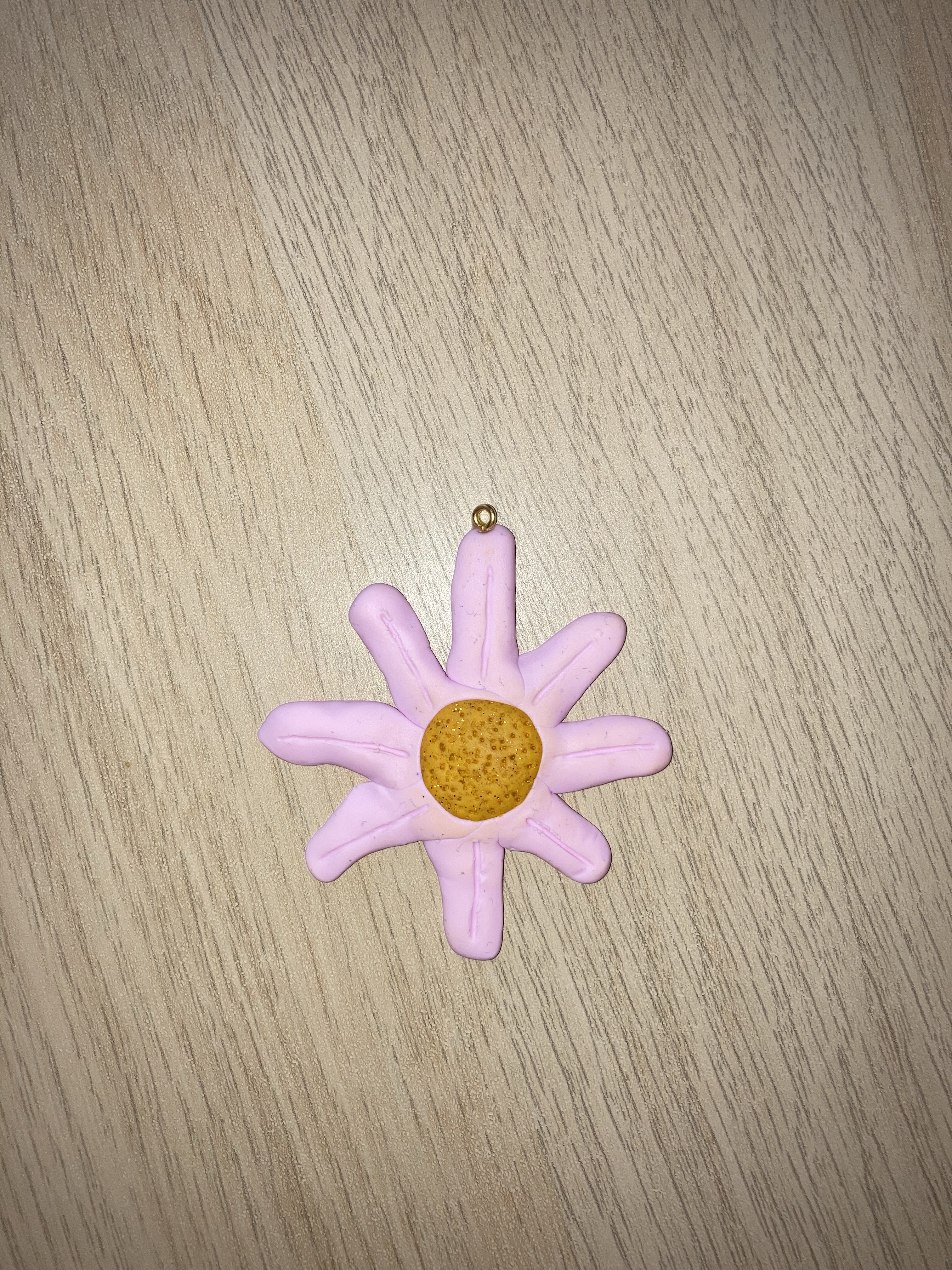
Today, I created a polymer clay flower pendant in just half an hour. I loved the entire process and it turned out quite good. In fact, the only thing I dislike about it is the fact that the eyepin’s direction is off.

I really need to be showing more of my creations on here, I think, as social media hardly work for me. I mean, I do try to use Instagram, although I wish it were more of a microblogging service with the pictures being optional. Then again, that’s what Twitter is supposed to be, but then again I despise Elon Musk. Oh well, the perfect social media platform doesn’t exist.

Don’t Leave Me Alone! #SoCS

I am one of those autistic people who doesn’t like to be left alone. That is, I do need a significant amount of alone time, but it has to be on my terms. That might seem weird or normal, I don’t even know. I mean, I’m used to it being seen as weird here at the care home. Staff see it as a sign that I crave attention somehow. Which, even if it were true, well, attention is a normal human need.

I am not sure where I’m headed with this post, but I often feel like a fake autistic for feeling like I don’t want or need to be left alone when I’m in distress. Probably because my former psychologist at the psychiatric hospital used it as a reason to diagnose me with dependent personality disorder. Which I might have after all, I’m not sure. Then again, the treatment for that isn’t to leave someone to their own resources just like that.

I often have this statement in my head: “Don’t leave me alone!” It is cried out, in my head, by a child’s voice. I am pretty sure it is from a book and in Dutch, it sounds different, but I’m writing it like this here for the purposes of this post. Don’t leave me alone. Never leave me alone. Well, people always will. That’s life.


This post was written for Stream of Consciousness Saturday for this week. The prompt is “left alone”.

ZZZ: Sleep Issues in People With Intellectual and Developmental Disabilities #AtoZChallenge

Hi everyone. Almost every year, my final post in the #AtoZChallenge is about sleep or “ZZZ”. This year is no different.

Sleep problems can affect anyone, disabled or not. However, sleep disorders, including sleep apnea (sleep-related breathing disorder) and insomnia, are more common among people with intellectual disabilities than among the general population. In fact, one review found that as many as 31% of adults with intellectual disability experienced more than one sleep problem. More severely intellectually disabled individuals, those with certain genetic syndromes and those with comorbid neurodevelopmental disorders such as autism, are at particularly increased risk of having more sleep disturbances.

Sleep problems can cause physical and mental health problems in intellectually disabled people just like in the general population. However, they can also contribute to challenging behavior.

There are many factors associated with sleep problems in intellectually disabled people. For example, those with comorbid autism and/or ADHD are at increased risk of having sleep disturbances. Those with certain genetic syndromes, too, may experience certain sleep disorders. I mentioned sleep apnea already in my post on Down Syndrome. People with Smith-Magenis Syndrome, on the other hand, often experience an inverted circadian rhythm.

Environmental factors also need to be considered. For instance, a care home may not be ideal for people with intellectual disabilities to sleep properly due to for example night staff checking on them frequently. This does not happen here. What happens here rather frequently is the reverse, staff leaving clients to “rest” in a sensory room or their bedroom during the day.

The management of sleep disorders in people with intellectual disabilities is somewhat similar to that in the general population. However, more care should be taken to rule out medical conditions such as epilepsy or sleep apnea as the cause for poor sleep. The only medication which is somewhat effective for sleep issues in intellectually disabled people, is melatonin.

Now it’s 10PM and I’m ready for bed myself, I guess.

Youth: Issues Specific to Intellectually or Developmentally Disabled Children #AtoZChallenge

Hi everyone. Phew, we’re almost done with the #AtoZChallenge. For my letter Y post, I thought I’d talk about issues specific to youth with intellectual and developmental disabilities.

Children, disabled or not, by definition, are still growing and developing towards their full potential. As a result, most developmentally and intellectually disabled children and young people will not qualify for long-term care. They are, instead, served under the Youth Act, which falls under the local government. This means that their parents or carers will need to reapply for care at least every year.

Most children with intellectual or developmental disabilities will go to school. Like I mentioned before, those with milder disabilities, due to “suited education”, are forced to go into mainstream classes. This particularly applies to autistic or otherwise neurodivergent children with an average or above-average IQ, but when doing research for this post, I found out that children with a mild intellectual disability (IQ 55-70) won’t qualify for special ed unless they have additional needs too.

Children with moderate to severe intellectual disabilities and those with mild intellectual disabilities and additional issues will usually go into special education. Usually, these schools have different educational levels depending on the severity of the child’s disability. I heard that some schools allow pupils in the highest level to take part in the lowest level regular school, called practice education, part-time. Practice education has only recently become part of the regular, diploma-earning educational system; until I think last year or the year before, pupils in these schools would just earn a certificate.

The most profoundly disabled children, who are deemed “unteachable”, will go to day centers for children and adolescents with intellectual disabilities. Some of these day centers do have a “school prep” group too.

I feel very strongly that “suited education” and the Youth Act leave behind a lot of children with intellectual and developmental disabilities. I mean, the government wants to cut the youth care budget even more and, though I understand this given the fact that one in seven children nowadays receives a form of youth services, this should not affect children with genuine intellectual and developmental disabilities. Like myself twenty to thirty years ago, though in my case being left behind was due to my parents’ denial.

Visibility of People With Intellectual and Developmental Disabilities in Mainstream Society #AtoZChallenge

Hi everyone. I’m really late writing my letter V post in the #AtoZChallenge. I am not too excited about today’s topic either, but that might change as I write. I just came up with it two minutes before opening the new post window on WordPress. Today, I want to talk about visibility of people with intellectual and developmental disabilities in mainstream society.

Until the mid-1990s, individuals with intellectual disabilities were routinely institutionalized on grounds like mine, sheltered away from the general public. While there are advantages to this, it did mean the general population hardly saw any individuals with intellectual disabilities, especially not adults or those with more severe disabilities.

In the 1990s, institutions were often demolished altogether and individuals with even the most severe disabilities were moved into the community. This, however, did little to help society be more accepting of people with intellectual disabilities.

Now, with “suited education”, which was introduced in the mid-2010s, individuals with disabilities are encouraged to attend mainstream education if at all possible. This means that more people with mild intellectual disabilities and other developmental disabilities, who would otherwise attend special ed, are now in regular classes.

I, having been forced into mainstream education with very few accommodations, am not a fan of “suited education”. My opinions on deinstitutionalization are mixed. While I do feel that we need to be allowed to be visible in mainstream society, I do not feel that this is a case of the disabled needing to assimilate or be “normalized”. Truthfully, I do not feel that we need to prove our right to exist beyond the margins. That being said, the reality is that society doesn’t want us. At least, it doesn’t want me, a high support needs autistic and multiply-disabled person. When I still ventured out into the world on my own, I had just a little too many encounters with the police that often weren’t pleasant.

Self-Injurious, Aggressive and Otherwise Challenging Behavior in People With Intellectual or Developmental Disabilities #AtoZChallenge

Hi everyone and welcome to my letter S post in the #AtoZChallenge. Today, I want to talk about self-harming, aggression and other challenging behavior in people with intellectual and developmental disabilities.

Some people erroneously believe that challenging behavior is an intrinsic part of being intellectually disabled. It isn’t. Neither are self-injurious or aggressive behaviors an intrinsic part of autism. These behaviors, however, do happen more often among people with intellectual and developmental disabilities than among non-disabled people.

The causes and reinforcing factors of challenging behavior are often complex. And though I mention them in one sentence, no, a reinforcing factor is not the same as a cause. Furthermore, if removing a reinforcing factor seems effective at reducing or eliminating the undesired behavior, this does not mean the problem is all solved. After all, especially people with intellectual and developmental disabilities who are at a lower emotional level of development or who struggle with communication are at risk of suffering in silence.

It may be tempting to presume motivators behind challenging behavior that are commonly believed to apply to typically-developing young children, such as attention or “getting their way”. Presuming these motivators, even correctly, is not taking into account the fact that people with intellectual and developmental disabilities are firstly not (necessarily) young children. Secondly, you need to realize that, like all people, they have a need for autonomy and attention and many, especially those living in institutions, are heavily lacking in both.

There are, of course, many other contributing factors to challenging behavior. For example, physical discomfort or pain may be a factor for some, especially those with profound intellectual or multiple disabilities. Others may have experienced trauma and struggle with attachment. I for one have relatively mild attachment issues (at least as apparent in my behavior) compared to some of my fellow clients, hence why I always get stuck with the temp workers. This of late has been causing me a lot of distress and has led to significant challenging behavior, which unfortunately for me isn’t significant enough to warrant any changes. Then again, if it did, those changes might well constitute restrictive measures.

Restraints and Other Restrictive Measures in the Dutch Care System #AtoZChallenge

Hi everyone. Today, it’s time for my letter R post in the #AtoZChallenge. I didn’t know what to write about for this post, so I looked at some books for inspiration. Then, the topic of restraints came up. This is quite a controversial one and sadly restraint and other restrictive measures are still commonly used here in the Netherlands. At least here at my current care home.

In the Netherlands, in 2020, the Care and Force Act replaced the law on exceptional admissions to psychiatric hospitals that previously regulated restrictive measures. Under the old law, only those involuntarily committed to care facilities or psychiatric hospitals could be subjected to restrictive measures against their will. This was not to say people weren’t pressured into consenting to restrictive measures. For instance, when I had been at the locked psych unit for a few months in early 2008, I was significantly dysregulated. My doctor told me she was implementing seclusion and, “if it doesn’t work, we’re going to file for involuntary commitment”. She should have said “if you don’t consent”, but I had no idea I even had a right to consent.

Under the Care and Force Act, anyone receiving care can be subjected to restrictive measures, which are euphemistically and rather incorrectly called “involuntary care”. Yes, even people receiving care in their own homes. And like I said “involuntary care” usually isn’t care at all, but are measures to restrict someone’s freedom, often in the absence of appropriate care. For instance, if a person with dementia lives independently, they can be involuntarily prevented from entering their own kitchen if they’re a risk of leaving appliances on.

I don’t know the exact criteria for people to be subjected to restrictive measures. It has to do something with risk of significant detriment to the client or others. I was, at my old home, subjected to some restrictive measures. For instance, several doors were locked at night because I would enter those areas (eg. the kitchen) and be a danger to myself there. Here at my current home, the door to the living room and all entrances are locked at night anyway and have been from before I came here. I do know at least one fellow resident is locked up in her room at night. This, to me, feels a bit unfair, particularly because there’s no night staff directly available and the ones in the main building usually just tell us to go back to sleep when we press the call button.

Restraint specifically – restricting someone’s physical movement – is also commonly used here. I, thankfully, have only been physically dragged by several people a few times and was never shoved to the ground or forcibly held in position.

The author of the book I read, which is a parent’s guide to autism, recommends not reacting to a disabled person’s meltdown at all unless in such a way absolutely necessary to keep them and others safe. I am not sure I agree, since honestly I don’t feel that many people with developmental disabilities do have the self-regulation skills necessary to calm themselves. In my experience, “crying it out” will not teach them those skills, but will teach them that you’re not available. In the same way, I honestly don’t feel that someone will actually have a meltdown just so they can be restrained, as the author claims. I, honestly, have never felt that having my movement restricted was comforting.