Suicidal Ideation in Childhood: Some Reflections

Earlier today, someone online asked a group of autistic women about suicidal ideation in childhood and at what age it started. It is common knowledge that depression and suicidality are near-universal among autistics. After all, we are taught, be it consciously or not, that our autistic way of expressing ourselves is unacceptable.

I remember my first autistic burnout at age five. I don’t have clear, verbal memories of the experience, but my inner five-year-old might and I do experience somatic and emotional flashbacks. The family story about the event is that I was ill with the flu. At the same time (coincidentally or not) my parents were making arrangements for me to start at the school for the visually impaired. I started in mid-May, before the end of the school year.

At the time, I wasn’t actively suicidal as far as I’m aware. I started having those thoughts when I was around age seven. I have a vague memory of telling my mother that I wanted to die sometime around that age.

Interestingly, I never made suicide attempts. Even the times I planned my “final day alive”, I never had any idea how I was going to go about actually doing it. This fact was later used to “prove” that I wasn’t serious.

I mean, when I was 21 and admitted to the psych unit, my parents came to tell the psychiatrist that I’d threatened suicide ever since I was seven-years-old, almost adding triumphantly: “See, and here she is, alive!” They said I just wanted attention.

Then again, is it somehow bad that I, deep down, didn’t really want to die? I just didn’t see any alternative. Of course I didn’t want to die by suicide. I imagine at least most people don’t really want to; instead, they want a better life. But I couldn’t get that at that time or so I thought. Does that make me a bad person? I don’t think so.

It’s so sad that, at least in my family, the red flag of long-time, severe suffering was ignored as a sign of “attention-seeking”. As if a seven-year-old even has the capacity to use suicide threats to manipulate their parents for mere attention without anything else going on with them.

Too Many Toys

Today’s topic for Throwback Thursday is toys and pastimes. The first question Maggie asks in her post is: “Did you have a lot of toys?” The short answer would be that yes, I was privileged to have quite many toys, but I must say I wasn’t so spoiled that I always got the latest trendy toy.

I probably shared this story before, but I played with toys quite a lot until I was at least eleven. By that time, my parents and teachers were looking into options for secondary schools and their opinions couldn’t have been any different: while my parents wanted me to go to mainstream grammar school, my teachers felt special education at their low-level secondary school for the blind, preferably residential, was in my best interest. My mother one day took me for a “mother-daughter walk” explaining the school’s stance and said that the reason they felt I needed residential special ed, was my behavior. That, in turn, she attributed to my having too many toys. The logic, I never quite understood, but it must’ve been something like my being so spoiled that I somehow felt entitled to display challenging behavior.

She went on to explain that, at the residential school, I would only be allowed one doll and one soft toy. She had given me a Barbie doll for my birthday earlier that summer, but told me she regretted it as soon as she received the school’s report. Needless to say, I always felt weird about playing with dolls from that age on, even though I continued to play with toys and dolls and everything until I was at least fifteen.

Fast forward some ten to fifteen years. When I was in my mid-twenties and diagnosed with dissociative identity disorder, I felt it might help my littles (child alters) if we had toys again. I first bought a box of old Barbies for €70 on a marketplace site. That wasn’t a wise decision as, though the box did arrive, the Barbie dolls were in such bad condition I eventually threw them away. I then decided to buy a couple of new ones at a toy store, but the littles hardly played with them. They prefer soft toys.

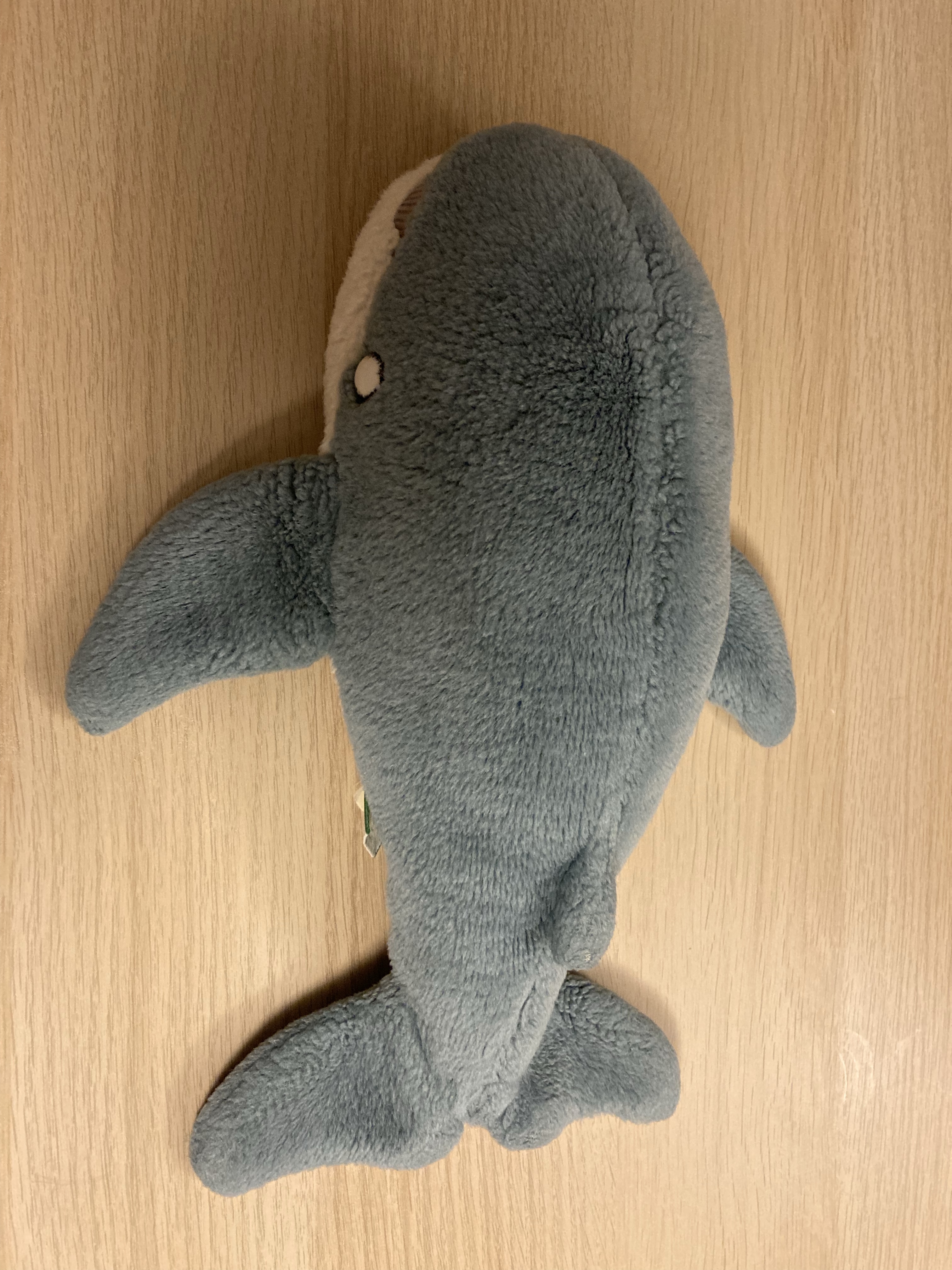
Speaking of which, one of Maggie’s questions is whether you still have any toys from your childhood. I don’t, as they’re probably all at my parents’. However, I do still have my stuffed whale Wally, whom I got when I left the NICU at three-months-old. I still sometimes sleep with it.

Wally

Did you have many toys growing up?

#IWSG: A Good Enough Writing Month?

IWSG

It’s Wednesday again. Specifically, it’s the first Wednesday of the month and this means it’s time for the Insecure Writer’s Support Group (#IWSG) to meet. Last month, I set myself a single goal for the month, which was to publish a blog post each day for the month of October. Originally, I planned to be participating in the 31-day writing challenge too, which is prompt-based, but I quickly gave up on that. I also didn’t set myself a goal of broadening my writing horizons in any specific way. I just wanted to hit that “Publish” button everyday for 31 days. And I didn’t reach that goal.

For this reason, I’m not sure how I feel about my writing over the past month. I mean, I know when I said in my September IWSG post that having published 21 posts in August made it an “okay” month, people responded that they felt this was a huge achievement. I know at one point I struggled to publish one blog post a week too. But I want to keep challenging myself. Then again, maybe I’ve reached my potential.

So, in keeping with yesterday’s post, I’m going to say this past month was good enough with respect to my writing. Not perfect – far from it. But it was good enough.

Now on to this month’s optional question. This month, the question is: what’s harder to do: coming up with your book title or writing the blurb? Now I must say I haven’t attempted to write books since my teens and had no idea authors had to come up with the blurb themselves. I’ve tried writing book blurbs and titles before even writing a single chapter – sort of like pitching a movie idea to Hollywood or whatever.

I honestly didn’t find coming up with titles particularly hard when I still wrote short stories or book manuscripts. That being said, my one published piece – yes, the one I got published in 2015 – is untitled. I also struggle sometimes with coming up with original titles for my blog posts. I mean, for memes like #WeekendCoffeeShare, I’ve gotten used to going with a predetermined format. With other diary-style posts though, I really struggle. And it doesn’t help that I have a weird idea that no two blog posts on my blog can ever have the exact same title.

How was your writing month?

Reclaiming November

Tomorrow is November 1. November is the hardest month of the year, since it is the month in which I ended in crisis in 2007.

Thirteen years later, it was also the month in which I finally broke down and admitted I needed more support than just the care facility’s group home support. On November 8 of last year, I broke down when a staff (the same staff who is now my assigned home staff) asked me to either calm down or go to my room when I was acting irritated at the other clients’ noises. My reaction wasn’t pretty: I hit the staff, screamed I hated her and cried out that indeed, as I’d been saying all along, if I showed who I truly was, she’d abandon me. She didn’t.

During the days that followed, I experienced significant dysregulation, including some near-psychotic symptoms and a lot of sadness. One day, I was crying my eyes out in my room when another staff came in and said she was going to spend her entire two-hour shift with me. We talked and she asked me whether I’d ever heard of one-on-one support. I had, but asked her to elaborate anyway. She did and asked me whether I wanted that. “Yes,” I said. The next day, the staff I’d hit and my then assigned home staff made the paperwork in order, because I had to sign a letter to the manager formally asking for more support. By mid-November, the wheels were set in motion for me to get one-on-one support and my one-on-one was pretty soon effectively started.

Now, as we’re approaching another November, I’m reclaiming the month. I don’t want this to be the month I landed in crisis so many years ago for the rest of my life. Instead, I want it to be the month I chose to get the support I need. I am choosing to stand up for myself, not just because crisis states force me, but because I have a right to do so.

Joining My Vivid Blog’s prompt: “Tomorrow”.

We Are Cinderella!

Hi all! Today, I discovered Throwback Thursday. Well, I had heard of it before, but always assumed it was an image-based blog hop, as this is what the term usually means. Not so in this case. Lauren and Maggie’s Throwback Thursday allows us to write a post taking a stroll down memory lane. I’m pretty sure photos are allowed, but the main focus seems on writing. Today’s topic is nicknames.

I have had many nicknames throughout my life. Some are derived from my name. For example, many people simply abbreviate “Astrid” to “As” and my spouse and in-laws then add the commonly-Dutch “-ie” suffix for “little”, so my nickname becomes “Assie”.

Then there are these nicknames that are based on some letters out of my name but not many. An example is the Dutch word “asbak” (which translates to “ashtray)”. I hate that nickname with a vengeance.

Another one is “Assepoester”. This is the Dutch name for Cinderella in the fairytale. I don’t like the Dutch nickname, but I for one do relate to Cinderella, particularly to the feeling of having to be transformed by a fairy (ie. put on a mask) in order to be acceptable as I am.

For this reason, I sometimes still use Cinderella as my nickname. That is, I do so when referring to myself and my multiple alter personalities (dissociative identities) as a system. Usually, I refer to the collective as Astridetal, as in my blog’s URL, but at one point we felt somehow like we needed a collective name that didn’t claim that Astrid was the “owner” of everyone else. So Cinderella System was born!

Did or do you have any interesting nicknames?

The Best Decision of My Life

I really want to write, but, as usual when I’m like this, so much is spinning through my mind that I cannot ultimately get anything out of my fingertips. To get myself started, I decided to look at the book Journaling with Lisa Shea and picked one of the journaling prompts on gratitude. It asks us what the best decision of our life was. Was it an easy decision or a hard one? I’m pretty sure I already covered this topic several years ago, but the answer may be different now.

After all, up till quite recently, I would have said the best decision I ever made was to consent to being admitted to the psychiatric hospital in 2007. That, after all, set in motion the wwheels that ultimately got me into the care system. However, looking back, I could just as easily have selected my choice to go to the blindness rehabilitation center in 2005 rather than to university. After all, that was what led me to the training home and to my autism diagnosis.

I honestly don’t want to give the psychiatric hospital people, particularly my last treatment team, the credit they get if I say that getting admitted was my best decision ever. After all, like I have said before, I didn’t make much progress in those 9 1/2 years in the hospital. Worse yet, the only difference between my care arrangement before the hospital and after it, was that my husband was now in my life. My husband deserves the kudos for that, not any mental health professional.

Instead, the best decision I ever made, I made rather offhandly on September 20, 2018. This was the decision to allow my support coordinator to schedule an appointment with her regional care consultant on getting me into long-term care. The appointment itself took place on October 4.

I say I made the decision rather offhandly, in that we were discussingn living options and I eventually said, sort of half-heartedly: “Okay, you can ask your care consultant to come.” In truth, the decision was a really hard one.

Even though I had planned on going into supported housing ever since my initial psych hospital admission in 2007, it felt kind of like I was betraying my husband, my parents, my former treatment team and everyone else by admitting this is what I needed. For this reason, my husband’s first words when I said my support coordinator had scheduled the appt with her care consultant, were very comforting: “You know I support you, right?”

My Relationship With the Night

I have a really complicated relationship with the night. On the one end, I’m a true night owl and can enjoy sitting up late reading a book or browsing the Internet. Before the Internet, I used to listen to a talk show on Dutch public radio called “Night shift” on weekend nights between 2AM and 6AM. The show might’ve aired on week nights too, but I wouldn’t allow myself to stay up past 1AM then. (Yes, I wouldn’t allow myself. My parents didn’t set a bedtime for me past age ten or so.) In the show, people called in to ask for advice or opinions on sometimes rather mundane topics, such as the difference between fruit and vegetables.

One time, a woman called in to ask for opinions on her eye condition. She literally had a hole in her eye, she explained, which she could see when there was static on TV. The hole, however, also meant she was unable to see facial expressions, which limited her card-playing ability. She assumed that and wanted opinions on whether she could have gotten the hole because of fifteen years of almost daily crying. I don’t know whether she ever received a satisfactory answer, but I do know that story brought chills to my spine.

As I said, I’m a true night owl. Others might call me an insomniac. In fact, I’m pretty sure my relationship with sleep and the night was rather unhealthy for most of my life. As a young child even, I used to stay up late at night worrying about things I’d seen in the news, things I’d heard or experienced during the day, etc. My parents hardly comforted me. In fact, they pretty much left me to my own resources. That’s one reason they didn’t set a bedtime for me.

When I lived on my own in 2007, I had an even worse relationship with the night. I developed something akin to OCD that mostly showed up at night. I had to check each night whether my alarm was on, door locked, windows open, heating off, electronics unplugged and I’m pretty sure I forgot something. I’d spend hours going through my apartment checking each several dozens of times.

During the last week of my living on my own, I’d often leave my apartment in the dark to go outside and wander the streets. I still get flashbacks of this darkness now.

Once in the psych hospital, the first medication I was put on, was temazepam, a sleeping pill. That worked for all of two weeks. Then I got put on Nozinan, a strong sedative, which however kept me drowsy for most of the day too. Then followed nitrazepam and diazepam until I finally decided I’d rather have insomnia without meds than with meds.

I eventually did have to go on meds after all, but these were daily meds. I currently don’t experience severe insomnia, but I do experience disrupted, restless sleep and nightmares. I did back in 2007 too, but, though I did mention it when admitted to the hospital, it never got paid attention to. Thankfully, my latest addition to my psych med combo, topiramate, does help with this.

This post was written for today’s Tourmaline’s Halloween Challenge prompt: night.

Do-Re-ME: My Favorite Music

Today, I came across Leslie’s Where Bloggers Live. This month’s theme is favorite music.

I am a kid of the 1990s, so, though my parents had a record player, I mostly grew up with cassette tapes and CDs. I remember my father (who was a stay-at-home Dad until I was thirteen) would also often have the radio on in our living room. He generally listened to public radio stations, which didn’t play the latest music and generally were more talk-focused anyway.

As a child and preteen, I was clueless about pop music. I remember the odd ’80s or early ’90s Dutch song, but I had no idea what was “hot”. My parents, aside from public talk radio, listened to 1970s protest songs.

When I was eleven in 1997, my mother encouraged me to develop an interest in music in order to “fit in”. For this reason, I pretended to be into the Backstreet Boys, even though I’d never consciously listened to any of their songs. In reality, I continued to listen to children’s songs for years. In fact, when I went to summer camp in Russia with a group of other teens at age fourteen, I was made acutely aware that listening to children’s songs was definitely not appropriate for someone my age.

I got a stereo player for my twelfth birthday in 1998 and I did buy the odd CD to play on it. I was mostly into ABBA or its upbeat cover band the A-Teens (which I spelled “eighteens” for years). Once I got into mainstream high school in 1999, I occasionally bought CDs recommended by other students in the school newspaper. I still to this day love The Corrs.

I eventually started listening to commercial radio stations at around age fifteen, but I never quite developed a truly defined taste in music. I still like to listen to all kinds of music. Some days, I’m into Dutch songs, usually dialect rock (such as Normaal or Mooi Wark) or truck driving songs. Other times, I’m into Celtic folk, country (usually 1970s songs such as by Bobby Bare or Buck Owens) or southern rock. Still other times, I’m into contemporary Christian music. Sometimes, quite the opposite. I even have a “Punk etc.” playlist on Spotify with songs from the likes of Cock Sparrer. I don’t really listen to that anymore though. Occasionally, I’ll revisit an old favorite genre of mine: world music.

When my now husband and I first met, he asked me what kinds of music I liked. I replied that I liked world music. Once, several years later, I played a favorite CD of mine with Latin music on it, which I’d had in mind at the time. He was glad he hadn’t known back then that this was what I’d meant or he might not have decided to meet me again. He, by the way, was the one who introduced me to most of my current favorite genres and artists.

#IWSG: Drawing the Line

IWSG

It’s the first Wednesday of the month and this means the Insecure Writer’s Support Group (#IWSG) is meeting. It doesn’t matter that it’s Blogtober and the 31-day writing challenge is running. It’s already past 8PM as I write this, so I probably won’t have time for a separate post for these challenges. Maybe I’ll catch up with the word prompts from the latter challenge tomorrow. Maybe not.

For those visiting from #Blogtober21 or the 31-day writing challenge anyway, the Insecure Writer’s Support Group gathers each first Wednesday of the month to discuss our writing insecurities, fears, successes and setbacks. There is also an optional question each month.

First, let me share that I did quite well in the writing department over the past month. I published 22 blog posts in September, one more than in August. I also think I did an okay job of broadening my writing horizons. I (re)discovered the diary app Diarium and did an okay job keeping a journal in there for part of the month. Not so much in October so far.

For October, my goal is just to write a blog post everyday in keeping with the challenges I’m participating in. I may or may not go with the 31-day writing challenge word prompts. I don’t really intend to write much in the way of fiction or poetry, but who knows where my muse will lead me?

Now on to this month’s optional question: where do you draw the line with respect to topics or language?

First, I have a clear line relating to language: I don’t swear in my writing. Even when one of my angry alters was writing on here and tried to drop an F-bomb, I censored it out. I do occasionally use bad language on social media. I don’t use profanity though and haven’t for a long time, even before I became a Christian. I in fact find unnecessary use of foul language (which is most use of foul language) quite offputting in my reading too.

With respect to topics, well, since I write mostly autobiographical musings on here, I draw the line where I invade other people’s privacy. For example, when I mention my husband, I make sure it’s in a lighthearted way. I won’t write about our arguments, about our intimate life, etc. I do need to say though that I had to learn to shut up about such topics the hard way. In fact, my husband still likes to jokingly remind me of a post I published on an old, now-private blog in 2008 in which I described my expectations should he and I become a couple officially. In particular, he likes to tease me about calling him a “kid”.

For clarity’s sake, I am not and never was one to describe violence, sex etc. in detail. Even when I still did describe my fights with my parents or my intimate life with my husband, I didn’t use explicit language. Similarly, when I write fiction or poetry, I must say, I generally keep my language quite non-explicit too. I do write about dark topics, but usually by trying to convey the emotions rather than going into detail about the actual facts.

Why I’m Content in My Current Care Facility #31Days2021 #Blogtober21

Last Thursday, like I mentioned before, I had my care plan review here at the long-term care facility. It was my first one, even though I’ve been living here for two years, because last year’s got canceled due to COVID. As we were discussing my progress over the past two years and my wishes for the future, I said that I’m about 95% sure I want to stay here. That’s huge for me, as I’ve been constantly on the lookout for another place to move to particularly over the past year.

This brings me to today’s prompt in the 31-day writing challenge: content. I at first wasn’t sure what to write about on this word. I mean, I wanted to write why I’m content living here, but somehow it felt kind of off. Then I read Lesley’s contribution to the challenge, Contentment Without Complacency, and realized that being content where you are doesn’t mean there’s no ground for improvement. So, with no further ado, I’m going to share why I’m content living in my current care facility.

First of all, I love the way my staff support me. As regular readers of this blog will know, I’ve had quite the journey through the care system. I resided in a mental hospital for 9 1/2 years, where there was constant pressure on meeting goals and getting better. Before that, I lived on my own and, before that, in a training home. As the name suggests, it was heavily focused on independence training.

For those not aware, my current care facility primarily caters to people with an intellectual disability. All other clients in my specific home have severe to profound intellectual disabilities. For this reason, my staff are used to helping them with everyday activities such as mealtimes, personal care, etc.

They are also used to clients needing staff to realize that correcting challenging behavior will not be effective. Whereas in the mental hospital, I used to be often left to my own resources if I’d done something self-destructive, now my staff provide me with affectionate care. This might be seen as reinforcing the behavior, but in my experience, quite the opposite is true.

In addition to liking my staff’s care approach, I like my fellow clients’ lack of social expectations of me. One of my fellow clients will occasionally come to my room asking me to wish him goodnight, but other than that, the clients hardly interact with me. One wish for the future that I voiced at my care plan review, is more interaction with other people, particularly those of higher intellectual level. I do have a couple of friends in other care homes that are part of the complex, whom I talk to when going to the day center or when outside. I however am grateful that I don’t live with these people 24/7.

I also like my room. Some staff call it an apartment, since I have my own bathroom and small kitchenette. I also have my own balcony. I honestly haven’t had a better room in any of my previous places in the healthcare system.

Overall, the reason I’m not 100% sure I want to stay here, doesn’t seem to have to do with my facility itself. It is rather related to my own anxieties and insecurities. Of course, things could always be better, but that doesn’t mean I’m not content exactly where I am right now.