Youth: Issues Specific to Intellectually or Developmentally Disabled Children #AtoZChallenge

Hi everyone. Phew, we’re almost done with the #AtoZChallenge. For my letter Y post, I thought I’d talk about issues specific to youth with intellectual and developmental disabilities.

Children, disabled or not, by definition, are still growing and developing towards their full potential. As a result, most developmentally and intellectually disabled children and young people will not qualify for long-term care. They are, instead, served under the Youth Act, which falls under the local government. This means that their parents or carers will need to reapply for care at least every year.

Most children with intellectual or developmental disabilities will go to school. Like I mentioned before, those with milder disabilities, due to “suited education”, are forced to go into mainstream classes. This particularly applies to autistic or otherwise neurodivergent children with an average or above-average IQ, but when doing research for this post, I found out that children with a mild intellectual disability (IQ 55-70) won’t qualify for special ed unless they have additional needs too.

Children with moderate to severe intellectual disabilities and those with mild intellectual disabilities and additional issues will usually go into special education. Usually, these schools have different educational levels depending on the severity of the child’s disability. I heard that some schools allow pupils in the highest level to take part in the lowest level regular school, called practice education, part-time. Practice education has only recently become part of the regular, diploma-earning educational system; until I think last year or the year before, pupils in these schools would just earn a certificate.

The most profoundly disabled children, who are deemed “unteachable”, will go to day centers for children and adolescents with intellectual disabilities. Some of these day centers do have a “school prep” group too.

I feel very strongly that “suited education” and the Youth Act leave behind a lot of children with intellectual and developmental disabilities. I mean, the government wants to cut the youth care budget even more and, though I understand this given the fact that one in seven children nowadays receives a form of youth services, this should not affect children with genuine intellectual and developmental disabilities. Like myself twenty to thirty years ago, though in my case being left behind was due to my parents’ denial.

Visibility of People With Intellectual and Developmental Disabilities in Mainstream Society #AtoZChallenge

Hi everyone. I’m really late writing my letter V post in the #AtoZChallenge. I am not too excited about today’s topic either, but that might change as I write. I just came up with it two minutes before opening the new post window on WordPress. Today, I want to talk about visibility of people with intellectual and developmental disabilities in mainstream society.

Until the mid-1990s, individuals with intellectual disabilities were routinely institutionalized on grounds like mine, sheltered away from the general public. While there are advantages to this, it did mean the general population hardly saw any individuals with intellectual disabilities, especially not adults or those with more severe disabilities.

In the 1990s, institutions were often demolished altogether and individuals with even the most severe disabilities were moved into the community. This, however, did little to help society be more accepting of people with intellectual disabilities.

Now, with “suited education”, which was introduced in the mid-2010s, individuals with disabilities are encouraged to attend mainstream education if at all possible. This means that more people with mild intellectual disabilities and other developmental disabilities, who would otherwise attend special ed, are now in regular classes.

I, having been forced into mainstream education with very few accommodations, am not a fan of “suited education”. My opinions on deinstitutionalization are mixed. While I do feel that we need to be allowed to be visible in mainstream society, I do not feel that this is a case of the disabled needing to assimilate or be “normalized”. Truthfully, I do not feel that we need to prove our right to exist beyond the margins. That being said, the reality is that society doesn’t want us. At least, it doesn’t want me, a high support needs autistic and multiply-disabled person. When I still ventured out into the world on my own, I had just a little too many encounters with the police that often weren’t pleasant.

Learning to Swim

Today’s topic for Throwback Thursday is “learning to swim”. There are no specific questions, but we are allowed to interpret the topic as we see fit. Here goes.

I got my first swimming lessons at the special school for the visually impaired I attended from first up to third grade. I, however, was very scared of the water and particularly of the deeper end. I vividly remember my teacher taking me to the deep end and my anxiously asking her if she could stand there. She was quite tall, but even so, she couldn’t. That scared me intensely.

According to my parents, my teachers were just overprotective, so my parents put me in swimming lessons at the pool close by their home. I didn’t need to start at the really shallow end, as I had had some swimming experience already, but could start at the 90cm deep second pool. Within a week, I was moved to the 110cm deep third pool, even though I think I protested.

It took me several more years before I earned my first swimming diploma. This first diploma at the time required students to be able to do breaststroke and backstroke, to swim one pool length with loose-fitting clothing, to tread water, etc., but it did not require students to swim underwater.

By the time I got my diploma, I had transferred to another school for the blind, where I had once again been put into the relatively shallow pool. I proudly showed my teachers my swimming diploma that I’d earned at home and was reluctantly transferred to the deep end.

From earning my first swimming diploma to my second, it took me only about eight months. The second diploma required students to swim 7m underwater. There was no way I could see whether I’d passed the 7m mark, so I had to guess. According to my parents, I swam about 11m.

After that, I had swimming lessons for the next three years that I was at various schools for the blind, but I never earned any more diplomas or certificates. The reason was, once again, the fact that my fear started to act up. After all, I wouldn’t swim under a mat. My parents, however, were okay with it this time. After all, my sister never moved beyond her second swimming diploma either.

I now can swim in a pool or lake. When my parents took me and my sister on vacation to Vlieland, I would also sometimes swim in the North Sea. I doubt I’d be able to save myself should I get underwater unintendedly though.

Childhood Creative Endeavors #AtoZChallenge

Hi everyone and welcome to my letter C post in the #AtoZChallenge. Today, I initially wanted to write about cardmaking, but I don’t feel like that now. Instead, I’m going to talk about my creative endeavors as a child.

As a young child, I had a bit of useable vision that allowed me to use colors sort of appropriately (that is, as appropriately as a sighted child my age could). I loved learning about the names of unusual colors. I remember, in particular, learning that the sixth color of the rainbow is indigo, which I was fascinated by.

I could do some basic drawing too. In Kindergarten, I went to mainstream school with hardly any accommodations. I remember having to color inside the lines of a piece of paper, giving each little shape within the drawing a different color and not leaving any white. When, several years later, I looked at it, I saw considerable white. I have no idea how I compared to the other kids though.

By the age of eight, I’d lost the ability to tell most shades of green and blue apart, but I continued to love drawing until I was about age twelve. Then, I realized I’d lost so much vision that it’d make no sense. Even so, before then, my drawings up till that age remained comparable to a Kindergartner’s in quality.

When I went to special education, I was taught other creative activities. I remember making at least a dozen origami frogs in second grade. However, my teacher did at one point write on my report card that she wished she were two teachers so that she could teach together. In other words, I required so much attention that she’d really need to split herself in half to be able to teach the class too.

My parents bought a pottery kiln when I was about eleven, so I also tried my hand at ceramics. I wasn’t too good at it, leaving fingerprints on my work all the time, but at least I enjoyed the process.

Writing also was a lifelong passion of mine. I can’t, in fact, remember a time when I didn’t enjoy writing. At first, I’d make up stories to go along with my drawings. As a tween and teen, I wrote stories that were somewhat or very much related to my real life. My greatest achievement is a work in progress, a young adult novel by the working title of “The Black Queen” about a teen whose mother has multiple sclerosis. This story, though it had autobiographical elements, was inspired by a conversation I overheard about a classmate.

Did you love creative activities as a child?

Report Cards and Progress Reports

Today’s topic for Throwback Thursday is report cards and progress reports. I am going to write mostly about traditional report cards in school, not the many psychological reports I had written about me during my childhood and adolescence.

Looking back, I was a good student academically, but it didn’t show on my report cards during elementary school. I attended special education and my teachers didn’t really believe I was more than just average intellectually. In fact, when I had a nationally standardized test in the sixth grade, the school’s principal called my parents in utter disbelief to tell them I had gotten a very high score. My father was like, duh, I told you so.

My behavior did get reported on. Though I had severe social and emotional challenges, I always got average ratings on those things that mattered to the teachers. I remember one day feeling disappointed when my rating on “correct behavior” had been lowered from the previous report card even though as far as I knew I hadn’t made mistakes about addressing the teachers formally.

In high school, I did get actual grades. Not letters here in the Netherlands, but numbers between one (worst) and ten (perfect). In my first year at grammar school, I got a lot of tens. These did get my classmates envious, so sometimes I’d argue for a lower grade. For instance, I had a ten on a drawing theory test and I hadn’t done any of the other drawing assignments because, well, I’m blind. Initially, I got a ten on my report card because that was the only grade I had. My classmates protested and my father and I agreed. Then the grade got lowered to an eight, reflecting the fact that I’d gotten a ten on that test and a six (barely passing) on drawing in general just for participating in the class.

Once in my third year, I was rebelling and hardly studying at all, so I did earn a few ones. One time, in my fifth year in high school (eleventh grade), I got a one in French for not doing an assignment because I’d had to do it with a partner and I hadn’t been able to find a partner, because I’d felt too anxious to ask anyone.

I wasn’t really punished harshly for failing grades or rewarded for good grades, but I did know I was expected to excel. Often, my parents made me do extra work, particularly before I was mainstreamed at grammar school.

My best subjects in elementary school were math and geography. In high school, those changed to languages, because high school math requires much more non-verbal intelligence and insight, something I don’t have. My best grade on my final high school exam was in English.

Now, as an adult, I do have an English-language blog, but I don’t think I learned to blog in high school. After all, despite the fact that grammar school is the highest level high school, I really wasn’t all that good at English after graduation. Other than English, I don’t use anything I learned in school really. I mean, during my year in special ed secondary school, textile arts was my worst subject and now I like to do macrame. Go figure.

Friends and Buddies

This week’s topic for Throwback Thursday is friendship. I was never really good at making friends. I still don’t have any real friends other than my husband. I mean, of course I could consider some of my fellow clients “friends”, but our relationship isn’t as deep as that of normal adult friendships.

In early childhood, I did have one friend. Her name was Kim and we used to make mud castles together. Or anything out of sand and water really. Kim’s last name translates to “peat” and my father used to jokingly call her “Kim Mud” rather than “Kim Peat”.

When I went to the special school for the visually impaired at the age of five, I started in a first grade class despite being of Kindergarten age. All girls in my class were at least a year older than me and they enjoyed “babysitting” me. In exchange, for the next three years, I’d help them with their schoolwork.

By the age of nine, I transferred to a different school for the blind. Though I did have a friend there, I was also an outcast and got heavily bullied.

My best time socially was my one year at the special ed secondary school for the blind. I had one good friend there, but also got along pretty well with everyone else in my class and most kids in my school in general.

All that changed when I entered mainstream high school at the age of thirteen. Within a month, everyone had formed cliques except for me. A few months later, my favorite clique took me under their wing and pretended to be my friends, only to drop me again when they’d had enough of me. I was friendless for the remainder of the six-year program. I didn’t really care. Or maybe I did, but I was determined to show my parents and teachers that I could earn a mainstream high level high school diploma. And I did. Not that I use it for anything now, but oh well.

Another topic mentioned in the Throwback Thursday post title at least is buddies. This reminds me of the autistic student buddy program I was part of during my two months of attending university. This program assigned a psychology student volunteer buddy to an autistic student to help the autistic with planning their coursework or other activities related to their studies. It worked in theory, but the catch was that these buddies were volunteers helping only with certain things for one or two hours a week at most. At the time, you couldn’t get paid support workers for assistance related to college or university studies, as the reasoning was that if you could be a student in college or uni, you should be able to do the planning and related tasks yourself. Needless to say my buddy got overwhelmed within a week. I feel intensely sorry for her.

The reason I mention this, besides it being in the post title, is the fact that I realize I struggle to maintain a distinction between social and professional relationships and, with the buddy, things got even muddier. I mean, friendships are supposed to be reciprocal, while professional relationships are not. For this reason, I am allowed to unload my shit to a professional without needing to listen to theirs. Professionals, however, get paid, while friends don’t. With the buddy, the situation got complicated, in that my fellow students called on my buddy to calm me when I was in a meltdown. That clearly wasn’t her role.

This thing about lack of reciprocity, however, also probably killed off that mainstream high school friendship I pretended to have. I don’t blame myself entirely though: my so-called “friends” also felt obligated to hang out with me out of pity, and that’s never a good reason to be someone’s friend.

Suicidal Ideation in Childhood: Some Reflections

Earlier today, someone online asked a group of autistic women about suicidal ideation in childhood and at what age it started. It is common knowledge that depression and suicidality are near-universal among autistics. After all, we are taught, be it consciously or not, that our autistic way of expressing ourselves is unacceptable.

I remember my first autistic burnout at age five. I don’t have clear, verbal memories of the experience, but my inner five-year-old might and I do experience somatic and emotional flashbacks. The family story about the event is that I was ill with the flu. At the same time (coincidentally or not) my parents were making arrangements for me to start at the school for the visually impaired. I started in mid-May, before the end of the school year.

At the time, I wasn’t actively suicidal as far as I’m aware. I started having those thoughts when I was around age seven. I have a vague memory of telling my mother that I wanted to die sometime around that age.

Interestingly, I never made suicide attempts. Even the times I planned my “final day alive”, I never had any idea how I was going to go about actually doing it. This fact was later used to “prove” that I wasn’t serious.

I mean, when I was 21 and admitted to the psych unit, my parents came to tell the psychiatrist that I’d threatened suicide ever since I was seven-years-old, almost adding triumphantly: “See, and here she is, alive!” They said I just wanted attention.

Then again, is it somehow bad that I, deep down, didn’t really want to die? I just didn’t see any alternative. Of course I didn’t want to die by suicide. I imagine at least most people don’t really want to; instead, they want a better life. But I couldn’t get that at that time or so I thought. Does that make me a bad person? I don’t think so.

It’s so sad that, at least in my family, the red flag of long-time, severe suffering was ignored as a sign of “attention-seeking”. As if a seven-year-old even has the capacity to use suicide threats to manipulate their parents for mere attention without anything else going on with them.

Too Many Toys

Today’s topic for Throwback Thursday is toys and pastimes. The first question Maggie asks in her post is: “Did you have a lot of toys?” The short answer would be that yes, I was privileged to have quite many toys, but I must say I wasn’t so spoiled that I always got the latest trendy toy.

I probably shared this story before, but I played with toys quite a lot until I was at least eleven. By that time, my parents and teachers were looking into options for secondary schools and their opinions couldn’t have been any different: while my parents wanted me to go to mainstream grammar school, my teachers felt special education at their low-level secondary school for the blind, preferably residential, was in my best interest. My mother one day took me for a “mother-daughter walk” explaining the school’s stance and said that the reason they felt I needed residential special ed, was my behavior. That, in turn, she attributed to my having too many toys. The logic, I never quite understood, but it must’ve been something like my being so spoiled that I somehow felt entitled to display challenging behavior.

She went on to explain that, at the residential school, I would only be allowed one doll and one soft toy. She had given me a Barbie doll for my birthday earlier that summer, but told me she regretted it as soon as she received the school’s report. Needless to say, I always felt weird about playing with dolls from that age on, even though I continued to play with toys and dolls and everything until I was at least fifteen.

Fast forward some ten to fifteen years. When I was in my mid-twenties and diagnosed with dissociative identity disorder, I felt it might help my littles (child alters) if we had toys again. I first bought a box of old Barbies for €70 on a marketplace site. That wasn’t a wise decision as, though the box did arrive, the Barbie dolls were in such bad condition I eventually threw them away. I then decided to buy a couple of new ones at a toy store, but the littles hardly played with them. They prefer soft toys.

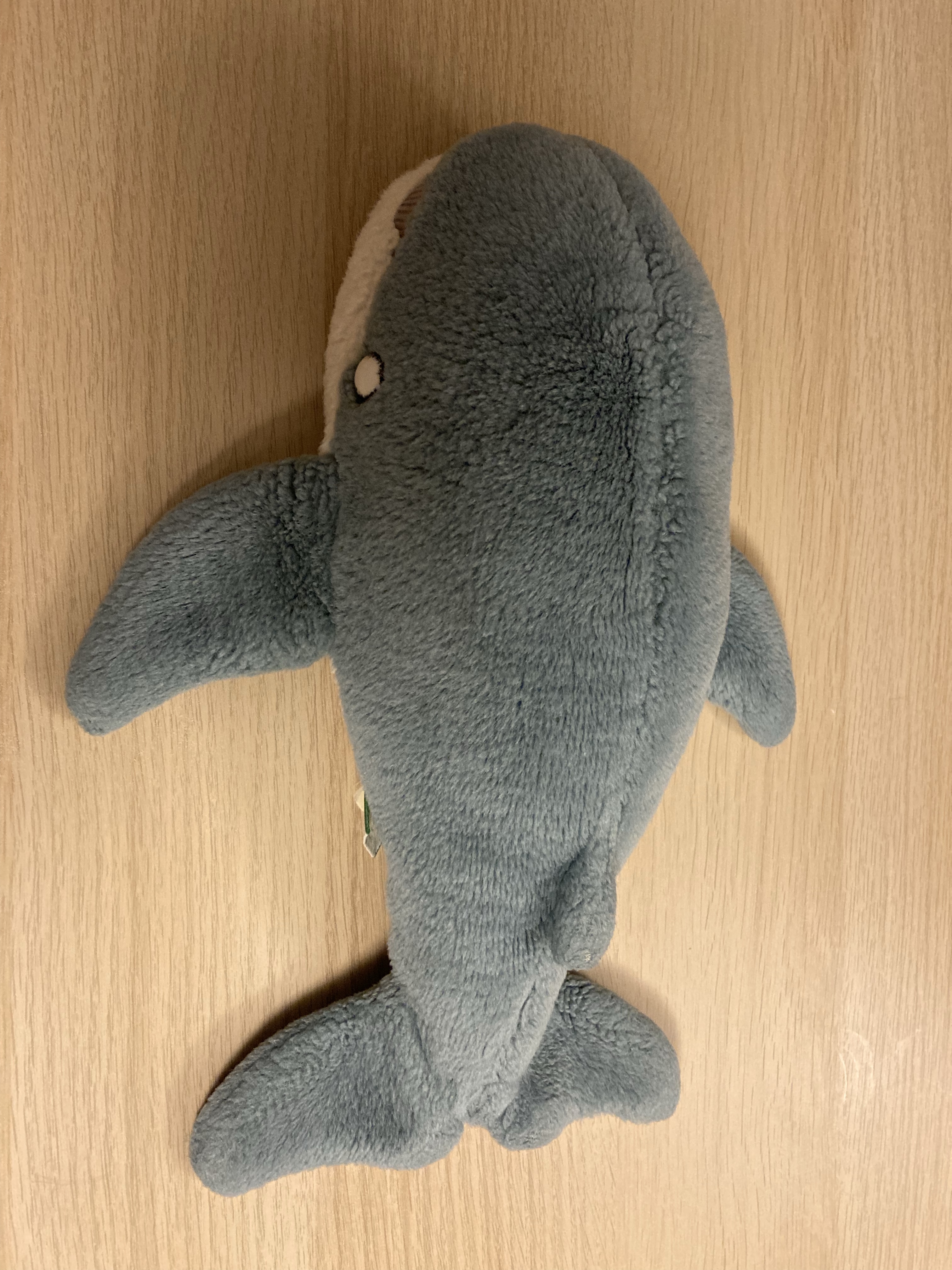
Speaking of which, one of Maggie’s questions is whether you still have any toys from your childhood. I don’t, as they’re probably all at my parents’. However, I do still have my stuffed whale Wally, whom I got when I left the NICU at three-months-old. I still sometimes sleep with it.

Wally

Did you have many toys growing up?

Lifelong Learning

I discovered 10 on the 10th last month, but didn’t feel like joining in at the time. Yesterday, a new edition went live and the topic is lifelong learning in honor of back-to-school season. I’m joining in today, as I loved the questions. Here goes.

1. How old were you when you started school? Did you attend pre-kinder and/or kinder or go straight into first grade?
I started in preschool at age three and in Kindergarten at age four. Here in the Netherlands, Kindergarten takes two years, although the first year (when children are four) wasn’t mandatory back in my day. It is now.

2. Were you a good student? What was your favorite subject?
In terms of academic performance, I was above-average in most subjects once I was properly educated. I added that last bit because, at my first special education school for the visually impaired, where I attended first till third grade, I was a little behind in reading and writing due to several factors. These included poor teaching and the fact that I didn’t start learning Braille till second grade, so had to pretty much start over learning to read and write then.

In terms of behavior, I did okay. I am autistic (undiagnosed at the time), so I did have my challenges, but I wasn’t the type to stir up trouble in school on purpose.

My favorite subject was math for most of elementary school and my first year in secondary school. Then, once I was mainstreamed at a high level high school and math became one of my hardest subjects, I started to like languages more. At the end of secondary school, my favorite subject was English.

3. As a child, did you take music lessons? Or play a sport? Do you still play an instrument now?
No, not at all! Contrary to the stereotype of blind people, I’m not musically-talented at all. Neither am I good at sports. I did attend a children’s choir for some years though, but mostly just hummed along.

4. Did you attend any kind of training or classes beyond high school? If so, what did you study? Did you wind up working in a profession or job for which those classes or training prepared you?
I went to college for one year to study applied psychology and to university for two months to study linguistics. I did get my foundation (first year certificate) in applied psychology, but didn’t get any credits in the linguistics program. Oh, I did take some classes at Open University (psychology once again) in 2009. I don’t need any education for what I do now (day activities for the disabled).

5. Have you taken any personal growth or adult education classes for fun? During the year that was Covid, did you home school, learn a new app to work from home, teach yourself to do something you might have paid someone else to do for you?
Uhm, not really. I am mostly self-taught where it comes to crafts and stuff. I would really like to take some classes in maybe crafting or writing someday, but not sure.

6. What would you like to learn how to do that you don’t know how to do already?
Right now, obviously I’d like to learn more crafting techniques, particularly polymer clay.

7. Name something that you learned easily. Then name something that was a struggle for you to learn to do.
As a child, reading print came easily to me. I taught myself to read at about age five. Reading Braille, on the other hand, was a struggle, mostly because I didn’t accept the fact that I was going blind.

8. What’s the last thing you remember learning? What kind of learner are you: visual, auditory, hands-on/kinesthetic, verbal, logical/mathematical?
The last thing I learned was moving a polymer clay slab from the work surface without distorting its shape (too much). I am probably a mix of a kinetic/hands-on and a verbal learner. I don’t do well with spoken instructions though. Rather, I need to read them.

9. Hard to teach an old dog new tricks, school of hard knocks, pass with flying colors, learn by heart, burn the midnight oil, pull an all-nighter, play hooky – which of these expression best fits your life lately? Why?
Pull an all-nighter, I guess. I’m often up late hyperfocusing on my latest obsession (currently polymer clay) and learning new things about it.

10. What is something you’ve learned from past mistakes?
To follow my own plan rather than relying on what others want me to do. As regular readers may know, I suffered autistic burnout in 2007 when at university trying to live on my own. This was what my parents wanted me to do. I ended up in the psych hospital only to be kicked out 9 1/2 years later almost with no after care even though I had hardly improved, only because I’d met my husband and my psychologist figured that if I was married I should be able to live with him. I didn’t cope and thankfully successfully fought for long-term care. This has been the best decision of my life.

What have you been learning recently?

Free to Belong in Long-Term Care

Today, one of Mama Kat’s writing prompts is to write a blog post inspired by the word “Free”. This definitely appealed to me, as a survivor of childhood trauma as well as abuse in the psychiatric system that continued until I was 30.

Last Tuesday marked the five-year anniversary of the opening of my current care facility. It also was the day I was here eighteen months. Five years ago, I myself still resided in the psychiatric hospital. Some of the worst abuses of power of my psychiatric hospital stay hadn’t even happened yet.

As a child, I suffered significant trauma both at home and at school. Most of it left only invisible wounds, but these are as deep as any physical wounds could’ve been.

Like I said on Sunday, my parents fought my schools, especially special ed, all the time. As a result, I endured frequent school changes and was at the center of conflicts pretty much my entire childhood. Whenever I had adapted to a school environment, I was removed again. I also didn’t have the opportunity to form lasting friendships. The feeling that I didn’t belong anywhere, was instilled in me from an early age.

When I finally moved to the mainstream high school my parents deemed best for me, I knew within a month that I didn’t belong here either. I managed to finish the grammar school program and graduate in 2005.

Then started my long journey through the adult disability and mental health care systems. My parents wanted me to go to university and live independently right away, but I asserted myself and sought help first.

I eventually lived independently for three months in 2007, but then landed in a mental crisis and was hospitalized. Over the following 9 1/2 years, I endured a lot of ongoing trauma at the hands of the psychiatric system. I eventually got kicked out of there and started living with my husband. That didn’t work out either. That is, our marriage is still strong, but I couldn’t cope living semi-independently.

All this to say, now I’m in long-term care and finally free. I am able to make my own choices now. It’s still a little hard to grasp that I am asked to sign for any restrictions to my freedom that may be needed for my safety. In the psychiatric hospital, seclusion and restraint were just shoved down my throat even though I was an informal admission. Either that or I was basically left to my own resources, since, being diagnosed with borderline personality disorder, I needed to take responsibility. Both of these extremes left me feeling unsafe.

Now, I not only am asked to sign for restrictive measures, but I am allowed to request extra support. This allows me freedom as well as safety. I am free now and yet I belong. If only I felt this way already. That may take a long while still.

Mama’s Losin’ It

PoCoLo