I Don’t Owe Anyone a Grateful Heart

Hi all. Today’s prompt for Reena’s Xploration Challenge is quite fitting. Reena asks us to ponder the paradox of gratitude and resistance.

Sometimes, by being grateful, we can bring about change. I am reminded of a story in one of the Chicken Soup for the Soul books in which nurses on one floor were irritated with another floor’s nurses for their constant negativity. Instead of fueling the conflict by becoming negative themselves, the nurses wrote a lengthy gratitude letter to their colleagues. I am not sure whether this was exactly what the story was about, but this was at least the message I took from it. The fact that the one group of nurses focused on the positive rather than giving in to the other group’s toxicity, turned the situation around for the better.

At other times though, particularly when there’s a power difference between two people or groups of people, gratitude becomes passive resignation. In this case, while it can be helpful in the short term to the oppressed person to keep a positive outlook, if the oppressor takes gratitude as acceptance, in the long run nothing will change.

I will give an example from my own life. Regular readers of my blog know that I’ve been accused of having a negative attitude by many people in positions of power, such as my care staff and treatment providers in various care settings. An example is being told I ought to be happy that anybody wants to work here at all. Well, no. While it’d be easier for me in the short term if I could just accept the umpteenth random stranger for my one-on-one care, in the long run it’d mean I’d always get assigned the random temp worker because regular staff would rather support the others and chill out with other regular staff while they can. Besides, even if it’d cost me less effort to resign than it costs me to rebel, I don’t owe my staff a positive attitude. If there’s anyone for whose sake I should have a grateful attitude, it’s myself.

It doesn’t mean I don’t struggle with this whole idea. I feel intense guilt whenever a staff throws some variation of “be happy anyone wants to work here” at me. I am also constantly reminded in my head of my assigned staff at the intensive support home, who was disappointed in me for never having a perfect day even when they’d followed my day schedule completely and had always assigned me regular staff. Which, for the record, never happened.

I, for clarity’s sake, don’t think violent resistance is the answer. When I have a meltdown over some rule I disagree with, being aggressive will always end in me being restrained. However, there’s a whole world between aggression and passivity. And sometimes, unfortunately, the people in positions of power are so caught up in their reality of being the ones to decide, that they (either willfully or not) ignore my less obvious attempts at resistance.

For example, last week I was trying to resist the “one chance” rule about orienting new staff. I tried going along with what the staff wanted, but this only led to further abuses of the rule. I tried talking sense into the staff, but this didn’t work either. Finally, on Saturday, I had the most massive meltdown. I am not proud of my behavior at all. In fact, I really wish I could’ve solved the issue without being aggressive, if for no other reason, then because the staff are far stronger than me and I ended up being restrained. In the end, I thankfully finally got a meeting with the behavior specialist on Monday and the rule got ditched. Now all I can hope for is that my main message, that I have to consent to every individual rule or agreement affecting me unless the behavior specialist uses the Care and Force Act, got through to everyone.

Xennials, Boomers, Gen Z, Etc.: Does Your Generation Determine Your Personality #AtoZChallenge

Hi everyone. Wow, we’ve arrived at the dreaded letter X! Now let me tell you X, by recommendation of one of the founders of the #AtoZChallenge (I don’t remember who) several years ago, was the first letter I decided on a topic for. This topic isn’t necessarily related to personal growth or even psychology, more to sociology. However, it’s fun nonetheless.

My topic for today’s post is generations. The idea that people of one generation have similar traits that differ from those of another generation, is tempting. Like, we all grew up at different times in history, so doesn’t it make sense that the technology available to us, the major world events of our teen years, etc. affect our personality?

The short answer to this though is “No”. Yes, young people (Gen Z currently, those born between 1995 and 2010) have a different attitude to life than older people like Gen X (birth years 1965-1980) or Boomers (1945-1965). They, for example, tend to have a more laid-back work ethic (also known as them being lazy) and a more relaxed view towards the future.

I see this myself in all the temp workers who are self-employed, most of them in their early to mid twenties. They clearly are in there for the quick money (self-employed temp workers get nearly twice as much as regular employees) and have a rather short-sighted attitude, such as not having disability/sick leave insurance.

If you read this, you may wonder why I said generations don’t have different characteristics. The reason I said so is it’s not their generation, but their age. When other generations were in their early twenties, they had a similarly laid-back attitude towards work or school. As an example, I’ll give my father (Boomer): he was in college for ten years free-wheeling through different majors and never finished anything. As he got older though, he did develop a more serious work ethic.

So what generation am I? I was born in 1986 so am none of the generations mentioned in the title. Xennials, after all, are on the cusp between Gen X and Millennials, roughly birth years 1977-1983. Instead, I’m a core Millennial. And it’s definitely the best generation to be in. After all, in our teens, we got a world-shattering terrorist attack to adapt to, in our twenties, we survived the Great Recession, and in our thirties, we survived COVID. If that doesn’t make us resilient, I don’t know what does. Just joking.

Friday Feels (December 6, 2024)

Hi everyone. I’m joining Debbie for Friday Feels, in which we’re asked three questions about our week and tasked with finding an F word to describe it. My post isn’t nearly as upbeat as Deb’s, but oh well.

F Word

My F word for this week has to be “fatigue”. Like I said last week, I was sick with a nasty cold. Well, I’m pretty sure it was COVID judging from how exhausted I was all week. I’m finally feeling mostly okay today.

What Made Me Happy?

There aren’t many things that made me especially happy this week, but I am glad to report my mental health hasn’t suffered significantly from a week in bed. In fact, I’ve had many crafting and writing ideas float through my mind and, this time, I was actually able to transform some to blog posts. I’m not yet there with respect to the crafting.

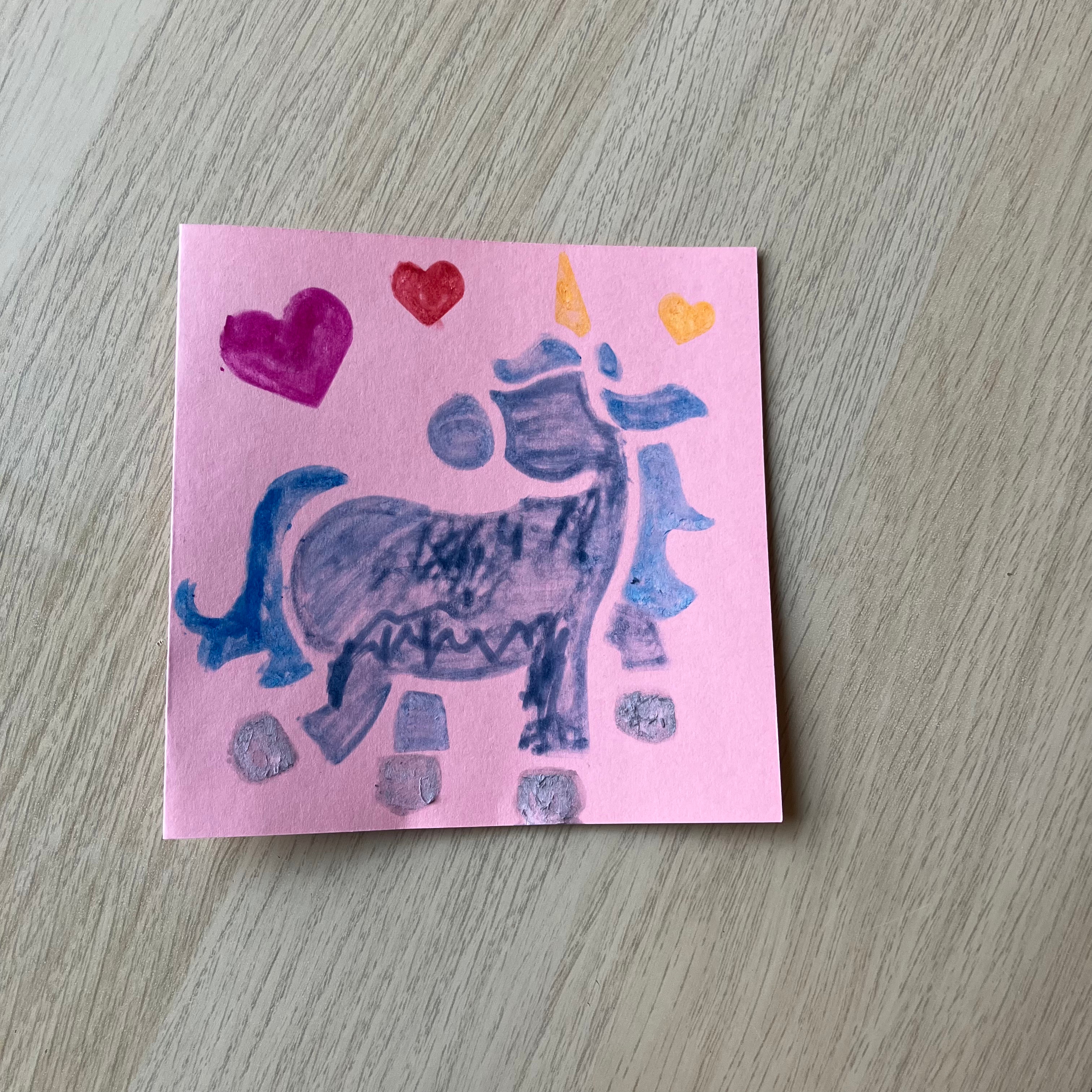
That being said, getting my new craft supplies that I’d ordered last week, did make me smile. I had forgotten how many things I’d ordered, but there are literally nine new colors of Premo polymer clay in the package, as well as a few really cool cutters (among which a 5mm heart) and a new silkscreen. I hope I can figure out a way to use the tiny cutter, as I’d love to decorate my next unicorn with a heart.

What Made Me Sad?

Being in bed. That is, I didn’t really have the energy to feel sad, but negative thoughts did creep up on me at times. Like I said above, however, my overall mental health hasn’t gone down significantly.

What Made a Difference?

My feeling optimistic about recovering from this nasty cold/COVID thing. Don’t get me wrong, I by no means believe that a positive attitude cures viral infections, but my not wallowing too much in frustration, helped prevent my mental health from spiraling down.

Never a Perfect Day: Is It a Bad Attitude?

Yesterday, as I was paging through some collections of journaling prompts I own, I came across a prompt that said: “Today was a perfect day because…”. Now I would counter that not a single day in my life was perfect. That in turn reminded me of something my assigned staff at the intensive support home used to complain about. She’d say I never said I’d had a great day and rarely said I had a good day. Most days though, I said my day was “okay”. I’d regularly say a shift had gone “pretty well”. To that, she often asked me to clarify what didn’t go well, since I didn’t say it went well, but said “pretty well” instead. According to her, even if I’d had a perfect day care-wise – my day schedule was followed precisely and I’d gotten all familiar staff -, I’d still find something to complain about.

There are several things I could add to this. For one thing, I wasn’t the one complaining. I think “pretty well” or even “okay” isn’t negative. For another, I never had an entire day where my day schedule was followed precisely and I was only supported by familiar staff. I do have those days now.

Another thing is, I am in near-constant physical discomfort. This may be relatively mild, but it is present nonetheless. I am also perpetually in a state of overload. For this reason, merely going through the day takes me more effort than it would a non-disabled person. I realize neurotypical, non-disabled people cannot grasp what it is like to feel what I feel, but to label my lack of overt positivity as somehow being a bad attitude, is quite something different.

Five Favorite Feelings #5Things

Okay, this is going to be a quick post. I want to write, but honestly have little idea what about. For this reason, I am taking up DrTanya on her #5Things Challenge. This week, the topic is favorite feelings. Here goes.

1. Delight. When I find myself in a happy flow, I can truly be delighted at things I do. I love this feeling of high energy combined with joy.

2. Inspiration. I truly love it when new ideas keep flowing. Currently, this is not the case, as you might guess from my needing to go with a meme for a blog post. That is, in the writing department, I’m not too inspired. In the crafting area, I definitely am.

3. Gratitude. It’s so great to be able to feel thankful at every possible opportunity. It is also a feeling I find is relatively possible to cultivate. In addition, I truly appreciate it when others show gratitude towards me.

4. Satisfaction. When I’m satisfied with something I’ve accomplished, it truly makes me feel great. Unfortunately, I’m a bit of a perfectionist, so I am not easily satisfied with myself.

5. Active acceptance. This means accepting a situation as it currently is, but being open to the possibility of being able to change it. It is walking a fine line between resignation and resistance. This is probably the hardest attitude to achieve for me, but I’m working on it.

What are your favorite feelings?

Pandemic Positives

Today, Fandango asks in his weekly provocative question wehther the need to quarantine as a result of COVID-19 has made you a better person.

Lockdown here started in the middle of March with restaurants acutely closing their doors, school closures and, a week later, a no-visitors policy in nursing homes and care facilities. I couldn’t see my husband for nearly three months. Then we could see each other, but we had to keep our distance as much as possible.

Life more or less returned to some sembleance of normal at the end of June. Still, people are scared. I, not so much, though I do take COVID-19 seriously. There are still certain restrictions, most of which don’t affect me too much.

The main thing affecting me was not being able to see my husband. This certainly made me appreciate our very special relationship even more than I appreciated it already. I mean, I chose to go into long-term care last year, of course not knowing that this would mean not seeing my husband for a few months. However, I doubt most marriages would survive even that decision, let alone the consequences. I attribute the success of our marriage mostly to my husband’s everlasting love, but I do deserve some credit for it too.

In general, too, the pandemic has made me more appreciative of what I do have. I am physically healthy and so are my loved ones. In April, a man at the home below me died of coronavirus. Though he was in his 70s, this shocked me a little. My father is in his 70s too, so I’m all the more grateful to still have him.

Other than gratitude, I think the pandemic taught me some level of creativity. Before the lockdown, I found it hard to connect to my husband when I didn’t see him. Now we call each other multiple times a week and text multiple times a day. Of course, I could’ve done that before too, but out of need grew the solution.

I also read somewhere that some people are particularly happier now than they were before the pandemic. I have to say so am I. The reasons may not be related to the pandemic at all, as I’ve also finally settled into the care facility and such.

In general though, I think the pandemic has had and continues to have negative effects on the world, of course. However, if it affected me personally at all, it’s positively. By this I don’t mean my economic, social or health status, of course. Though I’m still financially secure and healthy, no-one knows whether this will remain this way given the huge economic costs of the pandemic. I’ve just become a more positive (or should I say less negative?) person.

Sorry Not Sorry

Today I am not sorry I suffer with mental health issues. I didn’t choose them, no matter what some people think. I don’t necessarily have a bad attitude – and when I do, it has nothing to do with my mental illnesses.

Today, I’m not sorry I am a trauma survivor. I didn’t choose to endure the traumas I endured. These traumas and the resulting mental health symptoms do not make me weak. They do not make me not resilient. People can be resilient and suffer from mental health issues or trauma-related symptoms nonetheless.

Some people choose to believe that the fact that I don’t live up to my intellectual potential, means I’m not resilient. They reason that, if I were persistent enough, I would have finished university and had a job by now. They also judge my lack of persistence in these areas as a sign of a bad attitude.

Today, I’m not sorry I live with multiple disabilities. I don’t care whether you consider these disabilities valid or not. The people who judge me, think I use my disabilities as an excuse not to fulfill their expectations of me. They don’t realize that it’s my life and I have absolutely zero obligation to fulfill their dreams for me. No, not even when these people are my parents. I have no obligation to prove I am worthy of life.

People who don’t know me well commonly assume I must be very resilient for the mere fact that I’m alive. I didn’t use to like this attitude either, but then I read today’s post by carol anne, which inspired this post. Both of us were born prematurely. Both of us suffer with lifelong disabilities as a result. Both of us endured childhood trauma. Doesn’t the fact that we survived and haven’t succumbed, mean we’re pretty resilient? I think it does. We’re badass!