Report Cards and Progress Reports

Today’s topic for Throwback Thursday is report cards and progress reports. I am going to write mostly about traditional report cards in school, not the many psychological reports I had written about me during my childhood and adolescence.

Looking back, I was a good student academically, but it didn’t show on my report cards during elementary school. I attended special education and my teachers didn’t really believe I was more than just average intellectually. In fact, when I had a nationally standardized test in the sixth grade, the school’s principal called my parents in utter disbelief to tell them I had gotten a very high score. My father was like, duh, I told you so.

My behavior did get reported on. Though I had severe social and emotional challenges, I always got average ratings on those things that mattered to the teachers. I remember one day feeling disappointed when my rating on “correct behavior” had been lowered from the previous report card even though as far as I knew I hadn’t made mistakes about addressing the teachers formally.

In high school, I did get actual grades. Not letters here in the Netherlands, but numbers between one (worst) and ten (perfect). In my first year at grammar school, I got a lot of tens. These did get my classmates envious, so sometimes I’d argue for a lower grade. For instance, I had a ten on a drawing theory test and I hadn’t done any of the other drawing assignments because, well, I’m blind. Initially, I got a ten on my report card because that was the only grade I had. My classmates protested and my father and I agreed. Then the grade got lowered to an eight, reflecting the fact that I’d gotten a ten on that test and a six (barely passing) on drawing in general just for participating in the class.

Once in my third year, I was rebelling and hardly studying at all, so I did earn a few ones. One time, in my fifth year in high school (eleventh grade), I got a one in French for not doing an assignment because I’d had to do it with a partner and I hadn’t been able to find a partner, because I’d felt too anxious to ask anyone.

I wasn’t really punished harshly for failing grades or rewarded for good grades, but I did know I was expected to excel. Often, my parents made me do extra work, particularly before I was mainstreamed at grammar school.

My best subjects in elementary school were math and geography. In high school, those changed to languages, because high school math requires much more non-verbal intelligence and insight, something I don’t have. My best grade on my final high school exam was in English.

Now, as an adult, I do have an English-language blog, but I don’t think I learned to blog in high school. After all, despite the fact that grammar school is the highest level high school, I really wasn’t all that good at English after graduation. Other than English, I don’t use anything I learned in school really. I mean, during my year in special ed secondary school, textile arts was my worst subject and now I like to do macrame. Go figure.

Too Many Toys

Today’s topic for Throwback Thursday is toys and pastimes. The first question Maggie asks in her post is: “Did you have a lot of toys?” The short answer would be that yes, I was privileged to have quite many toys, but I must say I wasn’t so spoiled that I always got the latest trendy toy.

I probably shared this story before, but I played with toys quite a lot until I was at least eleven. By that time, my parents and teachers were looking into options for secondary schools and their opinions couldn’t have been any different: while my parents wanted me to go to mainstream grammar school, my teachers felt special education at their low-level secondary school for the blind, preferably residential, was in my best interest. My mother one day took me for a “mother-daughter walk” explaining the school’s stance and said that the reason they felt I needed residential special ed, was my behavior. That, in turn, she attributed to my having too many toys. The logic, I never quite understood, but it must’ve been something like my being so spoiled that I somehow felt entitled to display challenging behavior.

She went on to explain that, at the residential school, I would only be allowed one doll and one soft toy. She had given me a Barbie doll for my birthday earlier that summer, but told me she regretted it as soon as she received the school’s report. Needless to say, I always felt weird about playing with dolls from that age on, even though I continued to play with toys and dolls and everything until I was at least fifteen.

Fast forward some ten to fifteen years. When I was in my mid-twenties and diagnosed with dissociative identity disorder, I felt it might help my littles (child alters) if we had toys again. I first bought a box of old Barbies for €70 on a marketplace site. That wasn’t a wise decision as, though the box did arrive, the Barbie dolls were in such bad condition I eventually threw them away. I then decided to buy a couple of new ones at a toy store, but the littles hardly played with them. They prefer soft toys.

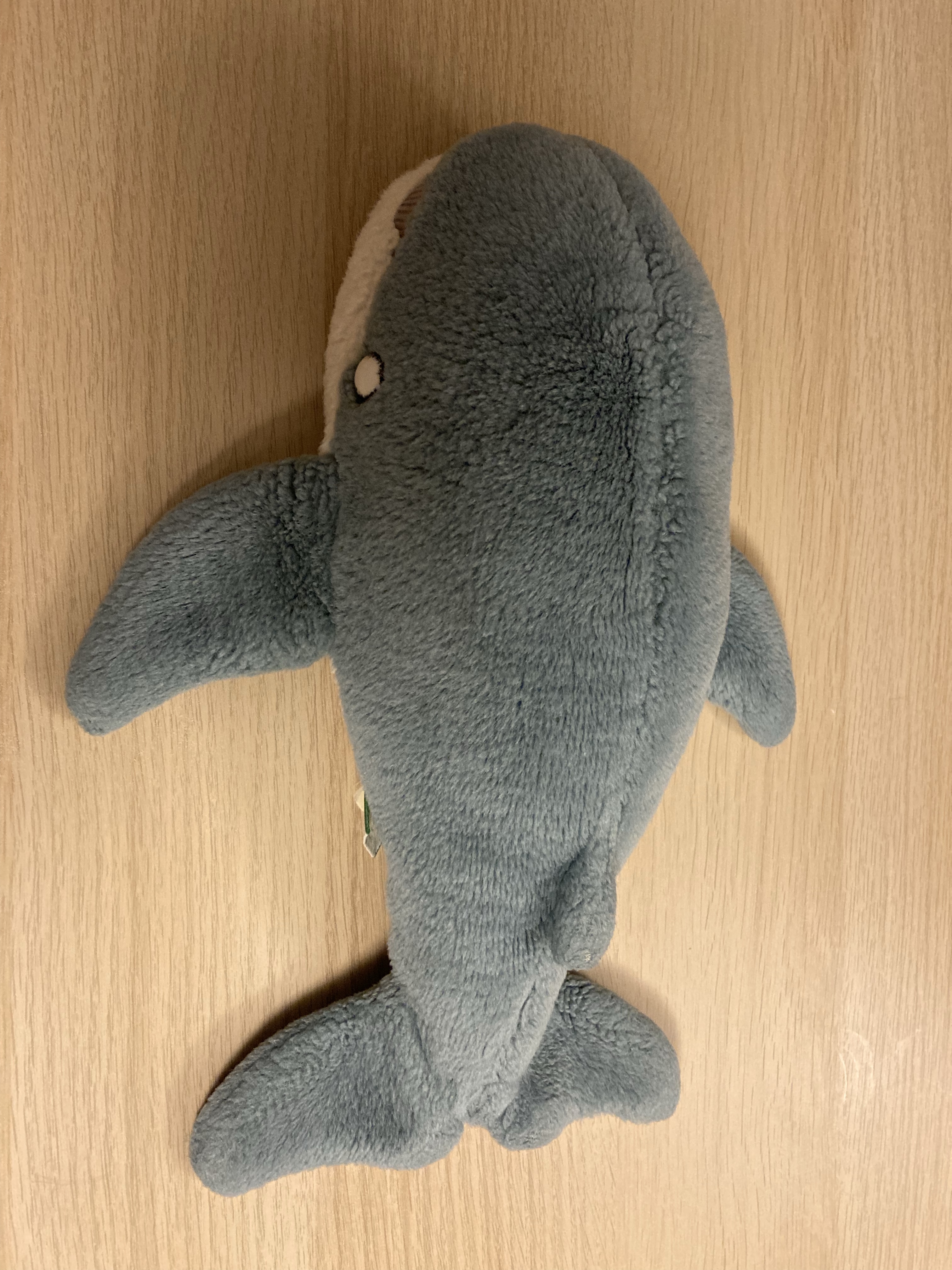
Speaking of which, one of Maggie’s questions is whether you still have any toys from your childhood. I don’t, as they’re probably all at my parents’. However, I do still have my stuffed whale Wally, whom I got when I left the NICU at three-months-old. I still sometimes sleep with it.

Wally

Did you have many toys growing up?

Lifelong Learning

I discovered 10 on the 10th last month, but didn’t feel like joining in at the time. Yesterday, a new edition went live and the topic is lifelong learning in honor of back-to-school season. I’m joining in today, as I loved the questions. Here goes.

1. How old were you when you started school? Did you attend pre-kinder and/or kinder or go straight into first grade?
I started in preschool at age three and in Kindergarten at age four. Here in the Netherlands, Kindergarten takes two years, although the first year (when children are four) wasn’t mandatory back in my day. It is now.

2. Were you a good student? What was your favorite subject?
In terms of academic performance, I was above-average in most subjects once I was properly educated. I added that last bit because, at my first special education school for the visually impaired, where I attended first till third grade, I was a little behind in reading and writing due to several factors. These included poor teaching and the fact that I didn’t start learning Braille till second grade, so had to pretty much start over learning to read and write then.

In terms of behavior, I did okay. I am autistic (undiagnosed at the time), so I did have my challenges, but I wasn’t the type to stir up trouble in school on purpose.

My favorite subject was math for most of elementary school and my first year in secondary school. Then, once I was mainstreamed at a high level high school and math became one of my hardest subjects, I started to like languages more. At the end of secondary school, my favorite subject was English.

3. As a child, did you take music lessons? Or play a sport? Do you still play an instrument now?
No, not at all! Contrary to the stereotype of blind people, I’m not musically-talented at all. Neither am I good at sports. I did attend a children’s choir for some years though, but mostly just hummed along.

4. Did you attend any kind of training or classes beyond high school? If so, what did you study? Did you wind up working in a profession or job for which those classes or training prepared you?
I went to college for one year to study applied psychology and to university for two months to study linguistics. I did get my foundation (first year certificate) in applied psychology, but didn’t get any credits in the linguistics program. Oh, I did take some classes at Open University (psychology once again) in 2009. I don’t need any education for what I do now (day activities for the disabled).

5. Have you taken any personal growth or adult education classes for fun? During the year that was Covid, did you home school, learn a new app to work from home, teach yourself to do something you might have paid someone else to do for you?
Uhm, not really. I am mostly self-taught where it comes to crafts and stuff. I would really like to take some classes in maybe crafting or writing someday, but not sure.

6. What would you like to learn how to do that you don’t know how to do already?
Right now, obviously I’d like to learn more crafting techniques, particularly polymer clay.

7. Name something that you learned easily. Then name something that was a struggle for you to learn to do.
As a child, reading print came easily to me. I taught myself to read at about age five. Reading Braille, on the other hand, was a struggle, mostly because I didn’t accept the fact that I was going blind.

8. What’s the last thing you remember learning? What kind of learner are you: visual, auditory, hands-on/kinesthetic, verbal, logical/mathematical?
The last thing I learned was moving a polymer clay slab from the work surface without distorting its shape (too much). I am probably a mix of a kinetic/hands-on and a verbal learner. I don’t do well with spoken instructions though. Rather, I need to read them.

9. Hard to teach an old dog new tricks, school of hard knocks, pass with flying colors, learn by heart, burn the midnight oil, pull an all-nighter, play hooky – which of these expression best fits your life lately? Why?
Pull an all-nighter, I guess. I’m often up late hyperfocusing on my latest obsession (currently polymer clay) and learning new things about it.

10. What is something you’ve learned from past mistakes?
To follow my own plan rather than relying on what others want me to do. As regular readers may know, I suffered autistic burnout in 2007 when at university trying to live on my own. This was what my parents wanted me to do. I ended up in the psych hospital only to be kicked out 9 1/2 years later almost with no after care even though I had hardly improved, only because I’d met my husband and my psychologist figured that if I was married I should be able to live with him. I didn’t cope and thankfully successfully fought for long-term care. This has been the best decision of my life.

What have you been learning recently?

Final Exams

Today, this year’s high schoolers should have heard whether they passed or failed their final exams for graduation. This inspired me to use one of Mama Kat’s writing prompts for this week, which is to write a post on the word “final”.

It’s been sixteen years since I graduated from high school. At the time, mobile phones were already in use, but they weren’t as popular as they are now and smartphones didn’t exist. Nonetheless, we were instructed not to text each other that we’d passed. After all, those who had failed would be called first and then those who had passed their exams would be called in alphabetical order. Texting each other would ruin the surprise effect. All of us would receive a call between 12:00 and 1:00PM. Since my last name starts with a W, I knew that I’d either be called at five past twelve if I’d failed, or at close to one o’clock if I’d passed.

Even though I had gotten pretty good grades on my school-based tests, which would make up half of my final grade, I had no idea how I’d done on the final exams. You could check your answers with a grading sheet available online once the exams were over. I didn’t do this with most subjects, I think. I did it with English though.

I at the time had an 8.1 out of 10 GPA in English. An 8.5 would be a nine. Though six is enough to pass, I badly wanted the nine. This meant I’d have to have an 8.9 on my final exam. When I checked, I found out that, most likely, I would not reach this. It however also depended on how strictly they were grading. After all, if most students scored lower than expected, they’d use a less strict grading system. If the grading folk were less strict than expected, I could get my desired 8.9.

Once the day we would be called arrived, I sat by my home phone from 11:30 until I was being called. I got called shortly before one o’clock: passed!

We were expected to be at school that afternoon to look at our grades. I had a surprisingly high grade on my geography final. That one had been adapted by my teacher and I’d taken it orally due to my blindness making the regular final inaccessible. As it turned out, the independent review teacher who had sat in on my final too, had been so incredibly impressed with my (quite mediocre) performance that he’d upped my grade. This made me feel guilty, but thankfully none of my fellow students knew.

As for English: the grading folk weren’t so kind this time. I passed with an 8.8, so got an eight out of ten GPA in English.

I, in fact, only got sevens and eights in all subjects, seven eights and eight sevens. This just about meant I wouldn’t be able to get accepted into selection-based college programs. Then again, I wasn’t intending on studying medicine or the like. In fact, now I’m more than grateful that I don’t need my high school diploma for anything anymore. I don’t even know where it is, nor do I care.

Mama’s Losin’ It

I Am a Rock #SoCS

Today’s prompt for Stream of Consciousness Saturday (#SoCS) is “roc”. I didn’t know that even is a word, but we can use words with “roc” in them too. I was immediately reminded of “rock” and then of the Simon & Garfunkel song “I Am a Rock”. As I assume most of you will know, it goes like: “I am a rock, I am an island. And a rock feels no pain, and an island never cries.”

This reminded me of the fact that, at around age thirteen, I would describe my class as a country with lots of states and one of them, me, would be an island. Think Hawaii. This, of course, symbolized the fact that I felt like an outsider or even an outcast in my class.

One day, I showed a girl in my class the piece about the island. This girl promptly decided to type on my laptop and let my text-to-speech read: “Astrid is my friend.” She probably felt pity for me, as the friendship never lasted. It was rather based on rules, as was my entire class’s associating with me.

Like, before I found my way around the school by myself, classmates had to sighted guide me around. There was an entire schedule which had the girls be sighted guide and the boys carry my backpack, until I decided, with a little nudging, that I could carry my own backpack. I mean, yes, it was heavy with my laptop and all, but so is every early secondary schooler’s backpack. From then on, the boys would sighted guide me too.

This meant I had to sit with them during recess. After the island story incident with my “friend”, she and her clique allowed me to sit with them everyday during recess even if it wasn’t their turn to be sighted guide.

At the beginning of my second year at this school, I decided I’d had it with sighted guides and especially with the schedule. I tried to find my way by myself, often struggling, but this was better than to have people assigned to me who didn’t want to associate with me. Quickly, that became the entire class, including my “friends”.

I am a rock. I am an island. And a rock feels no pain. Literally. By the end of my second year in this school, I had mastered the coping mechanism of detaching from my surroundings and myself. I felt like I lived in a movie. I still feel that way at times, even though I have no need (I hope) to escape my current life.

Good Enough

Today’s optional prompt word for #LifeThisWeek is “Good”. Denyse takes on a cynical approach to the word, which reminds me of the many degrees of being called “good” I experienced.

In my elementary school years, my parents were in a constant fight with the schools for the blind I attended about my educational needs and my potential. According to the school, I was a good enough student. That’s the literal translation of the words that appeared on my report card often. Sometimes, when I was better than average, just “Good” appeared.
My parents thought I ought to get some more recognition. They thought I was excellent, sublime, a genius.

My schools thought I should be going to their secondary school program, which at the highest level catered to average students. My parents believed I could do far better.

I doubt, to be very honest, that my teachers truly didn’t see that academically, I was above-average. At least some of my teachers must have seen this. However, socially and emotionally, I was significantly behind. This was probably the real reason my schools recommended I continue in special education. My parents disagreed. They felt that I would be overprotected and underestimated in special ed. They might’ve been right. We’ll never know, since my parents took me from educational psychologist to educational psychologist until they had the recommendation for mainstream high level secondary education in their hands.

What I do know, is that I ended up being overestimated and underprotected. My parents would love to deny this and blame the staff in independence training for essentially setting me up for long-term care. Agree to disagree. Then again, we’ll never know, because I didn’t go into independent living and on to university right out of high school.

Sometimes, I wish I was just the average, good enough student that some of my teachers saw me as. Then at least I wouldn’t have to face the enormous challenge of both a high IQ and an emotional level comparable in many ways to an 18-month-old child. Then, I might not be writing blog posts in English, but I also might not need 24-hour care.

Then again, I enjoy writing blog posts. I like my care facility. Life is good enough for me.

An F in Phys Ed

One of Mama Kat’s writing prompts for this week is whether you played sports as a child and if so, to share a memorable game. I never played sports outside of school. That is, I attended one gymnastics class with my sister and a friend of hers at around age eight. I didn’t enjoy it one bit, despite normally liking gymnastics in physical education classes.

I was, to put it plainly, horrible at sports. Any sports. While gymnastics was my favorite part of physical education, it was more because I hated team sports and athletics even more.

At the school for the blind I attended for grades four to six, I was always picked last. Not just because of my lack of athletic capacity, but also because I was the only girl in my class. I don’t blame my classmates though.

When I attended mainstream high school, my phys ed teacher was also my tutor. He was great at accommodating me up to a point. For example, he let me run with a buddy. Of course, I was the slowest runner of the entire class. Looking back, I like to blame my mild cerebral palsy, but I still struggle to figure out what is due to that and what is simply due to my being fat. Not that I was fat at the time, but I wasn’t skinny either.

In my second year in this school, I hadn’t had any failing grades until sometime in February. My classmates complained that I got it easier than them, because for example I’d get extra time on tests. Whether this motivated my phys ed teacher or not, I’ll never know. We had to do gymnastics, a particular swing on the rings. I couldn’t really see what everyone else did, but I tried my best. And failed. My teacher explained to my father that I might’ve done the best I could, but he couldn’t possibly justify giving me a passing grade.

Like I said, he was my tutor. He almost took pride in being the first to give me a failing grade that year. Except that he wasn’t. That same week, I’d gotten an F in Greek too. That one was definitely justified, as at the time I didn’t face any barriers to learning basic Greek that my classmates didn’t.

From the next year on, I started going to a gym instead of following regular PE classes. I, after all, would never be able to attain the level of physical ability required for higher secondary school sports. I continued to attend the gym regularly throughout high school and for the first several years after.

Mama’s Losin’ It

When I Was Fifteen

One of Mama Kat’s writer’s workshop prompts for this week is to explain how a parent or sibling would’ve described you at the age of fifteen. What an interesting thing that Mama Kat should mention age fifteen!

I turned fifteen in June of 2001. By August, looking back, I was close to insane mentally. This was the summer when I first realized I had alters inside of me, although I didn’t know what they were at the time. I just heard some type of voices that were and at the same time weren’t mine.

Neither my parents nor my younger sister knew this at the time. Still, they did realize something was up, if for no other reason, then because I didn’t care about school. I had always been a pretty studious kind of child, but this changed by November or December of 2001.

In addition, I was a rather angry, moody child. I had suffered from depression on and off since age seven or so, but it was particularly bad at age fifteen. I even made suicide plans several times during that year. My parents, being the type to dismiss mental health issues, felt I was just attention-seeking, of course.

My life turned around in a sort of positive way a few weeks before my sixteenth birthday, although no-one saw either the change or how positive it was at that point. On June 16, 2002, my father called me autistic as an insult. This led me to search the Internet for autism and to discover I may be on the spectrum myself. Although it’d take nearly five more years before I was diagnosed, in part because my parents and teachers didn’t believe me, I see this as a pivotal point in my life.

The day after this, June 17, I finally disclosed to my teacher what had been bothering me over the past year. I sugarcoated it a little, not mentioning the voices or suicidality or autism for that matter. I did tell him I was struggling with being blind in a mainstream school and that I realized I had been less than good of a student lately.

My father, at the time, worked at my school. My teacher told him that I had disclosed something to him, but he refused to tell my father what it was. This led to a really traumatic experience, because my parents demanded to know too and they weren’t kind about it at all. I am pretty sure they just tried to gain fuel for their idea that I was one giant attention-seeker.

Many years later, my parents used many of my struggles at age fifteen to “prove” this very point. I can see their perspective, sort of. Thankfully though, my current professionals don’t go along with it.

Mama’s Losin’ It

Millennium: Growing Up Blind in 2000 #Blogtober20

I’m a bit late to publish my #Blogtober20 post today. Well, not as late as yesterday, but then I already had a post up in the afternoon. Today’s prompt is “Millennium”.

Let’s see… we’re now 20 years into the new millennium, which I realize isn’t even the “new” millennium to some adults right now, as they were born in 2000 or later. I always find it surprising that there are people who will be legally old enough to vote in next year’s national election who weren’t even born when politician Pim Fortuyn was murdered on May 6, 2002. Yeah, I’m getting old!

In 2000, I turned fourteen. I was in my first year at a mainstream grammar school. I had already decided I hated it, but my parents and teachers had decided that, if I failed, I’d fail within the first three months and those were up. Woohoo, my mainstream education was a success! Okay, it was, since I did graduate with pretty good grades in 2005, but yeah.

In January of 2000, I suffered a bad case of the flu. I rarely got the flu back then and still get it only once every five years or so, so I remember. In fact, I’m not 100% sure of this but I think it was my only time being off school sick in my entire grammar school career.

In February, my outreach teacher for the visually impaired came to talk to my classmates. They had already decided they didn’t like me one bit. In fact, when the teacher asked casually what having me, a blind student, in their class evoked in them, they didn’t think of a single positive. They started saying that I was being favored by the teachers. They also resented the need to help me get around. This instilled in me the feeling that I had to make up for my blindness in some way by being extra, well, anything.

I had read a book called Het instituut (which translates to The Institution) by blind comedian Vincent Bijlo in 1998. This book is about a boy who goes to a boarding school for the blind and his teachers constantly instill in him the idea that the “sighted school” is really hard and that he’ll need to compensate for his sight loss. For all I knew, my parents and teachers at the grammar school agreed: I was an inherent burden due to my blindness unless I showed my classmates I was more independent, nicer, more hard-working and in any way better than them. Then when I tried to work hard and got good grades, my classmates decided I must be favored by the teachers.

My idea about myself as an inherent burden on the world around me due to my blindness didn’t change till I went to an international computer camp for the blind in 2002 and discovered the English-language Internet in that same summer. It never completely disappeared though.

Later in the year 2000, my classmates started openly bullying me. Again, my parents and teachers blamed me. I was too dependent, too unsociable, too much of a burden in general. I had ruined the only friendship I had developed (which in hindsight was based on pity mostly) by getting my “friends” an only average grade in a music performance in October. Though these girls didn’t actively bully me, they mostly ignored me.

I realize, looking back, that the attitude towards people with disabilities was generally very hostile back in the late 1990s and early 2000s, when I was growing up. I mean, I bullied a girl with a visual and intellectual impairment on the special needs bus to the school for the blind in the late 1990s. Though my parents disapproved of it, both they and my teachers didn’t do much to stop me. When this girl was dying of a brain tumor, my parents even openly criticized her religious parents’ hope that the girl would miraculously survive.

I can only hope that, with more children with significant disabilities being mainstreamed nowadays, that attitudes have changed.

#Blogtober20

Weird Dreams

It’s already Thursday here, so I’m technically a day late to join in on Fandango’s Provocative Question. I’ve never joined in on this meme before, but I really liked this week’s question. It is to share the strangest, weirdest dream you can remember.

I already shared about the dream that got me to quit putting sugar in my coffee some months ago. That wasn’t as weird a dream, considering that refined sugar is by some people considered pure poison indeed.

Another weird dream that had an impact on my later life is one I had when I was about seven-years-old. I dreamt that there was a big soccer match between Ajax and Feijenoord, the two main rivaling clubs in the Netherlands and the only ones I’d heard of at the time. I apparently was an Ajax fan and they won. So far, nothing weird, except that I knew nothing about soccer and certainly wasn’t a fan of any club. The weird bit comes now: someone gave me some pills that made me cry, so that everyone would think I was sad and hence supported the “right” club.

As a side note, I lived in Rotterdam at the time, so indeed Feijenoord would’ve been the club to support. I became a wannabe Ajax fan as soon as I learned anything about soccer at all, as my friends at the school for the blind were Ajax fans. This was probably after our move to Apeldoorn though.

Like I said, the dream had an impact on my later life. Indeed, when I went to the school for the blind at age nine, I got a phys ed teacher who looked a lot like the man who’d given me those pills in my dream. I took an instant dislike to him and even though I knew why, I couldn’t help it. He was a pretty strict teacher, so I may’ve disliked him anyway.

What was one of the weirdest dreams you can remember?