Codependent (Fawn-Based) Trauma Responses #AtoZChallenge

Hi everyone and welcome to my letter C post in the #AtoZChallenge. Last year during this challenge, I discussed codependency for my letter C post. Today, I want to talk about the same topic, but specifically as it relates to people who experienced complex trauma.

You are probably familiar with the fight or flight response when it comes to fear. However, there are several other ways people can respond to perceived threats. One of them is fawning. This has always been a confusing term for me, particularly because I’m a non-native speaker of English and there is no proper translation of this word in Dutch as far as I’m aware.

Fawning, if I’m correct, in the context of trauma means being overly compliant with the wishes of other people and being unable to protest. It’s similar to people-pleasing, for which I haven’t found a proper Dutch translation either by the way.

Pete Walker, the author through whom I know of the fawn-based trauma response, has an entire chapter on this topic in his book on complex PTSD. I just opened the book to the chapter on fawning and oh my did it hit hard! Walker starts out by explaining how he learned that he himself gravitates towards a fawn response when he apologized to a chair for bumping into it. I have done that too.

However, it’s harder for me when I find myself apologizing to people, because too often my apology gets seen as being insincere when I truly have a reason to apologize. That makes sense, especially because I can also show a fight-based response when triggered.

The thing for me is that I overadapt until I can no longer take it anymore and then I have an aggressive meltdown. This sometimes makes me doubt I actually fawn at all. It doesn’t help that my parents from a young age on ingrained the thought that I am selfish into my psyche. I can indeed be self-centered, but that’s not the same.

I am still unsure whether I am a primarily fawning trauma survivor rather than a fight type. However, reading Walker’s chapter makes me realize I’m probably closer to the fawn end of the fight-fawn continuum than many people, including myself, believe. I, after all, experience a deep-seated lack of understanding and even deeper lack of appreciation of myself. Walker calls this self-abandonment and self-abnegation. I wonder whether, because my most outwardly noticeable reaction when triggered is fight, I have been conditioned to see myself as primarily a fight-based type.

Birth: The Effects of a Complicated Start in Life #AtoZChallenge

Hi everyone and welcome to my letter B post in the #AtoZChallenge. I’m doing this challenge on healing past hurts. Today, I want to go far into my past: I want to talk about the effects of a complicated birth.

As regular readers know, I was born prematurely and spent the first three months of my life in hospital. Of course, I have no conscious memories of this time, but that doesn’t mean my complicated start in life didn’t have an impact. There is evidence that many people who were born prematurely or otherwise had a difficult start to life, experience attachment problems into adulthood. Now of course I didn’t have the most positive childhood either and there is no way of knowing whether I would still have attachment issues had my parents been well-attuned to me. Of course, this is also a difficult question, since my parents experienced their own trauma having me prematurely.

The thing remains though, a child who was born prematurely, spends time in a clinical setting that they should’ve spent literally inside their mother’s body. There are attempts to lessen the burden this has on children (and parents). For example, kangarooing, in which a baby experiences skin-to-skin contact with their parents, is encouraged as soon as it is possible. However, for preemies and other NICU graduates who are now adults, this may not have been the case. Many older NICU graduates hardly saw or heard their parents for the first few weeks to months of their life. My parents, thankfully, lived in the same city I was in the neonatal unit in, so they were able to visit often.

One thing that haunts me though, and I’ve mentioned this several times, is the effect my being medically complex from birth on left on my parents’ attachment to me. Like I said, whether I would’ve experienced attachment issues had my parents not mistreated me as a child, is a difficult question because one of the reasons they treated me so poorly is their difficulty coping with my being disabled. My father quite literally asked the doctor whether it’d make sense to keep me alive after I’d had a brain bleed a few weeks after birth.

It’s telling, in my opinion, that when you look up “birth trauma” online, what comes up most frequently is not the effects a child’s own start in life could’ve had on them, but the effects of complicated childbirth on parents. And like I said, one goes hand-in-hand with the other.

Autonomy: Learning That I Can Do Things and That My Opinions Matter #AtoZChallenge

Hi everyone. Today is April 1 so this means the #AtoZChallenge is starting. I haven’t prepared any posts in advance, but since I am going to write on healing past hurts, the concept of autonomy spoke to me for my letter A post. Autonomy is the ability to be self-reliant and independent, both physically and emotionally. It starts to develop in toddlerhood.

As I learned about emotional development as it relates to developmental disability (I discussed this in 2023), I realized in many ways I’m not there yet. I struggle with even basic decisions like what clothes I want to wear.

When I was 30, I was told I have dependent personality disorder. This disorder is characterized by passivity and the inability to make decisions independently, as well as a pervasive need to be taken care of. It is often related to lack of encouragement of autonomy in childhood.

I don’t have many memories of my early childhood, but I do know I wasn’t given a lot of autonomy when I was older. It’s not that my parents didn’t try, but as soon as I got frustrated, they gave up. They genuinely believed they were giving me autonomy and that I was just too stubborn to want to be independent. For this reason, they claimed and to this day still claim it’s my choice to be in the care system.

My psychologist back in 2016, the one who diagnosed me with dependent personality disorder, sided with them. She said I did have the assertiveness to stand up for myself, but wasn’t doing things I was (thought to be) capable of. That’s not what dependent personality disorder is though: lack of confidence in one’s own physical capabilities is but one criterion out of eight. And please note: it’s specified that the reason someone isn’t doing something, is in fact lack of confidence, not lack of skill or motivation. In other words, unwillingness to do things independently that you can do, is not dependent personality disorder, but care misuse.

And for clarity’s sake: I am not and never was misusing care. However, that’s exactly what my psychologist thought I was and according to which presumption she treated me by kicking me out of the mental hospital with virtually no support. She once again didn’t encourage me to develop autonomy. Refusing to help someone who clearly asks for help, contrary to the current idea in mental health services, may be politically useful, but it is not autonomy-supportive.

I am only now, now that I’m nearly forty, learning that I in fact was conditioned by both my parents and the psychiatric hospital to disregard my own opinions. Yes, being able to do things independently, is one aspect of autonomy, but so is the ability to make your own choices. One can hardly exist without the other.

March 2026 In Review

Hi everyone. It’s the last day of the month and that means I’m joining Natalie for her monthly wrap-up. March was a tough month. As I say this, I hear a little voice in my head saying I’ll never be happy anyway as I’m so negative. One of my staff on Sunday said I have nothing to complain about because I get regular support workers and my day schedule is followed. I still wonder how much of my dissatisfaction is indeed due to circumstances that can be changed, such as my day schedule, how much is due to the inherent nature of my being multiply-disabled and living in long-term care and how much is my attitude.

In any case, early in the month I heard that my activity-based day schedule would be taking effect on April 1. That’s tomorrow. Unfortunately, on the same day, the staff’s hours are going to change and this, even though the literal hours they are in the home won’t be cut, means my support will be cut a little. We’ll see how that goes.

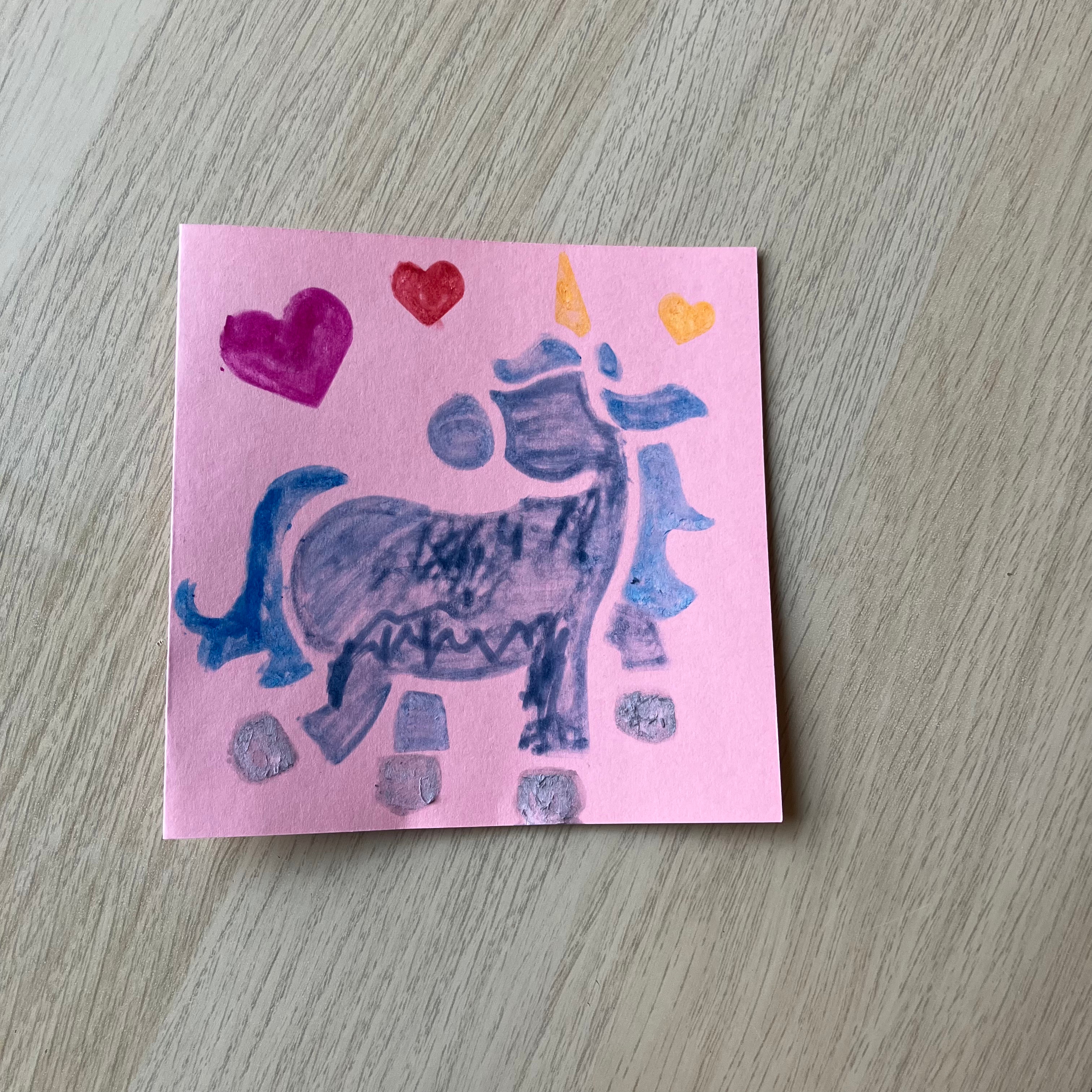
I tried to adapt to the new support hours already and this was incredibly hard. I also tried to myself follow a schedule with more meaningful activities. This was partly successful, especially with staff who are already able to help me get more meaningful activities done. For example, last week, one of the staff helped me create a unicorn-themed card for a former fellow resident from the intensive support home, who had her birthday that day.

Thankfully, one staff, with whom until then I’d only been doing dice games and going for walks, herself took the initiative to ask a colleague to orient her to the polymer clay activity.

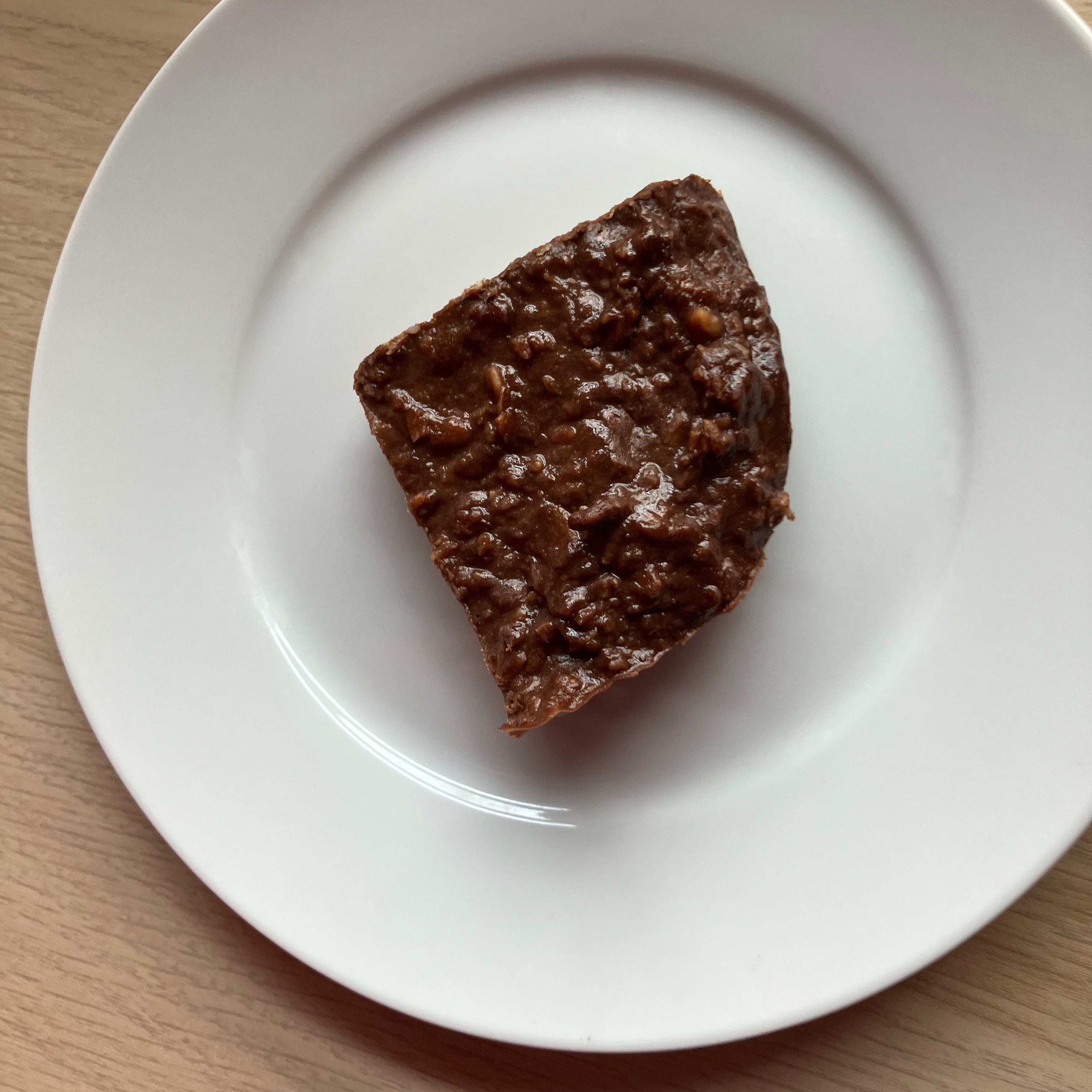
I have been cooking and baking more than I used to. For example, I baked so-called “healthy” brownies that I fully intended on handing out at the monthly local brain injury meet-up. They weren’t all that good though.

Later, I found out I had a Trojan on my computer that came with the recipe manager app I used to download random recipes off Facebook into, including this “healthy” brownie recipe.

Before I found out I had malware on my computer, I had been obsessing over the idea of cooking vegetarian curries. Most of the recipes, I got off English-language food websites like BBC Good Food, so I’m not sure I’ll be able to use them. After all, though my English is quite good, my staff’s might not be.

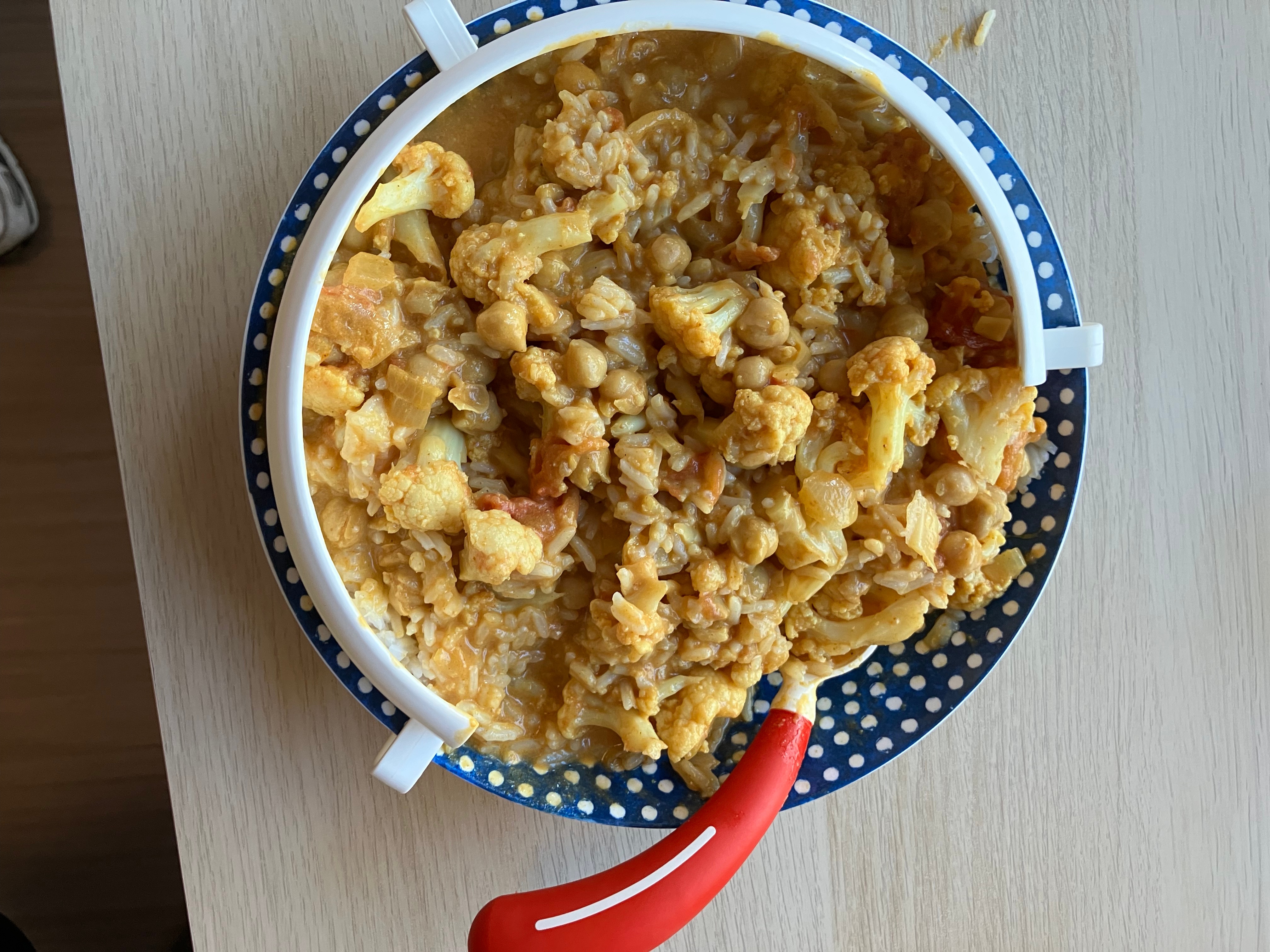
Last Saturday, I cooked a delicious cauliflower, tomato and chickpea curry. This recipe was in Dutch, by the way.

Now that I look over this post, I wonder what made the month so tough, given that I once again did more meaningful activities than I used to. I do believe part of the problem is the fact that I’m still not adequately supported when I’m struggling. I mean, highs and lows are to be expected even when you’re having the proverbial time of your life. When people expect me to have a positive outlook because “I have nothing to complain about”, that is horribly invalidating. Life in the care system isn’t great and it isn’t meant to be. I don’t expect to ever rate my days higher than a seven out of ten, but when staff do have this expectation of me, it’s incredibly frustrating. I’m hoping something can be done about this.

Of course, this was also the month I finally realized I’ll never have an okay relationship with my parents. It’s tough realizing I never experienced a proper bond with my parents and even tougher to know that no-one can replace it. However, I do think I’m more capable than I used to believe. I’m not sure how I feel about that.

Chosen Family #WotW

Hi everyone. Today, I’m joining in with Anne’s Word of the Week linky, as well as Natalie’s #WeekendCoffeeShare. My word of the week (or rather, phrase, as it usually is), is “chosen family”.

First, as I usually do when writing my weekend coffee shares, I’d like to write about the weather. Over the weekend, it was good: relatively warm and somewhat sunny too. I even sat in the sun for a bit on Sunday. However, most of this week brought cooler temperatures and rain. Today, the daytime high was 9°C. That’s considered normal for this time of year, which I honestly believe is crazy but oh well.

Now here’s why my phrase of the week is “chosen family”: several things this week made me realize my wife is more like family than my birth family. Yes, even now that we’re officially in the divorce process.

You see, we had our first meeting with the divorce mediator and financial advisor on Tuesday. I won’t go into detail as to what we’ve been discussing, but it looks like we’re both going to be okay and we’ll find a way together to make this work. We’ll have our next meeting on April 14.

On Saturday, I was at our house too. I got strange queries in Chrome so had run a full virus scan two weeks ago and it’d found a threat. I initially brushed it off, but finally told my best friend/wife. She was a bit stressed, because I had not paid attention to the full implications of this and for example changed my passwords. I didn’t know what the malware might’ve done, so went to our house on Saturday so that she could check it over. It looks like no actual damage was done, thankfully. In case I’ve mentioned the name of the recipe manager I used though (I’m pretty sure I touted it as the perfect app) and anyone’s installed it too: that was the source of the malware. No more Chrome extensions for me.

Today, my mother texted me to check on me. I, stupidly enough, called her. We’ve been in very limited contact for years now due to her attitudes towards my childhood trauma. After I got more of the same shit, among which comments insinuating that I should move closer to my family because my friendship with my best friend may not be forever, I had had enough. I don’t know yet what will happen in the long run, but for now I’m genuinely done with my family of origin. My best friend feels more like family than my parents do and yes, I’m aware that our friendship might dissolve over time. Then again, no relationship is forever.

Ten Things I Hate to Love

Hi everyone. I’m joining Marsha’s 10 on the 10th linky once again. It’s been forever. Today, we’re sharing things we hate to love. You know, those things you secretly love but feel a little (or a lot of) embarrassment about loving. In no particular order, here are mine. I realize that many of these are not considered generally bad, but I’m choosing to write about things that I have cognitive dissonance about loving.

1. Tarot and astrology and the like. These are not necessarily weird per se, but I sometimes feel weird about loving them because I’m non-religious and grew up with atheist, strongly science-minded parents.

2. The Enneagram. Same as above, but with an added layer of it having pretty much been claimed by Christians. I’m not a Christian and one of the reasons for that is the fact that most mainstream Christians are openly queerphobic. I could, of course, call myself a progressive Christian, but then I’d not be playing by the rules of that religion, as indeed the Bible condemns homosexuality. I still read some Christian-based works and wonder whether that should be its own bullet point on this list. Anyway, I know that the Enneagram is not science-based at all, but I love it nonetheless.

3. Articles, blogs etc. about parenting and children. I don’t love these as much as I used to when I was in my late twenties, but I still find myself drawn to them. For someone who is happily childfree, this is a bit weird.

4. Scrolling online. I do it a lot and always feel bad about how it means my time has been wasted.

5. Gossiping. I don’t share as much info as I gather information that isn’t mine to gather. I honestly wouldn’t even call this something I love, but it’s something I do a lot and it’s quite distressing.

6. Online shopping. I love it, but it’s a pain to get things delivered here.

7. Lying in bed during the day. Again, something I do almost daily but feel bad about because it means I’ve wasted my days.

8. Junk food. I could write an entire list of things I hate to love that are food-related: candy, French fries, large cookies (particularly stroopwafels), etc. Rather, I’m grouping them into one item. As regular readers of my blog know, I used to struggle with disordered eating, particularly overeating and some purging. I’m so glad I no longer binge, but I snack way more than I should.

9. Nail-biting. And many other body-focused repetitive behaviors I won’t go into on my blog.

10. So many things that are generally thought of as more suitable for (young) children. Think stuffed animals, chapter books, kids’ bedtime story podcasts, etc. I could say it’s my alters (I have symptoms of dissociative identity disorder), but I’m not so sure that’s true.

My Existence Is a Medical Miracle, Or Is It? #3TC

Hi everyone. I just stumbled across Today’s #3TC prompt. In response, carol anne shares about her premature birth. She was born three months prematurely in 1980 and considers herself to be a medical miracle.

I, often, believe the same. I mean, I was born just over three months prematurely, albeit six years later than carol anne. I weighed 850 grams or 1lb 14oz at birth. I spent three months in neonatal care.

When I was younger, I’d occasionally half-jokingly say that I’m a calculation mistake. The reason is the fact that I was born at sometime between 25 and 27 weeks gestation. The official paperwork says I was born at 26 weeks 4 days gestation, but this wasn’t always easy to determine back then. My mother claimed that, back in 1986, the line between actively keeping preemies alive and only treating them when they showed genuine strength, was at 26 weeks. I never cared to look up whether that’s true, but I do know that my doctor was adamant he was keeping me alive. In this sense, not a miracle.

In another respect though, I’m definitely a medical miracle, in that obviously I wouldn’t have survived without medical technology.

Yesterday, I read about the Dionne quintuplets, who were born in 1934 and the last one of whom had just passed away. Compared to them, I’m not a miracle at all. I’m glad about that, as they were on public display throughout their childhoods.

Like carol anne, I realize I didn’t just survive thanks to medical technology, despite the fact that’s what my doctor more or less said when my father questioned him whether I should be continuing to receive treatment after my brain bleed. I wouldn’t have survived had I not had the will in me to survive.

This is somewhat of an interesting realization in light of my suicide attempts over the years. In 2017, I survived two medication overdoses and, this past summer, I cut my wrist. Thankfully, I survived and, in the case of the incident this summer, without medical intervention. I realize this means I still somehow have a desire to stay alive.

Mother As the Giving Tree: Reflections on Conditional Acceptance

Hi everyone. Last Monday, I attended an online meeting for adults who spent time in the NICU as infants. It touched me on many levels. One thing that was mentioned was the fact that most NICU parents go through their own emotional process, which then is passed on somehow to their child in the NICU and beyond. For example, many parents back in my day and before didn’t know whether their baby would survive, so they didn’t attach to their babies as they normally would have.

I was also reminded of something I read in the book The Emotionally Absent Mother. In it, motherhood is compared to the giving tree in Shel Sinverstein’s writing. I don’t think I’ve ever read this piece, but its point is that the tree keeps on giving and giving and expects nothing in return.

I have been thinking about my parents’ attitude to me as a multiply-disabled person. When I suffered a brain bleed in the NICU, my father questioned my neonatologist about my quality of life and what they were doing to me. “We’re keeping her alive,” the doctor bluntly replied. My father has always been adamant to me that he wouldn’t have wanted me if I’d had an intellectual disability, because “you can’t talk with those”.

I have always felt the pressure of conditional acceptance. I’ve shared this before, but when I was in Kindergarten or first grade, it was already made clear to me that, at age eighteen, i’d leave the house and go to university. I tell myself every parent has expectations and dreams for their child. This may be so, but most parents don’t abandon their children when these children don’t meet their expectations and certainly not when it’s inability, not unwillingness, that drives these children not to fulfill their parents’ dreams. Then again, my parents say it’s indeed unwillingness on my part.

I still question myself on this. Am I really unable to live on my own and go to university? My wife says yes, I am unable. Sometimes though, I wish it were within my power to make my parents be on my side. Then again, the boy in Shel Silverstein’s writing didn’t have to do anything to make the tree support him either.

I’m linking up with #WWWhimsy. I was also inspired to write this post when I saw Esther’s writing prompt for this week, which is “giving”.

Reflections on Being a Thrown Away Golden Child

I’ve been struggling with memories lately, as well as with the role I played in my family. I was for the most part the golden child. For those not aware of what this means, this is the child in a family in which one or both parents are narcissists or otherwise emotionally immature, who ends up being the parents’ favorite.

My parents often half-jokingly (though it wasn’t funny) said that my younger sister was oh so nicely average. More like invisible, I’d say.

I, on the other hand, was exceptional in both positive and negative ways. I was a genius when doing calendar calculation, which for your information is a common savant skill in people with developmental disabilities. By contrast, I was threatened with being thrown away into institutional care and called all kinds of insults for people with mental illness when I was acting less than excellent. I at one point thought of printing out the table of contents for the DSM so that my parents at least knew the correct terms for what they were calling me.

Then, when I was admitted to the psychiatric hospital in 2007, my parents more or less actually threw me away. No, that’s not even entirely true: they threatened to abandon me when I announced that I was taking a second gap year in order to work on independence skills in 2006 and only came back into my life after the independence training home promised to prepare me for university and independent living. Which they couldn’t.

I struggle with both the fact that I was thrown away and the fact that I was my parents’ favorite before that. After all, it adds an extra layer of shame to my life: the layer of “if only…”. If only I hadn’t taken that second gap year… If only I hadn’t consented to being admitted to the psychiatric hospital… If only I hadn’t applied for long-term care… would I still be the hero… in my parents’ fantasy tale? In other words, isn’t it my choice to have fallen off my parents’ pedestal?

I don’t know how I feel about the idea that it might’ve somehow been my choice to be thrown away. On the one hand, I feel it makes me responsible for not having a “normal” relationship with my parents. On the other hand though, I know how many golden children turn out and that’s not pretty. Many end up repeating their parents’ toxic patterns with partners or children.

I’m forever grateful for being childfree for this reason (and others), as just today I had a memory of shoving my and my wife’s then cat Barry out of the bed. I feel forever guilty about this and the very thought of doing this to a child, makes me sick.

Remembering this and other things makes me realize I’m glad I didn’t stay in the golden child role. If I had, I might as well have ended up in prison… or should have.

#WeekendCoffeeShare (December 6, 2025)

Hi everyone. Yesterday, I had tons of ideas on my mind on what to blog about but no motivation to actually write. Today, it’s the opposite. I’m joining in with #WeekendCoffeeShare even though I think I don’t have a lot to share today. I, as usual, had my last cup of coffee for the day about half an hour ago and am going to take a break from writing this post to have my soft drink and chips. Let’s have a drink and let’s catch up.

If we were having coffee, first I’d talk about the weather. For most of the week, it was chilly but not rainy with daytime temps around 7°C. Today, the daytime high was 10°C but it’s been raining all day.

If we were having coffee, I’d tell you that I was pretty active for most of the week, both by walking and one time by cycling to the next town just to have a purpose for cycling. I didn’t need any groceries and we only ended up having a snack, but at least we weren’t aimlessly cycling around.

Today though, I spent the entire day indoors and still need to dance or whatever to reach my movement goal on my Apple Watch. My streak for whatever reason is still stuck on 33 days even though I’m moving each day and it’s been stuck on 33 days for a month or so.

If we were having coffee, then I’d tell you that I had many plans over the past week but haven’t accomplished a lot. On Monday and Tuesday, I did create some Christmas decorations out of polymer clay. Yesterday, I attempted to bake cookies. They turned out okay but not great and the process was frustrating. Nonetheless, it was better than lying in bed or staring into space, which is what I’ve been doing a lot lately.

If we were having coffee, I’d cheat a little with the coffee share being about the past week, since there was none last week. I’d share about the meeting I had with the behavior specialist early last week. It went well. First of all, like I said, the “one chance” rule about orienting new staff got ditched. My assigned staff, who is in training to become my side of the home’s support coordinator now too, E-mailed me the new orienting plan yesterday and it looks pretty good.

We also discussed my day schedule. In the future, I’ll hopefully get more set activities. In preparation for this, my assigned staff created instruction cards for some of my activities, so that I can hopefully do more activities regardless of which staff is assigned to me. She E-mailed these to me too and I gave some feedback.

If we were having coffee, lastly I’d share that I’ve been having lots of memories lately. And by “memories” I don’t mean good ones. Yesterday, for example, I remembered the team meeting for my current home I attended in the summer of 2023. One of the staff, when I told them that I can’t prepare my own lunch, replied: “But you lived independently, right?”. I immediately got defensive, because yes, I technically lived independently, but I shouldn’t have. Yesterday when I was talking about this with my wife, whom I’d first met when living on my own in 2007, she told me more about how bad it actually was. Until a few years ago, I believed that, while I couldn’t cope, this was mostly a mental thing. In other words, I was falling apart mentally but could really care for myself if I hadn’t been so scared. Well, no.

It is sad to realize that part of the reason why I need so much care is lack of training in childhood, adolescence and to a lesser degree early adulthood. I’m still struggling with my parents’ reasoning that they couldn’t have taught me because I was too strong-willed and just didn’t want to learn. It may’ve been true that I didn’t understand why I had to learn something that caused me frustration, but then isn’t it the parents’ job to guide the child through their frustration? I’m honestly still struggling with this.