Youth to Midlife: At What Point is Personality Development Complete? #AtoZChallenge

Hi everyone. I’m cheating a little with my letter Y post in the #AtoZChallenge, because I’m not really talking about any Y topic. That is, my topic for today is personality development from youth to midlife.

Many people believe that someone’s personality development is more or less complete by the age of eighteen. This isn’t true. The last phase in emotional development, which covers people’s individuation from everyone else, isn’t complete until a young adult has reached age 25 or so.

Similarly, cognitive abilities such as executive functioning, which is important for impulse control, haven’t fully developed until a person is in their late twenties.

As such, can we say that someone is well and truly an adult by the age of 30? Not necessarily. After all, life experiences also contribute to adulting. This means that in today’s society, where people leave home later, many don’t start a family until they’re in their mid-thirties, etc., with respect to life choices, someone hasn’t truly faced the most difficult ones until they’re around age 40. Which is midlife whether you want it or not. Yes, Millennials like me might want to pretend to still be youthful, and this makes sense from a personality development standpoint, but we’ve most likely had (nearly) half our life behind us.

What does this mean if you want to work on personal growth? What does it mean when you’re struggling with a personality disorder? Personality disorders are said to start in early adulthood and be stable over time, but are they?

I try to see it as there being hope. People with certain personality disorders, such as borderline personality disorder, do experience improvement of their symptoms as they get older. In fact, when I was in my mid-twenties, my psychiatrist told me my dissociative and emotion regulation problems (which were at the time not diagnosed as BPD, by the way) would likely get better as I got older. So far, they haven’t, but then again I (hopefully) still have half my life ahead of me.

Freud’s Theory of Personality #AtoZChallenge

Hi everyone. For my letter F post in the #AtoZChallenge on personal growth, I want to talk about Sigmund Freud’s theory of personality.

According to Sigmund Freud (1856-1939), the human personality consists of three main components: the id, the ego and the superego.

The id refers to sexual and aggressive drives that, Freud claims, are fully unconscious. More broadly, it refers to the drive for pleasure and the drive to avoid discomfort. This is the only part of the personality that Freud thinks is present from birth. As such, an infant cannot delay their need for gratification. For instance, when they are hungry, they are not able to keep themselves from showing this.

The ego is the part of the personality, both unconscious and conscious, that helps regulate the id and express our impulses in a way that’s acceptable in the real world.

The superego, which doesn’t start developing until a child is about five-years-old according to Freud, is the part of the mind that allows a person to distinguish right from wrong. This part includes the conscience, which is the part of the mind responsible for signaling that something is “bad”, as well as the ego ideal, which holds the person’s ideas of what is desired of them or what is “good”.

Healthy personality development can only happen if there’s a balance between the id, the ego and the superego, that is, if the ego is capable of moderating the other two parts of the personality. As such, if a person has an overactive id, they are thought to become impulsive or otherwise antisocial. On the other hand, if a person has an overactive superego, they will become overly judgmental. Freud actually claimed that pretty much all mental illnesses are down to imbalanced personality development.

Freud describes several stages of personality development, which are all related to the way the child interacts with their body. For instance, the first stage is called the oral stage, in which a baby discovers their environment through their mouth.

It has been nearly twenty years since I read about Freud. Back then, I only saw how Freud’s theory was wrong on so many levels and particularly judgmental, especially towards women. For instance, Freud reasoned that women have a less well-developed moral sense than men. This is obviously not true.

However, now that I read up on Freud’s theory, I can see certain parallels between Freud’s thoughts and the modern ideas of emotional development. For example, behavior signaling pleasure or discomfort is still strongly associated with Anton Došen’s first stage of emotional development. This is not, for clarity’s sake, meant to defend Freud, whose theory is not only grossly outdated but also horribly anti-woman, like I said. I guess this is a case of the saying that a broken clock is right twice a day.

#WeekendCoffeeShare (March 1, 2025)

Hi everyone on this first day of March. I’m joining #WeekendCoffeeShare again. I’ve just had my last cup of coffee for the day, but if you’re quick, you may be able to enjoy a soft drink. We usually get chips with our soft drinks on weekends, but if I’m correct, the staff ordered meatballs. Let’s have a drink (and a snack) and let’s catch up.

If we were having coffee, first I’d talk about the weather. Most days, it was chilly but not rainy. We got the most rain on Thursday, but even then I managed to go out.

If we were having coffee, then I’d tell you that I did achieve the perfect month on my Apple Watch in February. My March challenge is incredibly easy: get in at least 3.63km of walking/running on at least fourteen days this month. I always thought the challenges were based on the previous month’s achievements, but I’m pretty sure I got a lot more steps in during February.

If we were having coffee, I’d report that I’ve been struggling again. This led to a number of arguments between me and the staff. Particularly, it frustrates me to no end that some staff are much more likely to react angrily to my irritability than others. As a result, I don’t accept gestures indicating they support me from these staff. Like, if you’ve first been telling me off, I won’t accept it when you offer me comfort. Unfortunately, my assigned staff claims this differing treatment is just how it is and she says it’s because I don’t accept the same treatment from everyone. This came across as if she was holding me responsible for the different approaches.

If we were having coffee, I’d also share that I’ve been frustrated with my day schedule and particularly the lack of clarity in it. I particularly don’t like the fact that, each time, I’ll have to choose an activity out of fifteen or so options. Thankfully, I was able to turn my frustration around today and decide that, on Monday, I’m going to the next town to buy groceries and, on Tuesday, I’m going to cook dinner for the home.

If we were having coffee, I’d share that part of my struggle is the extreme discrepancy between my intelligence and my emotional functioning. I’m said to function emotionally at a level comparable to a child under 18 months of age in most respects, but my IQ is above-average. Moreover, I happen to have an interest in psychology and social work. As a result, I, for example, know more about the theory of care and support than most of my staff, but I can’t apply it to my own situation and not just because I’m the client.

Like, when I’m in a good place mentally, I sometimes find myself pointing out ways staff are asking too much of me emotionally, but precisely because I can say so, I’m judged not to need the support I need.

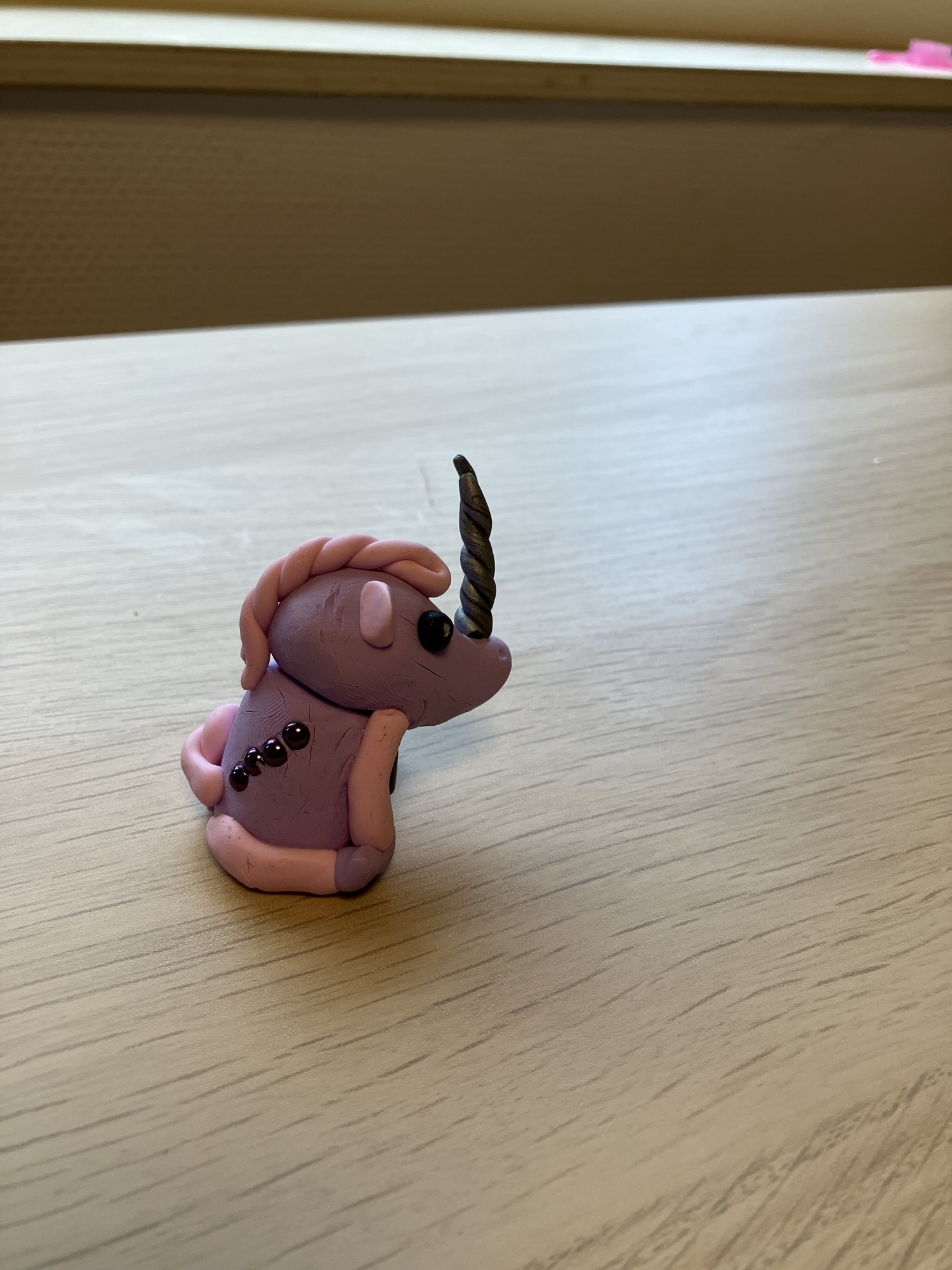
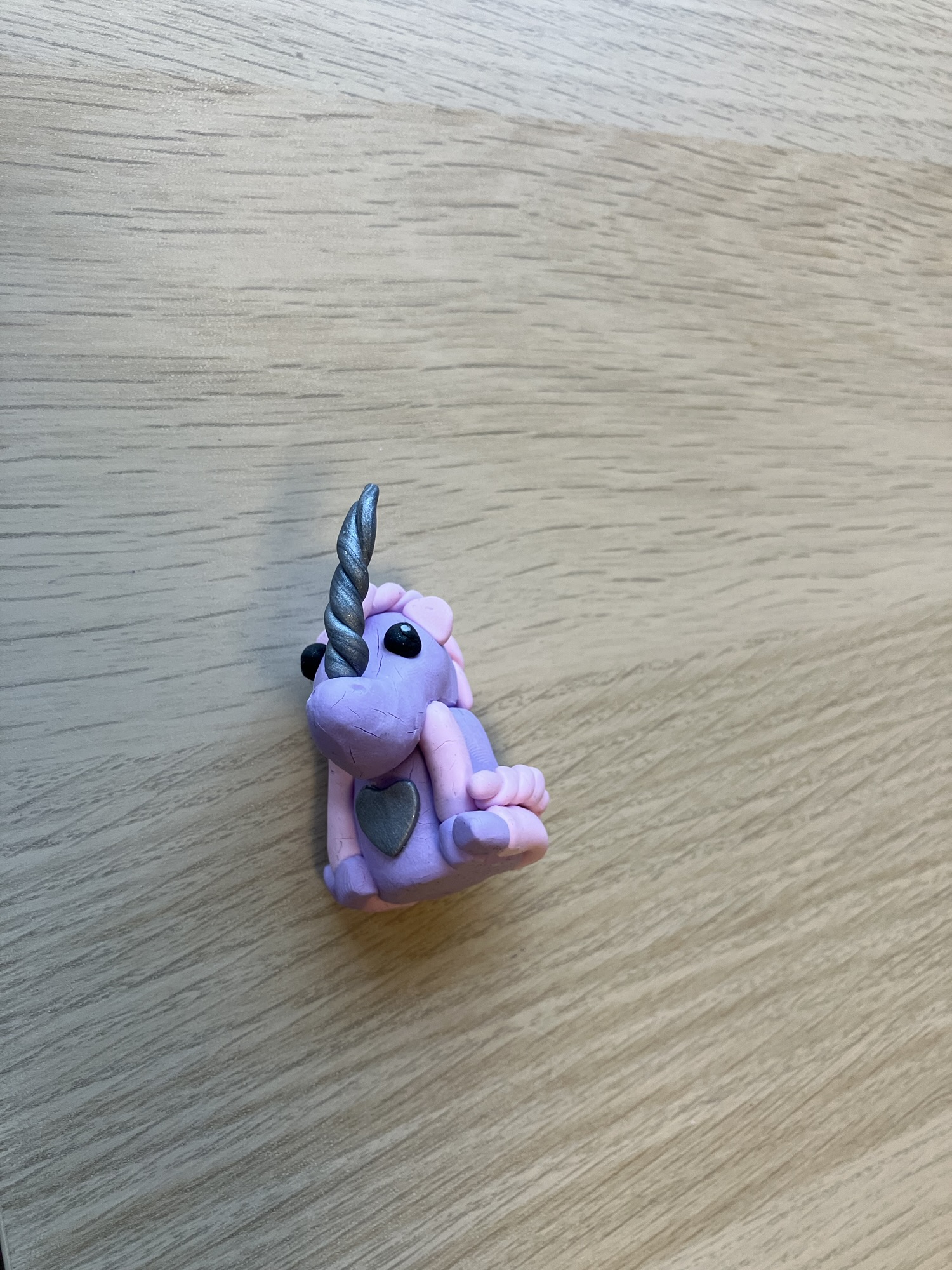
If we were having coffee, I would however also share that I still experience moments of joy. For example, on Monday, a new student staff was being introduced to my activities and we created a unicorn (of course) out of polymer clay. This time, because the unicorn was rather fat and the staff had placed the front legs far apart, I chose to add a heart to its belly. I also decorated its back with rhinestones. Two pictures below, because my staff couldn’t capture both the heart and the rhinestones in one.


If we were having coffee, lastly I’d tell you that I struggle with self-criticism and this also leads me towards less creativity. I, however, overcame the feeling that I “should be better” sometime on Tuesday when I created a rather simple bracelet. It was just beads stringed onto elastic wire. However, looking at my comment about emotional development, I sincerely believe I did a pretty awesome job, since a toddler can’t do this at all.

Sorry for the rambly post. I’m still feeling hazy after another meltdown. By the way, no meatballs for our evening treat, as somehow they’d disappeared.

Growing Up Emotionally

Today’s Ragtag Daily Prompt is “when I grow up”. I’m going to be forty next year, so by most standards, I’m considered to have “grown up”. Only by the model that includes life experiences such as working, buying a house, etc., I’m not necessarily truly an adult. After all, though my spouse and I own a house together, buying it was mostly done out of necessity so that I could go into long-term care. I’ve never worked, not even had a side job as a teen.

That being said, in many respects I’m still young at heart. I know everyone my age says so to be cool, but I don’t mean it in a positive way. Rather, I mean it to say that emotionally I’m very vulnerable. Like I shared when discussing emotional development as it relates to intellectual disability (and autism) in 2023, on many subscales of the emotional development assessment used here in the Netherlands, I’m considered an infant or toddler. That doesn’t mean I can’t grow.

When I grow emotionally, I’d like to become more regulated. My psychiatrist used to say that I’d likely experience less emotional dysregulation after age thirty. I’m not sure that’s true in my case. In fact, I’m pretty sure it’s not true. The frequency and severity of my meltdowns has increased, though the duration has lessened significantly. I no longer experience outbursts that last all day. That, I mostly attribute to my staff’s proactive attitude.

I’d also like to be more independent. The problem with this, however, is the fact that my energy level varies significantly from day to day. Because of this, I hardly ever progress in my independence even though I might be able to. The reason is the fact that, if I do something independently once, my staff and others are going to expect me to always be able to do it.

Same for adaptability and emotional regulation: my abilities vary from day to day and sometimes hour to hour. I, for this reason, struggle to really make progress. That doesn’t mean I don’t want to.

Friday Feels (October 4, 2024)

Hi everyone. I have a ton of ideas of what to write about floating in my mind, but because of this I struggle to pick one. I’m going with Deb’s Friday Feels. I loved coming up with an F word last time.

F word

My F word for this week is “fruit”. Like I mentioned earlier, I bought a slow juicer. My spouse cautioned me against using it daily because of the risk of microplastics getting into my juice, as the juicer is a Chinese brand. For this reason, I’ve only used it once so far and only juiced an apple.

I since discovered that I can do far more with my blender (which is safe to use according to my spouse) than I used to think. I mean, I have one book of smoothie recipes that has a ton of juice-based ones in it, like recipes for which you need carrot juice, blueberry nectar (which I found out is just sweetened, thickened blueberry juice), etc. I decided to look beyond this book, as I have many other books on the topic of smoothies and juicing.

Today, I made my first green smoothie. Of course, I didn’t use just greens, as that’d make the smoothie taste horrible. I used spinach, pineapple, banana and coconut water. I think this smoothie can compete with the smoothie I made a few weeks back that I said was my favorite. My fellow residents loved it too.

What made me happy?

I’m in a pretty good mood, but there’s little specifically that made me happy. Then again, being in a good space mentally is a good enough reason to be happy, in my opinion.

What made me sad?

Not sad per se. More like frustrated. A skin infection on my face. Thankfully, the staff finally saw that it needed treatment yesterday and the institution nurse agreed, so I now have a salve for it.

Oh, and the fact that the entire town was cut off from WiFi yesterday afternoon and it wasn’t solved until this morning. This is costing the institution lots of money, as the night staff rely on WiFi-connected technology to know when we need them, so now each home had to have its own night staff.

What made a difference?

Two things. First, my support coordinator is genuinely listening to me with regards to my struggles in play therapy and in general. I have this issue with being very much behind emotionally and I struggle with this, because sometimes I can explain the theory, but this doesn’t mean I can help myself in reality.

Another, somewhat related thing was the video interaction support I got on Tuesday. Then, it was just someone recording me and a staff interacting on video without any feedback, but I’m hopeful the staff will learn something by looking at the video at a later time.

Friendship: What It Means to Be a Friend #AtoZChallenge

Hi everyone. For my letter F post in the #AtoZChallenge, I had a lot of choices and yet this actually overwhelmed me. I am once again doing a post on a topic I think I covered in 2019 too, ie. friendship. What does it mean to be a friend?

My spouse and I are best friends. Since we aren’t in a traditional relationship due to for example not living together, we need to find other ways to make our relationship work. However, we were friends before we were a couple.

As someone who didn’t have any friends beyond elementary school until I met my now spouse, I am not the best possible judge of what makes a friendship tick. I mean, I can look at what psychologists say about the development of friendships from early childhood into adulthood.

For instance, three-year-olds say someone is their friend because they play with them on the see-saw and “doesn’t want to be their friend anymore” as soon as the other child isn’t any longer interested in the same activity. I have this kind of relationship with some of my fellow residents.

As a child gets older, they develop more perspective about the fact that other children aren’t just momentary playmates, but their viewpoint is still very one-sided. For example, a six-year-old might consider someone their friend because they save them a seat at the bus or give them treats. They don’t yet fully comprehend mutual give-and-take though.

This follows at the next stage, which starts at around age six and continues throughout elementary school age. At this point, children are very fairness-conscious and usually have rigid rules for give-and-take.

At my very best, I am stuck at this stage. Usually though, I am at the second stage, hard as I find it to admit this. I, after all, usually only think of giving something in return for the things (material or immaterial) my spouse gives me when I’m in a very healthy place mentally.

At the next stage, which starts at around age eleven, children develop intimate friendships in which they mutually support each other. They help each other solve problems and confide feelings in each other that they don’t share with anyone else. Like I said, I never had friends beyond elementary school before meeting my spouse. Though I did and do confide in my spouse, I am pretty bad at offering my spouse any emotional support in return.

Finally, adolescents and adults have mature friendships in which they emphasize emotional closeness over anything else. They can accept, sometimes even appreciate their friends being significantly different from them. People at this stage emphasize trust, knowing their friendship will be long-lasting even through temporary separations and differences.

#WeekendCoffeeShare (February 17, 2024)

Hi everyone. I’m joining #WeekendCoffeeShare today. Like most times, I’ve already had my last cup of coffee for the day. I hope we still have apple and peach-flavored Dubbelfrisss, my favorite soft drink, though. We’re permitted a soft drink each evening as opposed to just on weekends as of this week, but I haven’t had it each day and I’m pretty sure I’m the only one who drinks this particular soft drink, so I’m optimistic there’s still some left. Anyway, let’s have a drink and let’s catch up.

If we were having coffee, first, I’d talk about the weather. It’s been a rainy but mild week. In fact, on Thursday (if I’m correct), the daytime temperature climbed to 15°C. Today was the best day of the week as far as it not raining goes, but we did get a few drops here and there.

If we were having coffee, I’d share that I taught myself and subsequently my staff a new dice game called Centennial. It is a welcome distraction from the usual Yahtzee. I have also been playing Mexican, which is supposedly a drinking game but it can be fun without the beer too.

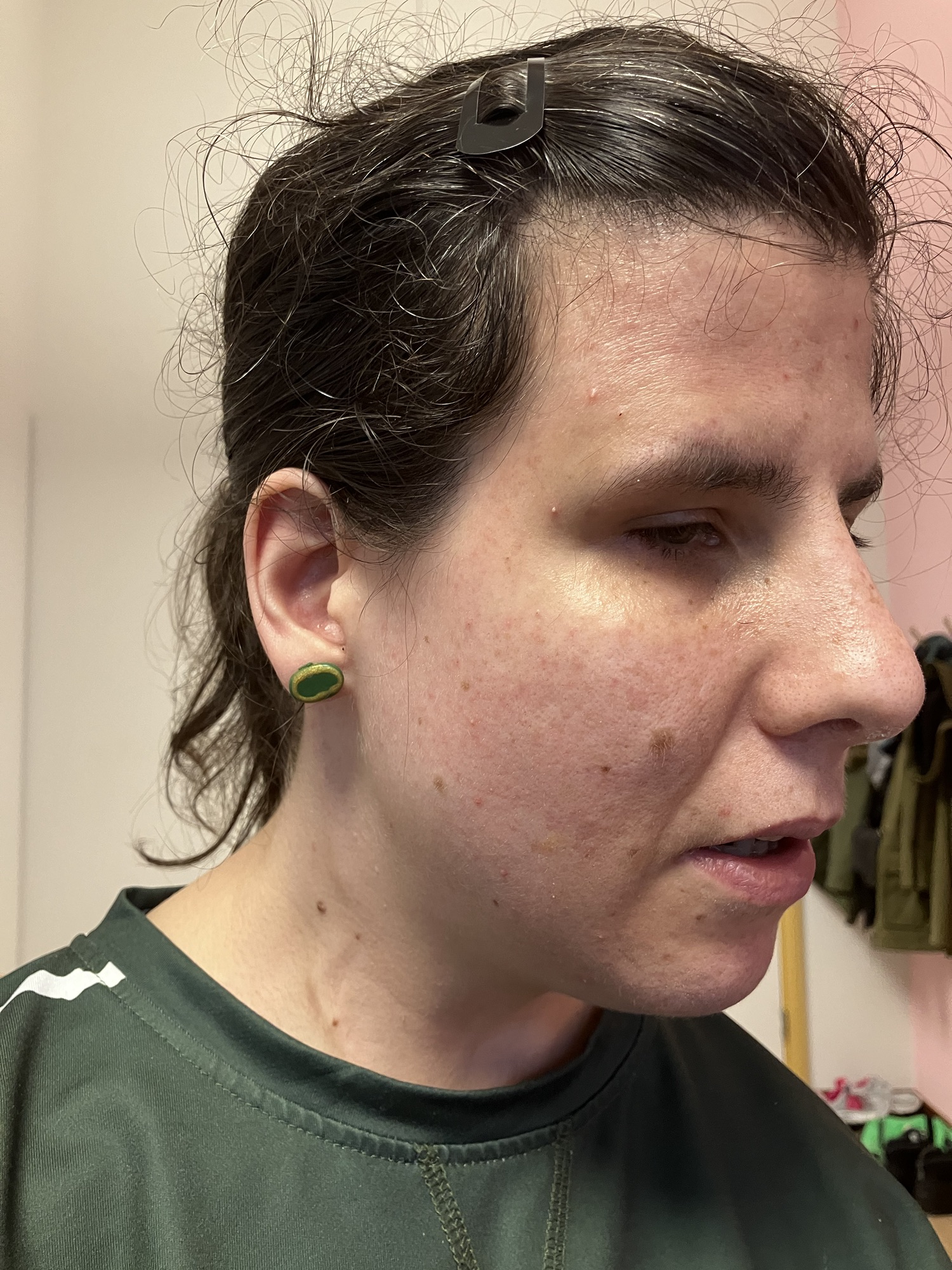
If we were having coffee, I’d tell you that, on Thursday, I finished the first pair of polymer clay earrings I can actually wear. The previous pairs of earrings I created had been hooks, which I can’t yet wear due to not having had my ears pierced long enough. I finally found an easy-to-follow YouTube tutorial on how to embed earring posts into polymer clay. Even though I could only do a small part of the work myself, I am quite satisfied with the result. And, of course, I did create the original earrings myself. These are a simple design of leaf green Fimo ovals with gold Fimo liquid around the edges for decorating. In the future, I really hope to create more earrings.

If we were having coffee, I’d share that I rewrote my care plan together with my support coordinator. I’m still unsure as to what I think of it.

Particularly, I feel rather stressed out about the portion about my emotional functioning. I had an emotional developmental assessment done in 2018, which determined I function in most areas comparable to a child age 6-18 months. In some areas, it estimated my functioning to be much higher than I would estimate my own, such as in object permanence, while in others (such as handling unfamiliar material), it estimated me to function at a much lower level. I mentioned this to my support coordinator, who proposed the assessment be repeated. Since my one-on-one is largely based on my poor emotional functioning and the discrepancy between this and my IQ, this stresses me out. This especially since my assigned staff, who will likely be asked to complete the associated questionnaire, grossly overestimates my capabilities based on my verbal skills.

On a positive note, my previously assumed exact IQ score, which dates back to a test done in 1999, was finally removed. Yay, I am no longer 154. Instead, I am said to have an “above-average IQ”, which is more in line with a more recent IQ test (also a little dated, but at least not 25 years).

If we were having coffee, lastly I’d tell you all that, next week, I’ll finally be taking my next step in tapering my antipsychotic, Abilify. I took two tiny steps back in 2022, but remained at my current dosage ever since August of 2022 due to never having stabilized in the intensive support home. Now I’m not sure it’s the right time either, but then again I doubt it’ll ever be the right time, in that I’ll probably never be fully stable. I will go from 25mg to 20mg a day. I will stay on this new dosage for at least six weeks, unless of course I’ll spiral out of control to the point of necessitating we return to the old dosage. Wish me luck!

Act Your Age, Astrid?!

Hi everyone. Today’s topic for Sunday Poser is the idea of acting our age. Society expects us to act a certain way depending on our age – not just behave quite responsibly past our mid-twenties or so, but also to wear certain clothes, listen to certain music, enjoy certain activities, etc. depending on our age. Do we generally conform to that expectation? A quick read through the comments on Sadje’s original post gave me the impression that, no, we don’t. And I personally certainly don’t.

With respect to the responsible behavior part, I have to admit, unlike the other participants, that I’m very much a child – no, a toddler – at heart. I still have significant temper outbursts, for instance. In fact, on my thirtieth birthday, I had an intense outburst and was adamant that I could no longer have those in my thirties. Well, my brain wouldn’t listen. It’s said that my emotional developmental level is comparable in many ways to that of an infant or young toddler.

In other ways, I’m still a child at heart too. I love unicorns, going on the swings at the institution playground and stuffed animals. I even talk to my stuffed animals at times.

Then in other areas, I do act my age or even older. I’m not keen on using my phone when doing another activity and get annoyed when my staff get constantly distracted by text messages. I don’t really do social media except for Facebook (which probably makes me appear really old). It isn’t that I haven’t tried, but I was rather late to the party with most platforms.

Of course, the fact that I use the singular pronoun “I” here, is a bit misguided too, since we’re a plural system and there are parts of all ages. This is probably one of the reasons that I can talk to my stuffed animals happily one moment, have a temper tantrum the next and be involved in an “old-fashioned” hobby later. I do sometimes wonder whether my parts are genuine alters or whether something like internal family systems could help them too. Then again, I’m not in therapy, IFS or otherwise, anyway.

Self-Injurious, Aggressive and Otherwise Challenging Behavior in People With Intellectual or Developmental Disabilities #AtoZChallenge

Hi everyone and welcome to my letter S post in the #AtoZChallenge. Today, I want to talk about self-harming, aggression and other challenging behavior in people with intellectual and developmental disabilities.

Some people erroneously believe that challenging behavior is an intrinsic part of being intellectually disabled. It isn’t. Neither are self-injurious or aggressive behaviors an intrinsic part of autism. These behaviors, however, do happen more often among people with intellectual and developmental disabilities than among non-disabled people.

The causes and reinforcing factors of challenging behavior are often complex. And though I mention them in one sentence, no, a reinforcing factor is not the same as a cause. Furthermore, if removing a reinforcing factor seems effective at reducing or eliminating the undesired behavior, this does not mean the problem is all solved. After all, especially people with intellectual and developmental disabilities who are at a lower emotional level of development or who struggle with communication are at risk of suffering in silence.

It may be tempting to presume motivators behind challenging behavior that are commonly believed to apply to typically-developing young children, such as attention or “getting their way”. Presuming these motivators, even correctly, is not taking into account the fact that people with intellectual and developmental disabilities are firstly not (necessarily) young children. Secondly, you need to realize that, like all people, they have a need for autonomy and attention and many, especially those living in institutions, are heavily lacking in both.

There are, of course, many other contributing factors to challenging behavior. For example, physical discomfort or pain may be a factor for some, especially those with profound intellectual or multiple disabilities. Others may have experienced trauma and struggle with attachment. I for one have relatively mild attachment issues (at least as apparent in my behavior) compared to some of my fellow clients, hence why I always get stuck with the temp workers. This of late has been causing me a lot of distress and has led to significant challenging behavior, which unfortunately for me isn’t significant enough to warrant any changes. Then again, if it did, those changes might well constitute restrictive measures.

Emotional Development As It Relates to Intellectual and Developmental Disabilities #AtoZChallenge

Hello everyone. For my letter E post in the #AtoZChallenge on disability, I’d like to talk about emotional development. This is one of my pet peeves, as I myself am considered as having a very significant gap between my intellectual and my emotional level of functioning. For people with an intellectual disability, this is often the case too. In an ideal situation, regardless of developmental level, a person’s intellectual and emotional functioning are in sync. That way, after all, they can more or less be understood like you would a child of their developmental age. (I know that infantilizing disabled people is highly discriminatory, so it’s more complicated than that. For the purpose of this blog post though, I will not go into that. And, for the record, I personally find the concept quite useful for myself.)

The concept of emotional development in intellectual disability here in the Netherlands is most well-known from child psychiatrist Anton Došen. Došen wrote a book on working with developmental ages. He explained about intellectual and emotional development. People’s emotional development rarely surpasses their intellectual level.

In the book, he detailed either seven or five stages of child emotional development. I say possibly seven because a typically-developing child goes through seven stages, but intellectually disabled people aren’t presumed to reach an intellectual level beyond that comparable of a twelve-year-old child. For this reason, Došen postulates that the last two stages aren’t relevant to people with intellectual disabilities.

The stages are:


  1. adaptation phase: 0-6 months. Babies learn to adapt to the world outside of the womb. Babies will not yet explore the world around them, but will explore their own bodies. They will learn to adapt to temperature changes, sensory stimuli, etc. People stuck in this stage will usually show severe agitation when overstimulated, but they are not able to consciously direct this at other people or their environment. Disabled people stuck just in this stage are usually profoundly and multiply impaired, although people with severe mental illness or developmental disabilities such as autism may regress into this stage at times. I, for one, do.

  2. First socialization phase: 6-18 months. This is the stage in which a child (or disabled person stuck in this stage) will be focused primarily on the caretaker as an extension of themself. Secure attachment is of prime importance for children at this age and insecurely attached individuals might be stuck at this stage (again, me). Many individuals with less severe intellectual disabilities or even no intellectual disability at all, are emotionally at this level (like myself). They, like individuals stuck in the first stage, require individual support.

  3. First individuation phase: 18-36 months. During this stage, children learn that they are their own person separate from the caretaker. This can lead to conflicts related to their need for autonomy vs. their need for care. They, like children in the previous stage, experience separation anxiety. It is also common for individuals stuck at this stage, particularly more verbally capable ones like myself when I’m well, to engage in power struggles. Think of the “Terrible Twos”. Individuals who function at this level, will be able to cope with less one-on-one support.

  4. Identification phase: 3-7 years. During this phase, children learn to identify with important role models such as their caretakers and learn social rules and norms from them. Early on in this stage, children will still often feel tempted to do things that aren’t okay, but later on, they will learn to follow socially-accepted rules even when the caretaker isn’t present. Children or people who function at this level often come across as self-centered because they are unable to see things from another’s point of view. For this reason, they can (unintentionally) hurt each other. The ability to understand another’s viewpoint doesn’t develop until a child is about six-years-old. Individuals in this stage can be supported from a distance (in a group setting), but will need individual support when stressed.

  5. Sense of reality: 7-12 years. During this phase, children are usually in primary school, so contact with peers is more important than contact with caretakers. Children will learn to think logically and their distress tolerance will increase. Individuals in this stage need less support than those in the previous stages. It is more important to negotiate responsibilities with the client and to discuss conflict situations after they’ve occurred. I, honestly, cannot relate to anything within the description for this phase.


The next two phases are the second socialization and second individuation phase, which are usually only reached by typically-developing young people. I have not been able to find information on these stages yet.

The scale for emotional development used in the Netherlands for understanding people with intellectual and developmental disabilities, makes use of eight different domains of emotional development, on which a person can be scored differently. For instance, on the domain of body awareness, someone might score as functioning between 0-6 months, while in the area of handling material, that same person might be seen as functioning like someone between 7-12 years. Someone can also regress back into an earlier phase when under severe stress.