Feelings After Watching a Documentary on the Blindness Rehabilitation Center

Today, I got a subscription to see past episodes of Dutch television programs mostly so that I could see a documentary series called Five Days Inside. It’s where three presenters rotate to visit mostly health care settings or other institutions that are not commonly shown to the general public. The episode of four weeks ago was about the blindness rehabilitation center I attended in 2005. I actually still recognized some of the staff talking to the presenter from when I went there.

Watching it had me very emotional. I don’t know why. I guess because most of the clients who were featured, some roughly my age when I attended the program, are so optimistic about their future despite sometimes having recently lost their vision. When I attended the program, I often felt way ahead of these people and way behind of them at the same time. After all, I had pretty good Braille reading skills. My reading speed at the start was more than twice that which is the ultimate goal of the rehabilitation program for adults. As I learned today while watching the episode, some people don’t even have the tactile ability to ever learn Braille. Most will only be able to use Braille for simple labeling, not for reading books, like I do.

On the other hand, I never learnd to cook. Not in those four months in the center or the eighteen months in an independence training home that followed. It wasn’t for lack of teaching, but I couldn’t manage these tasks. Or even simpler tasks such as putting peanut butter on bread.

Today, I talked to my CPN from the mental health agency. We were talking about my skills or lack thereof. She seems to blame my parents for not having taught me properly. I understand. Then again, with my having had a meltdown each time my parents tried to make me learn new practical skills, it’s only understandable that they gave up. My CPN acknowledged this is a common autistic trait. My parents would say I’m not autistic, just stubborn. Apparently I decided from as early as age seven on that I would never learn practical skills because I couldn’t do them visually. Or maybe because I thought I was too smart for them. I don’t know what my father’s theory boiled down to exactly.

And now I see these blind or partially sighted people who are planning on working or going to college. I don’t know how I feel towards them. On the one hand, I feel envy. I wish I could cook tuna macaroni or zucchini soup. I wish I could ride the bus on my own, then go into town to buy raisin rolls. I wish six months of training could teach me the skills to live independently and go to college or work.

Then on the other hand, I feel an enormous sense of relief. I feel relieved that somehow my support coordinator was able to convince a long-term care funding lawyer that it’s at least partly due to blindness that I can’t.

PoCoLo

Taking a Risk

Today I’m joining in with Five Minute Friday (FMF). The prompt this week is “Risk”.

Last month, like I shared in passing on this blog, I finally opened up to a behavior specialist at my care facility about my struggles. I was really putting myself out there. In my mind, I took a huge risk, because I felt that if I was open about what I really needed, I’d be kicked out of the care facility. I wasn’t.

Then two weeks ago, as I discussed my issues with my community psychiatric nurse (CPN), she started to suggest I live in an apartment building for autistic people. That didn’t sit well with me. I mean, I don’t care who my fellow clients are as long as I get the support I need and I won’t get that in an apartment building. I mean, of course I do somewhat care about my fellow clients, but not in the sense that I need to be able to get along well with them. They aren’t my friends, after all.

I still feel I’m taking an immense risk by opening up about my feelings. I did so again last week, when I asked the staff at my facility to ask the physician for a script for some tranquilizer. The reason is that I’m due to have an old filling repaired at the dentist’s next week. The area surrounding the tooth is already inflamed and I experience considerable pain from it, so I know it’s going to be hard going in and having it fixed, despite the option of getting a topical anesthetic.

So I put myself out there again and asked for something to calm my nerves. Initially, the doctor told me to take 0.5mg lorazepam. Well, that’s not going to work. So I felt off again, like I was being a drug seeker and a burden. I’m used to being seen as a burden, after all.

Being genuinely open about my feelings, my needs and even my wishes is a huge accomplishment for me. I’m totally used to being judged. After all, if people really see me, aren’t they going to discover how wicked I really am? Apparently not.

Quote of the Day (February 19, 2020): Everyone Sees What You Appear to Be

“Everyone sees what you appear to be, few experience what you really are.” – Niccolò Machiavelli, The Prince

When first starting this blog, I intended to do a daily quote of the day post. I never did. In fact, my “Quotes” category has only four posts. I do like quotes though, so when I figured I had nothing else to share, I decided to do a quote post again.

Today I checked out a sort of guided self-discovery journal called Happy to Meet Me. This quote was printed above the first prompt. The prompt was about common misconceptions about you. It asks you what you wish people would automatically see about you.

This is harder than I thought. After all, the prompt isn’t what you wish people didn’t immediately know about you. I mean, that would be easy. I wish people would see beyond my blindness. But then what would they see?

I think most people would see me as still somehow disabled if they didn’t see I’m blind. Like my sister said when I was a teen, I don’t appear like someone my age judging from even my way of walking. Of course, I have mild cerebral palsy, but the average Joe won’t have a clue. They’ll most likely think I’m intellectually disabled. Until I start to talk. Then most people will be baffled and start to assume my every way of being different is due to blindness again. After all, most people here are still pretty clueless about autism.

I don’t really know what I wish people would automatically know about me. I mean, back when I was still more serious about blogging, I knew that people had their blog name printed on T-shirts and I even for a fleeting moment considered getting one myself. I’m glad I never did, as honestly in the age of smartphones I don’t think I’d want people in the streets to be able to Google me without ever having met me. I mean, my blog is way too personal for that.

I can think of things I wish professionals would automatically know about me. I wish they understood the disconnect between my intellectual and emotional functioning. I can also think of things I wish friends would automatically know. I wish they’d know about my interests. But what would I want other people in general to know? I guess I’d start with the very basic: I am a human being just like you.

What do you wish people would automatically see about you?

Five of My Bookish Habits

I’m once again joining in with Top 5 Tuesday. This week, the topic is bookish habits. Some of these are probably rather common, but some might not be.

1. I tend to read multiple books at a time. It’s rare that I finish a book before another one captures my interest, so I usually have at least three books I’m in the process of reading at the same time.

2. I almost exclusively read eBooks. Okay, so to those who know me, this may be obvious. I am blind and Braille books are extremely clunky. Then again, I hardly ever listen to audiobooks either. The reason is my poor English listening skills. Oh yeah, I hardly ever read books in any language other than English. This may seem obvious to those who don’t know me, since then you might not know that Dutch is my native language. I don’t seem to like Dutch books though.

3. I can’t do anything else while reading. Can’t listen to music or have the TV on or the like. I’m trying to train myself to listen to whale sounds or other white noise while reading. Otherwise I’m unable to read at day activities and I’d love to be able to do that.

4. I’m a true book collector. Especially now that I am a Bookshare (U.S.-based accessible book service) member, I download a lot more books than I actually read. I mean, when I was younger, my parents or later I myself would have to manualy scan print books for me, so I had an incentive to read all books on my shelf. Now I have a ton of textbooks and self-help books I only ever page through. My fiction bookshelf also has a lot on it I haven’t read. Conversely though, my Goodreads TBR list is rather short. The reason is I hardly use Goodreads.

5. I’m obsessed with checking book length and my progress percentage once I decide to read a book. I’m a slow reader, so I often want to know if I’m progressing nicely.

What are some of your bookish habits?

Guilt Won’t Help Suicidal People

Yesterday Ashley shared a piece about a blogger friend of hers who had died by suicide and the guilt trips she received on Twitter. The person had scheduled her post for after the fact, so she most likely didn’t see the guilt-tripping. However, this got both Ashley and me thinking about guilt tripping not being a suicide prvention strategy.

This person had written that her intent was to be hit by a train. This led people to blame her for traumatizing the train driver. While it is true that train drivers are often traumatized by people running in front of their trains, it is equally true that guilt won’t help suicidal people.

I was in a suicidal crisis in 2007. I also intended to be hit by a train. I disclosed this to my support worker in a voicemail message, which people overheard, as I was on a bus. They called the police, who called someone called a community physician. This doctor was supposed to liaise with the mental health crisis service. For some stupid reason, the police in that city can’t directly call the crisis service. Anyway, this doctor told me I was making people feel responsible for me.

Well, let me tell you, in a depressive state or any state that can lead to suicidality – mine was diagnosed as adjustment disorder -, this won’t help. This will, if anything, just tell the sufferer that their suffering isn’t as important as someone else’s suffering. It will also most likely reinforce the prevalent idea among depressed people that they aren’t worth much, which may further reinforce their suicidal ideation.

I also want to say there is no way of dying by suicide that won’t affect others. Then again, there is no way of dying that won’t affect those lefte behind.

Some people think that running in front of a train is extra selfish. Well, once I was in the hospital, I spoke to my mother. She told me that I was selfish, because if I died by suicide, my parents would have to pay for my funeral. Let me tell you, this only made my depressive mood worse.

Sometimes, it can help suicidal people if you gently ask who they will leave behind, so that they might realize they still have loved ones. It didn’t help me. I didn’t have friends at the time and my family were, like I said, very unsupportive. In any case, don’t appeal to someone’s sense of responsibility or selflessness. That’s only going to make them feel worse and it won’t actually help those who would be affected by someone’s suicide. People who are suicidal benefit from support, not judgment or guilt tripping.

#FOWC: Euphoric

I haven’t felt really happy for longer than a few minutes at a time in a long while. I mean, yes, sometimes I laugh out loud and feel pretty good for a few moments. Overall though, I feel irritable.

I have never experienced an euphoric mood as far as I know. Then again, in mental health, euphoria isn’t seen as something positive. It is one of the manifestations of the (hypo)manic phase of bipolar disorder. The other, dysphoria, is not as commonly recognized as a bipolar or mood disorder phase.

I’m not bipolar. I never experienced mania or even hypomania. I do however experience dysphoric symptoms. In fact, I’m almost always irritable.

Back in the day when the DSM-5 was being drafted, the term for what is now called disruptive mood dysregulation disorder, was temper dysregulation disorder with dysphoria. Neither term feels right to me, as someone who may’ve been diagnosed with DMDD as a child had it existed in the mid-1990s. I feel mood dysregulation disorder with dysphoria would be a better name. I mean, yes, of course these kids are disruptive, but the focus should be on their unstable mood. DMDD is characterized by the occurrence of frequent mood outbursts combined with a generally irritable mood even when the child isn’t experiencing dysregulation.

Thankfully, irritability was added to depression’s mood criterion in DSM-5 too. Before then, it was only a criterion in children and adolescents. I, however, have always experienced dysphoric depression. In fact, I’m pretty sure I’m diagnosable with persistent depressive disorder.

This is one reason I might want to experience a bit of an euphoric mood at times. Maybe I do get it, but usually it happens at an inconvenient time. I mean, I occasionally experience an extreme flow of ideas combined with an urge to act on them. Usually this happens during a night I cannot sleep though, so I cannot act out my impulses immediately. Then often the next day I’m back to my usual, irritable and slightly depressed self. Even though I know that it’s not an entirely positive thing, I wish I experienced euphoria for a longer while at times.

Top Five Books That Exceeded My Expectations

I am once again in the mood for books and book blogging. Today I discovered a new to me bookish meme called Top 5 Tuesday. Today’s topic is about the books that exceeded your expectations. Now I must say that I don’t usually read books I don’t expect to really like. For this reason, last week’s topic of books that weren’t what I expected, is a lot easier for me. Still, particularly in the last few years, I’ve come to read a few books that are outside of my admittedly rather narrow comfort zone and that I did end up loving. Here they are.

1. Brave New World by Aldous Huxley. Well, let’s start with a book I read many years ago. I read this in high school for no other reason than it being in the public domain so easily accessible to me as a blind girl from a non-English-speaking country. I ended up really liking it, unlike the other books I read for English literature.

2. Don’t Wake Up by Liz Lawler. This was really outside of my comfort zone. I usually read YA and had never read a thriller before. The blurb spoke to me though. I ended up finishing this book in a few days, which is extremely rare for me.

3. Attachments by Rainbow Rowell. Though Fangirl has been on my TBR forever, I decided to read Attachments first. It is outside of my comfort zone too, as I rarely read romances or adult fiction in general. I really liked this one though.

4. Cruel to Be Kind by Cathy Glass. Of course, I need to include a memoir in this list, as that’s my favorite genre. I was told about Cathy Glass’ books many times by my trauma survivor friends in the UK and Ireland, but never got to read her books until I picked up this one in 2017. It isn’t the best book of hers I’ve read since, but it was the book that got me into Cathy Glass.

5. Unspeakable by Abbie Rushton. Will I ever have a top five list without this one on it? ☺️ This was a book I really expected to like, but it turned out even better. I loved the plot. It’s a shame I still haven’t read Consumed yet.

My Medication Musings: Risperdal

I started this should-have-been-series a long time ago, but never got beyond the first post. Today I’m not very inspired to write, but I want to write something anyway, so I am deciding to continue with my medication musings. The medication I’m covering today, is the first daily medication I was evver prescribed.

Risperdal, which is now sold under its generic name risperidone, is an atypical antipsychotic. It was approved by the U.S. FDA for use against irritability in autistic children in 2006. I was not a child when I was prescribed Risperdal in 2007, but I was definitely irritable and autistic.

I remember very clearly when I saw a psychiatrist I’d never met before and who may or may not have read up on my psychiatric history on July 25, 2007. She had a strong Flanders accent. My CPN had referred me to her after my staff at the independence training home called her because I had been very irritable of late. Looking back, it’s no wonder, since I was due to move out of the home and into independent living the next week. But my staff were desperate and so was I.

My CPN had suggested a sleeping medicationor tranquilizer, as I was also sleeping very poorly. Not that the psychiatrist agreed, since when I reported how many hours of sleep I got at a later phone consultation, she said that wasn’t worrysome. The psychiatrist listend to my symptoms and suggested Risperdal.

I agreed without much further questioning. That evening, I wrote a blog post saying antipsychotics in autistics are a matter of really well-informed consent. The post was a response to the general consensus at the time among vocal autistics that antipsychotics should never be considered.

Looking back, while I don’t feel that antipsychotics are completely off limits for autistics – I still take one -, I do agree with another notion from said vocal autistics: psychiatric medication is no substitute for proper support. And yet, at the time, there was no convincing my staff that I shouldn’t move into independent living, so I felt I had no other option if I wanted to have somewhat of a life worth living.

And yet, I was scared. When, after two days, I started experiencing palpitations, I was extremely anxious. It happened on a Friday night when my staff were already gone. Don’t ask me how I got through that night. The next morning, I rang the out-of-hours GP, who recommended I stop taking the medication for a few days and consult my psychiatrist on Monday. Said psychiatrist didn’t believe that this could be a Risperdal side effect or I’d have experienced the palpitations right from the start. So back I was on Risperdal.

I was on a low dose of 0.5mg twice a day. My psychiatrist was in the training home’s city, so when I moved the next week, I had no psychiatrist nearby. My GP ended up prescribing my medication. When I complained to both the training home city psychiatrist and my new GP about continuing palpitations, both dismissed me. The psychiatrist even suggested I up my dose. I refused.

Because of the abrupt change in my living situation soon after starting Risperdal, I had no idea whether it was working. I was still experiencing a lot of meltdowns.

After two months, I took myself off of the medication. I more or less informed my GP, because she was really against me going off of it. I probably lowered my dose way too quickly, going from 1mg a day to 0.5mg for a week and then stopping altogether.

We will never be sure whether Risperdal worked for me, as I never went back on it. However, three weeks after stopping the medication, I started to spiral down into crisis and had to be hospitalized four days later. The crisis service psychiatrist didn’t say a thing about me having discontinued Risperdal.

An interesting thing I need to note, is the fact that Risperdal is notorious for increased appetite and weight gain. However, I experienced the opposite if anything. This could’ve been due to stress though.

Gratitude List (February 8, 2020) #TToT

It’s Saturday and I haven’t published a blog post in a few days. Today I am bored and slightly depressed, so I thought I’d join in with Ten Things of Thankful (#TToT) to lift up my mood.

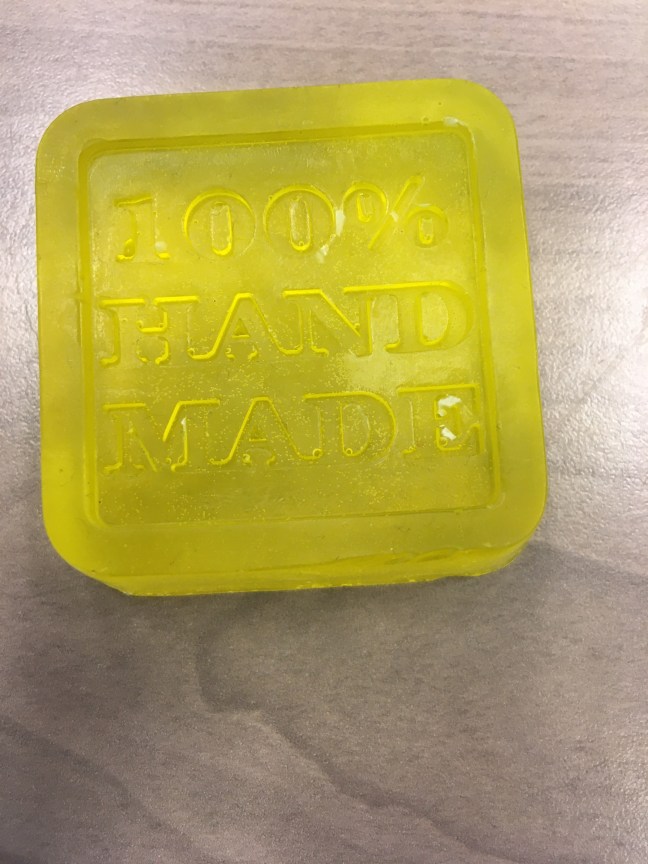
1. Soap making. On Sunday, I asked my husband to sort through my soaping supplies. He didn’t need to though, as the essentials were all in a wheeled shopping bag. My mother-in-law took me back to the facility on Sunday evening, so she put the entire thing in the back of her car and helped me get it inside. I took it to day activities on Monday and have been making soap a few times this past week already.

2. Ordering new supplies. I didn’t have a lot of soap base in the bag, so I had an excuse to order new soaping supplies. Besides new soap base, I ordered bath bomb and bath salt making supplies. I never made bath bombs or bath salts before. I am really excited to try.

3. The cooking activity at day activities. I used to do a simple cooking activity with the staff intern on Wednesday. Now that her schedule has changed, we do it on Tuesday. This past Tuesday, we in fact had ingredients for two recipes: ham and cheese sandwiches and a creamy cookie dessert. The reason is that last week, we didn’t do the cooking activity because I had a meeting with the behavior specialist then. The intern had time to help me with both. We ate the sandwiches for lunch and had the cookie dessert later in the afternoon. It was extra gratifying, as the clients on my side of my day activities group can’t have sandwiches due to swallowing issues, but most can have the dessert. We served the sandwiches to the other side and I actually had both.

4. My weight. I got weighed in on Wednesday and I had a small gain of 200 grams (less than half a pound). I attribute that to all the treats I had on Tuesday though. I’m also happy, because people actually notice that I’m skinnier (or rather, less fat, of course) than I used to be.

5. Some long’ish walks. I mean, no, I don’t walk for an hour like I used to at my old day activities and with my home support staff, but I did have some walks of about half an hour. Despite not having walked in the evenings much this past week, I did manage to get to 175 active minutes.

6. The support from my assigned staff. I was somewhat distressed this past week, as I’m still not fully recovered from the meltdowns I had last week. However, my support staff are all very helpful.

Like, yesterday I had a meeting with my nurse from the mental health agency. When I explained my difficulty coping with the noise at day activities, she started to suggest I move to an apartment building for autistic people and occupy myself there or go work at a sheltered workshop. This isn’t suitable and my staff helped me explain this to my nurse.

7. French fries and ice cream. My husband said on Thursday that he couldn’t come by for a long visit today but could take me out to have some fries and a snack for dinner. Today, he canceled. Of course, I miss my husband, but I didn’t miss the fries, as my staff thought it’d be a good idea to order fries and snacks for the entire home. We also had ice cream, which was still left over in the freezer from Christmas. I had the last serving of whipped cream-flavored ice cream.

I can’t get to ten, but I’m definitely in a brighter mood now. I guess that should be my eighth grateful on this list. What have you been grateful for lately?

#IWSG: Ready, Set, Write?

It’s once again time for the Insecure Writer’s Support Group (#IWSG) day. I don’t really feel like checking in on it, but this at least is a monthly reminder to keep at least somewhat focused on my writing endeavors.

This past month was a mixed one when it came to my creativity. Early in the month, I was really inspired and really felt like writing fiction and poetry again rather than just blog posts. I did write one poem and read a ton of them, but my ideas for fiction never made it into actual stories.

I got ahold of a few interesting books on writing. One of them is called Ready, Set, Write and it inspired the title of this post.

Inspired by the advice in this book and others in the Adventures in Writing series, I started stream of consciousness writing in an app called Drafts. Several blog posts and the one poem I wrote this past month, were originally drafted in this app.

Still, I’m not sure I’m ready to actually devote much of my time to writing. It’s a great hobby, but like with everything, I don’t have the patience to practise and want to be at least somewhat proficient at it pretty soon. That’s probably why I keep disappointing myself.

On to the optional question of the month. This month’s question is whether you’ve ever been inspired to write a story based on a piece of art. I have not, as I am very artistically ignorant. I tried to blame it on my blindness, but then I realized there are other works of art besides paintings.

I did however very often base my stories on the fiction I read. This sometimes led to plagiarism. My best story yet, which should’ve become a young adult novel but never got finished, was inspired by a book about a teen whose mother had multiple sclerosis. It followed the same subject but its plot was very different.

How about you? Do you base your writing on works of art?