Romantic?

Daily writing prompt
What’s your definition of romantic?

Well, this is an interesting question. One could define romantic as a form of attraction, ie. being in love or having a crush on someone. In that sense, I would say I rarely if ever experience it. I mean, I had childhood crushes, but the reason I called these crushes was more because that’s what everyone else called them. You know, when a girl and a boy hang out, they are almost automatically assumed to be in love. And even when I found out I liked girls more, I still said I was “in love” because everyone my age had a boyfriend or girlfriend.

When I met my now best friend, both of us probably had similar thoughts of what sharing our life was supposed to mean. We now realize we weren’t looking for a romantic partner but for a best friend. So that’s what we are. We are technically still married, but we aren’t in love. Honestly, never were.

Then, “romantic” can refer to an expression of thinking someone is special. In this sense, I am quite romantic. I am a sucker for hearts even though they make my best friend feel slightly uncomfortable now that we’ve clarified to each other that we aren’t in love. In this sense, the feeling of having a crush on someone, for me, is quite different from feeling that they’re special. I must admit I’m still figuring these things out though.

Flash Fiction: Of Fish and Tape (Or Horses and Receipts)

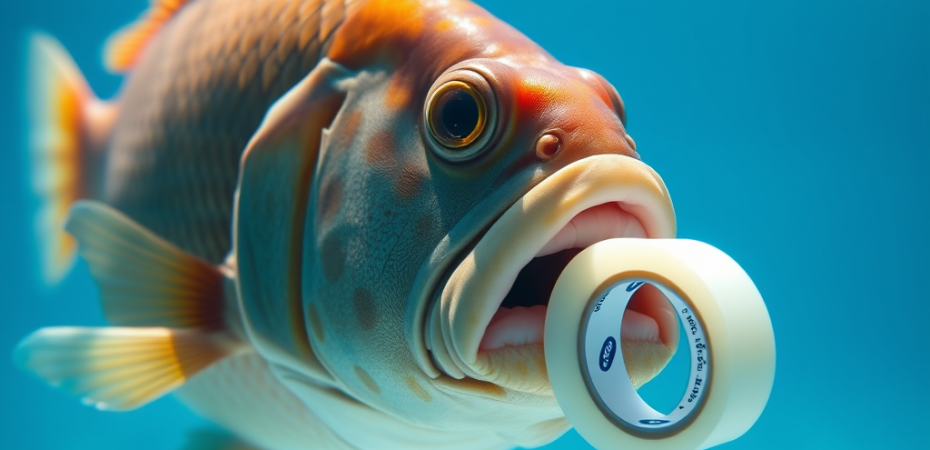
A fish swam in the ocean with a roll of sticky tape in its mouth. It was a copycat really, because it learned to carry something in its mouth from the stick horse a little girl once created for her teacher’s St. Nicholas surprise. The attached poem read
A wooden horse
Without a tail
Flew quickly towards the sun
With in its mouth a receipt
Of an already-eaten cake.

That poem was better in Dutch, as the girl was me, but it was still silly. At least it rhymed in its original Dutch version.

The fish didn’t know this, of course. Its picture had been drawn or otherwise created some 30 years after the girl’s original poem. And even if the fish knew, it didn’t care.

I do wonder though, isn’t a roll of sticky tape far too large for a goldfish? It will know very soon. Or not.


This piece of silliness was written for Simply 6 Minutes. It’s 148 words. My original poem was:
Een houten paard
Zonder staart
Vloog pijlsnel naar de zon
Met in zijn mond een kassabon
Van een opgegeten taart

Neurospicy Burnout

Hi everyone. A few days ago, I listened to a podcast episode on autistic burnout. It’s the most recent episode of Beyond Chronic Burnout, a podcast for autistic women (and other marginalized genders, I hope) and their helping professionals. It discussed the Spicy Pepper burnout questionnaire, which apparently is a questionnaire to determine your level of burnout. I got overloaded trying to find the actual questionnaire amid all the ads etc. and it looks like the website it was published on, isn’t particularly screen reader friendly, so I wasn’t able to take the test. However, from the descriptions discussed on the podcast, I believe I’m in quite a significant burnout and have been for, well, years.

What is autistic burnout, you might ask? Autistic burnout is like regular burnout from being overworked, but it is really more like being overworked living life in a world not designed for autistics. As I have said for many, many years, just living in a neurotypical world is hard work for me.

I want to clarify that autistic burnout is often amplified by co-occuring conditions such as ADHD. In fact, writing this just reminds me of something I read several years ago that said that having fibromyalgia, which is often agravated by stress, is often correlated to ADHD. This is why I refer to neurospicy burnout.

The podcaster claimed that the first signs of burnout in autistics usually appear between the ages of four and six and many autistics experience their first actual burnout between the ages of six and ten. This was hugely validating. I, at age five, fell ill with what my parents claim was the flu, but it did lead them to get me into special ed quicker than originally intended. Age seven is always when my parents claim I changed from a cheerful, happy child to angry and depressed. This correlates with my having to start learning Braille, so according to my parents I then became aware of my declining vision. This is probably correct, but it doesn’t mean that my difficulty accepting my blindness was the only or main problem.

The first warning sign of autistic burnout, the podcaster says, is suicidal ideation. Oh my, can I relate! I honestly always thought that the first sign of burnout, whether neurospicy or work-related, was exhaustion. That with the fact that I react to overload with overactivity and irritability, always made me believe I’ve never had “real” burnout symptoms. Now I realize that I may not have fully collapsed (yet), but I do certainly experience burnout. And have for, well, my entire life since I was seven, I guess.

Kymber’s Get to Know You (January 9, 2025)

Hi everyone. I have been quite tired over the past few days, so didn’t do much writing. I’m still proud to say that this is my sixth blog post in January. Considering that some months in 2024, I only published five posts total, this is good.

Anyway, regular readers may remember me participating in the Wednesday Hodgepodge for a while. I stopped doing that, because I didn’t like it that the overwhelming majority of participants’ posts were heavily Christian-based. Now though, I seem to have found something to replace it with: Kymber’s Get to Know You. Here are the questions for this week and my answers.

1. What is the most memorable activity you did with your family as a child?
Not an activity we did as a whole family, but play-based learning with my parents comes to mind. For example, my father taught me to calculate squares using computer chips he’d been removing out of the devices himself. I also remember us looking at maps together. My mother also made little books in large print for me to learn to read when I was about four. Here in the Netherlands, children don’t usually learn to read until they’re six, but I was a precocious learner. My parents will probably be proud to see me list these “intellectual” activities.

2. What quality do you appreciate most in a friend?
Acceptance. I want to be myself with a friend and if they aren’t willing to accept that, fine but they aren’t my friend. I will also accept my friends for who they are. I don’t mean that mutual annoyances can’t happen. They happen between me and my spouse, who I consider to be my best friend, all the time. However, when it comes down to it, we accept each other for who we are.

3. What is one characteristic you received from your parents you want to keep and one you wish you could change?
My mother jokes that I inherited all my positive qualities from my father and all my negative ones from her. I was almost going along with it, because indeed the first positive characteristic I thought of comes from my Dad and the first negative one from my Mom. However, I’d like to boost my Mom’s self-esteem a bit (should she ever read this) and lessen my Dad’s. Therefore, I’d like to keep my Mom’s creativity and get rid of my Dad’s snobbishness.

Behind My Anger #SoCS

SoCS Badge 2019-2020

Many people think I’m angry a lot. It was written in my reports from psychologists as early as age 8 and maybe even younger. I do sound angry sometimes, but behind that anger are many other emotions. I mean, I rarely feel genuinely angry, but I express many strong emotions as rage, irritability or other forms of anger.

I don’t blame other people for not seeing it. I see anger a lot when others claim there isn’t any. But it’s hard for me to look beyond (my perceptions of) people’s surface expressions. When it feels as though an angry person stands in front of me, or worse yet, behind me, I shrink inwardly, but react outwardly. This is really hard for others to comprehend, but I have the same feelings as everybody else. So do you, even if it appears I only see anger. We all need to look beyond what seems to be in front of us.


This post was written for Stream of Consciousness Saturday, for which the prompt today is “in front” and/or “behind”. Linda’s also doing #JusJoJan again, which stands for Just Jot It! January. I will write a post when the prompt appeals to me, but I do really hope to be blogging regularly this month (and the rest of 2025).

Parenting Advice From a Childfree Survivor of Childhood Trauma

Hi everyone. Today’s RagTag Daily Prompt is “parenting”. Since I’m currently recovering from meeting my parents for my birthday, I’m going to make a list of parenting advice my parents should’ve received. I realize their inability to love me unconditionally wasn’t unwillingness. In fact, the fear that I may have this same inability is one reason I’m childfree. This post is a random list and may come across a bit harsh, but so be it.

1. A family is not a business. It doesn’t have to be run efficiently. Yes, I understand you get impatient with your child’s struggles at times, but this isn’t their problem – it’s yours.

I was constantly shamed for needing too much help and my parents gave up on teaching me basic skills of daily living because I got frustrated and the task didn’t get done efficiently.

2. Challenging behavior does not make the child (especially young child) bad or manipulative. Behavior is communication, yes, but to search for hidden motives behind it, is actually quite arrogant.

I was told by my parents that, by age seven, I had come up with some idea to manipulate everyone into thinking I was different in all kinds of other ways besides blind because I didn’t accept my blindness. News flash: I am those other things.

3. Children are incredibly loyal to authority figures, be it their parents, teachers, or others. When you fight the school or healthcare system over something rather than trying to be cooperative, the child will experience a conflict of loyalty. This means that, just because they side with you eventually, it isn’t necessarily in their best interest.

My parents were constantly fighting the school over my needs, because the school denied my intelligence. Then again, my parents minimized my emotional difficulties. When an educational psychologist who saw both my intelligence and my emotional issues, nonetheless advised special education for me, my parents still weren’t happy even though they’d chosen this ed psych, because they were dead set on me being mainstreamed.

4. Your child is not an extension of your ego. For this reason, they do not have to follow an educational or career path you like. It isn’t their job to make up for your lost dreams.

See also above. From the time I was a young child on, it was clear that, by age eighteen, I’d live on my own and go to university. Interestingly, neither of my parents have a college degree and particularly my mother feels “dumb” for it even though she worked herself up to a management position that usually requires a college degree.

5. Your child doesn’t need to prove their value. They do not need to prove they were “worth raising” by being anything, be it independent, successful, or whatever. If you don’t want a disabled child, a child of a certain gender, or whatever, you shouldn’t have a child.

I have probably said this before, but my parents, particularly my father, seriously think that a child needs to prove they were worth raising by being successful in life as an adult. He didn’t mean me when he said this, “because you’re training for independent living”. Well, now that I’m in an institution with seven hours of one-on-one a day, he obviously does mean me, since the few times I’ve seen him since he’s barely acknowledged me.

6. Love your child unconditionally. This does not mean agreeing with every single decision they make, but it does mean being there for them when they need you. And this doesn’t end when they turn 21. With a few exceptions (an adult child becoming a criminal, for example), parenting is a lifelong commitment.

I am linking this post up with #WWWhimsy as well.

Vignettes About Unicorns

Hi everyone. Today I’m joining Writer’s Workshop. One of the prompts is to share at least five moments of your life (not events, but merely vignettes) that are somehow related. I, for some reason, was immediately drawn to the theme of unicorns. Let’s see what I can come up with.

1. I remember having a unicorn My Little Pony figurine as a child. In fact, that’s a lie, as I think it was my sister’s, but I loved her anyway. In my memory, she was light purple, but I could’ve misremembered that, since my favorite color is lilac.

2. Last October (I think), I got a unicorn soft toy from my spouse as a thank-you gift for my support throughout our relationship and particularly over the past several months.

3. The other two unicorn soft toys on my bed, I bought at the fall fair here on institution grounds last October too.

4. Which reminds me, I have a lonely unicorn soft toy sitting in the soft toy cabinet. I got that one for Christmas at the last day center I attended while living with my spouse.

5. Oh wait, no, I have another unicorn soft toy in the cabinet. I got that one when leaving the care facility in Raalte for the intensive support home. Oh, how I miss being in Raalte still.

6. Now enough with the soft toys. The first unicorn I created, in July of 2021, I did entirely from a YouTube tutorial. I gave it to my spouse, who probably still has it.

7. I remember crafting my first unicorn at the intensive support home with my assigned staff. It didn’t turn out as good as I’d liked, but it was okay.

8. I gifted her my best unicorn I created while there when I left. Too bad she ignores me now…

9. When I left the intensive support home, I gifted each of my fellow residents a small cutter-created polymer clay unicorn.

10. I used for it a cutter I’d gotten for my birthday last year from my parents. My spouse had also gifted me unicorn-themed cutters at some point, which I originally intended to use.

11. I read my first unicorn-themed book a few years ago. That is, I probably read some in childhood too but not sure since they weren’t as popular as they are now. The book was a short picture book called First Day of Unicorn School.

12. My current unicorn-related read is the second book in the Unicorn Academy series by Julie Sykes. Oh wait, that’s not exactly a memory I’m sharing…

13. I can’t remember when I started calling my spouse “head unicorn catcher”. The reason is the fact that my spouse’s truck route is named after a city which has the unicorn as its symbol. Oh wait, that wasn’t really a memory either.

But I got to thirteen. So I’m allowed to share this post with Thursday Thirteen too. So if my post doesn’t meet the criteria for Writer’s Workshop, at least it meets the criteria for that.

Friendship: What It Means to Be a Friend #AtoZChallenge

Hi everyone. For my letter F post in the #AtoZChallenge, I had a lot of choices and yet this actually overwhelmed me. I am once again doing a post on a topic I think I covered in 2019 too, ie. friendship. What does it mean to be a friend?

My spouse and I are best friends. Since we aren’t in a traditional relationship due to for example not living together, we need to find other ways to make our relationship work. However, we were friends before we were a couple.

As someone who didn’t have any friends beyond elementary school until I met my now spouse, I am not the best possible judge of what makes a friendship tick. I mean, I can look at what psychologists say about the development of friendships from early childhood into adulthood.

For instance, three-year-olds say someone is their friend because they play with them on the see-saw and “doesn’t want to be their friend anymore” as soon as the other child isn’t any longer interested in the same activity. I have this kind of relationship with some of my fellow residents.

As a child gets older, they develop more perspective about the fact that other children aren’t just momentary playmates, but their viewpoint is still very one-sided. For example, a six-year-old might consider someone their friend because they save them a seat at the bus or give them treats. They don’t yet fully comprehend mutual give-and-take though.

This follows at the next stage, which starts at around age six and continues throughout elementary school age. At this point, children are very fairness-conscious and usually have rigid rules for give-and-take.

At my very best, I am stuck at this stage. Usually though, I am at the second stage, hard as I find it to admit this. I, after all, usually only think of giving something in return for the things (material or immaterial) my spouse gives me when I’m in a very healthy place mentally.

At the next stage, which starts at around age eleven, children develop intimate friendships in which they mutually support each other. They help each other solve problems and confide feelings in each other that they don’t share with anyone else. Like I said, I never had friends beyond elementary school before meeting my spouse. Though I did and do confide in my spouse, I am pretty bad at offering my spouse any emotional support in return.

Finally, adolescents and adults have mature friendships in which they emphasize emotional closeness over anything else. They can accept, sometimes even appreciate their friends being significantly different from them. People at this stage emphasize trust, knowing their friendship will be long-lasting even through temporary separations and differences.

Creativity: How I Have Evolved As a Creative Over the Years #AtoZChallenge

Hi everyone. It’s late once again as I get to my letter C post. I don’t tend to think up my topics in advance. Same with this one. It actually popped up in my mind several minutes ago and here I am writing about my creative journey. Okay, I did my entire #AtoZChallenge of 2022 on creativity so am pretty sure I covered this topic already, but let’s do a repeat in that case.

I am not very imaginative. Like I said on Monday, I most likely have aphantasia. This combined with blindness and my other disabilities doesn’t make me all that great of an artist. And yet, I love to create!

In childhood, I’d often draw dresses and other fashion items, pretending I was a fashion designer. I lost the vision needed to draw around age 12 and, even though my drawing teacher found me paper that would create raised lines when drawing on it, I also hardly drew anything beyond stick figures in boxes from then on. Don’t ask me about their meaning – yes, I know they meant something, but for the life of me I can’t remember what.

I didn’t craft or create art again until my mid-twenties. Then I started card making. Over the next five years followed at least a dozen other crafts. And now, I’m stuck on polymer clay, although to be honest I don’t use the medium nearly as often as I used to.

Creativity can, of course, also involve the written word. I wrote stories from a young age on. I started out writing fiction and the occasional poem. Now, I almost exclusively write blog posts.

I must admit, as I think back on my creative journey, that my level of imaginativeness has probably declined over the years and I didn’t always experience aphantasia. Not that I ever had a rich inner world. Well, that is, I have and always had a strong inner monologue (or inner cacaphony, in fact) and could probably describe an inner world in words, but I couldn’t visually imagine it at all.

I think this lack of imaginativeness is the reason I write personal blog posts mostly and craft mostly realistic figures or things from tutorials. I mean, of course a unicorn isn’t real, but I almost literally copied my style of unicorns from a tutorial. Realizing this makes me feel really sad.

“St. Nick, I’m Stuck!”

Hi everyone. Sorry for not having touched the blog for nearly a week. I’ve been struggling once again. However, today I feel in an okay place mentally at least, so I thought I’d join in with John Holton’s Writer’s Workshop. One of the prompts is to share when you learned that Santa/the Easter bunny/the tooth fairy was your parents.

I’ll have to talk about St. Nicholas rather than any of the others here, because that’s what we celebrate most here in the Netherlands. St. Nicholas is like Santa, except he has helpers called Peters. They used to be black, but now they come in every color or with black streaks across their faces (from creeping through chimneys to deliver presents) because the concept of Black Peter is racist.

I was eight the last year when I still believed in St. Nick. This was 1994. As the legend goes, St. Nick and his Peters would ride over the rooftops on a white horse and maybe they’d descend through the chimney to deliver presents.

That year, on the evening of December 5, my parents, sister and I were having dinner when we heard noise coming from the roof. We didn’t have a chimney, but I was still too clueless to think about that. “St. Nick, help, I’m stuck!” We went looking for where the sound came from and saw that there were presents in the loft under the staircase.

Eight is a fairly old age to still believe in St. Nick. In fact, I’d been packaging St. Nicholas presents for my teachers for several years by then. By the year after this, when literally everyone my age had stopped believing, my father spoiled the beans for me: he came to me with a cassette tape, put it in the player and there it was: “St. Nick, help, I’m stuck!” It was his own voice, slightly distorted. By that time, I knew for sure that St. Nicholas was my parents.