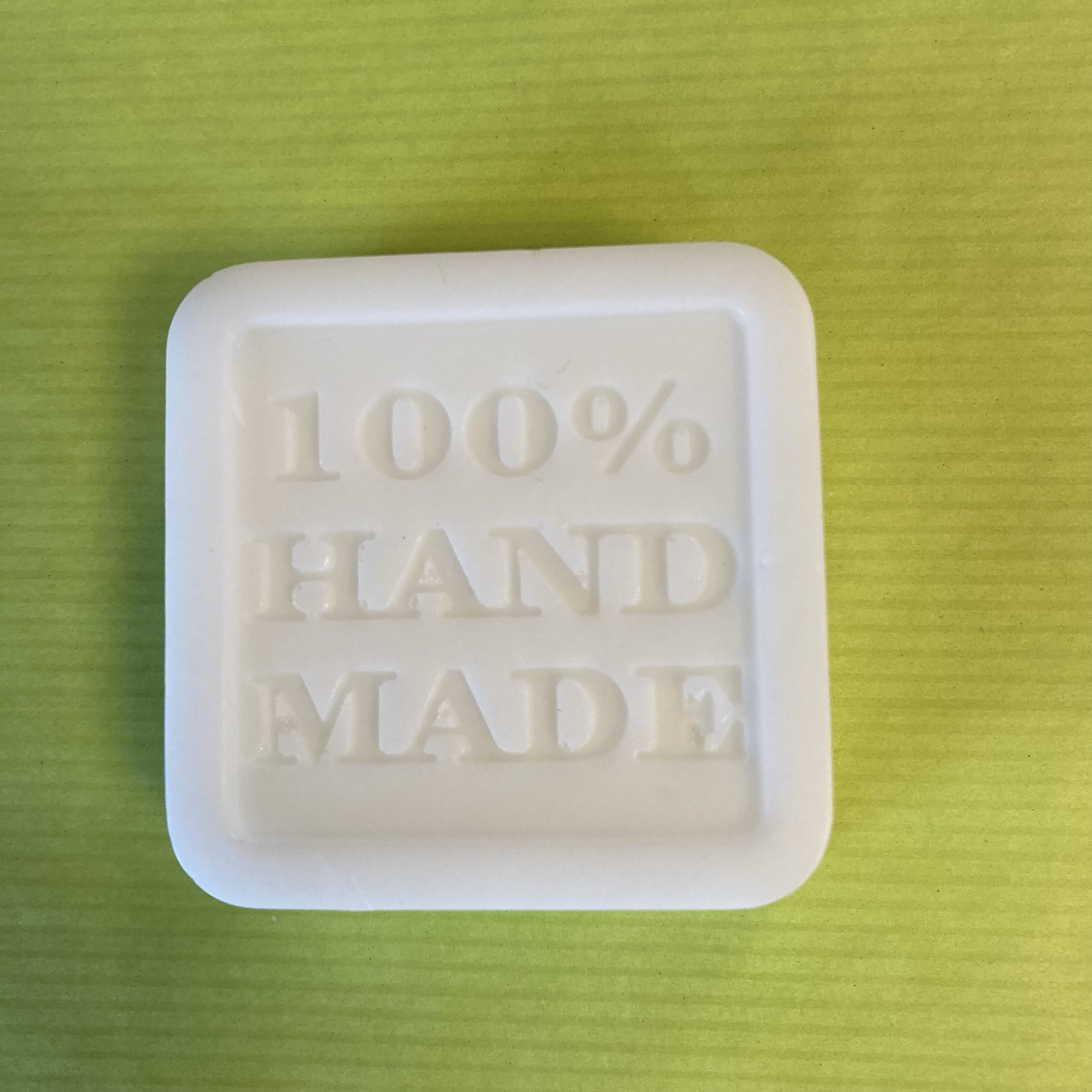
DIY All-Natural Hand Cream Using Essential Oils

I finally seem to have found a bit of inspiration to create things again lately. Last Tuesday, I decided to buy the essential oil safety files at Lea Jacobson’s website. For $47 one-time, you’ll have access to the safety guidelines for over 240 essential oils and absolutes. This seemed a bit expensive to me at first, but given how hard it otherwise is to find exact topical dilution maxes etc. online, I finally gave in.

Regular readers will know that I love to make melt and pour soap and have occasionally made massage oils and body butters. I also made one hand cream. I however usually use fragrance oils, as essential oils can be more irritating to the skin and cause sun sensitivity. Now, with Lea’s safety files, I felt more confident that I’d properly dilute my essential oils. This means I could finally make an all-natural hand cream.

Ingredients


  • 50 g cocoa butter

  • 50 g coconut oil

  • 50 g sweet almond oil

  • 20 g beeswax pellets

  • Essential oils (see below on dilution)


You can use shea butter or mango butter instead of cocoa butter and any liquid carrier oil instead of sweet almond oil. If you want a vegan option, I think you can even use candellia wax instead of beeswax.

Now for the essential oils. I wanted to create a relaxing blend of essential oils. It is hard to find ready-made skincare blends online, so I used a diffuser blend and adapted it for topical use. This required me to know whether the essential oils I would be using, are skin-safe and, if so, in what dosage. For this, I used Lea’s safety files.

The blend I found online that I liked, contained lavender, clary sage and vetiver essential oil. Since I didn’t have lavender essential oil on hand anymore, I decided to use lavandin instead. I found out that, while lavandin essential oil is pretty skin-safe, lavandin absolute is not. For this reason, I made extra sure my staff checked that what I had in my box was the essential oil. It was!

The diffuser blend called for two drops of each oil. I decided to use three drops in my hand cream. This totals nine drops of essential oil, which isn’t even a 1% dilution. Usually, natural skincare makers use a 3% dilution, which would be safe with these oils. However, I felt the scent was strong enough already as it was now.

Making the Hand Cream


  1. Mix together the cocoa butter, coconut oil, sweet almond oil and beeswax in a microwave-safe bowl.

  2. Microwave in one-minute increments, stirring afterwards, until melted.

  3. Let the mixture cool for about 10 minutes before adding the essential oils. You could use a thermometer to check the temperature. I’ve heard most EOs require a temperature below 45°C. I don’t own a thermometer though, so I just wait until the mixture starts to set a little.

  4. Add in the essential oils.

  5. Stir with a whisk to make the hand cream more fluffy.

  6. Pour the mixture into a jar or pot.

  7. Let fully cool before screwing on the lid.

Since my hand cream will be a gift, I haven’t touched it myself after fully cooling. My previous attempt turned out a bit too thick for my liking, which is why I cut back on the beeswax a little this time.

I will probably be making a melt and pour soap with the same scent soon too. Then, I’ll add them both into a package I’ll send to my assigned home staff, who, as regular readers know, is on sick leave. I really hope she likes it.

PoCoLo
Keep Calm and Carry On Linking Sunday

Living With Sleep Disturbances

On Monday, I wrote about my relationship with the night. Today, I saw that the topic for Tale Weaver this week is sleep. I thought I’d use this opportunity to expand on Monday’s post a little and write about my various sleep issues. After all, being a night owl is one thing. Experiencing significant sleep disturbances is quite another.

First, there is of course plain old insomnia. I talked about this on Monday mostly. For as long as I can remember, I’ve had a lot of trouble falling asleep. Once I was asleep, staying asleep usually wasn’t that hard, except during times of significantly elevated stress.

Then there was the opposite. I honestly don’t think I ever truly suffered with hypersomnia, but there were definitely times I slept far more than I should have. These were often times of low stimulation. IN other words, I was bored to the point of sleeping.

Then there are these sleep disturbances that I cannot really classify and, since I haven’t been to a doctor with them at this point, neither can anyone else. I get really weird half-awakening states where it feels as if I’m doing something for which I should clearly be awake, only to realize later on that I wasn’t doing anything at all and was just half-awake thinking of doing something. With this come weird sensations, almost like hallucinations, too. These half-awakenings currently are very scary. I’ve heard they might be a sign of sleep paralysis, but I don’t think I experience the actual inability to move upon waking up that comes with it.

Then there are nightmares. I don’t get your standard child’s monster-under-your-bed nightmares. Neither do I get violent nightmares usually. In this sense, my nightmares don’t fit the criterion for PTSD. Then again, probably neither does most of my trauma, as most of it was mental and emotional abuse. Rather, I get nightmares that relate to my anxieties, such as of being kicked out of the care facility.

With these half-awakenings and my nightmares, it’s no wonder that sleep often invades my day-time life and vice versa. I find that nightmares often seem to go after me during the day and half-awakenings scare me too. This in turn contributes to a fear of going to sleep, which contributes to insomnia.

One sleep disorder I need to mention here, which I thankfully don’t have, is non-24-hour circadian rhythm disorder. This is common in totally blind individuals and occurs because our natural biological clocks seem not to co-occur with exactly the 24-hour clock of a day. This is corrected in people with some vision by the perception of light and dark, which regulates melatonin production. I have hardly any light perception left, but thankfully my sleep-wake cycle does not seem to be affected as of yet.

Loneliness Comes From Within: Some Reflections

I am still struggling badly. I have been having flashbacks of the time when I lived on my own in 2007. When I told my husband this tonight, he asked whether any traumatic events happened there. Not really in the classic sense of the word, but I did suffer intensely. The “cage”, as I called my apartment, was a filthy, dark and gloomy place. Neither I nor anyone else had ever thought of making it into a home.

I was intensely lonely during the three months that I lived in that place. Nonetheless, people did reach out to me. I was in touch with several of my fellow students in the linguistics program at university, one of whom lived in my housing complex too.

When I mentioned this, my husband said that loneliness rarely comes from the environment. It wasn’t that no-one cared, as had been the case during most of my high school years. In fact, multiple people reached out to me, but I was closed off to contact with others. I was so convinced that I was unloveable that I didn’t attempt to form genuine bonds with people.

Sadly, it’s still mostly this way. Just a few days back, I was telling my husband that all caring staff eventually leave, referring to the idea I’ve gotten in my head that my assigned staff is not coming back. Indeed, a number of staff have left in the past or told me they had to distance themselves from me due to my behavior. However, a number have stayed too. In particular, my support coordinator from when I lived with my husband, stuck by me till the end.

Of course, staff/client relations are different from friendships. Staff might leave for reasons that have nothing to do with me. Others will come in their place, sad as it may be. Friends though will not necessarily be replaced. And that’s where it hurts more: I feel intensely incompetent at forming friendships.

I mean, though I did have contact with fellow students and people in my housing complex while living on my own, I mostly sucked up their energy. I feel intensely sad about this. I still feel like I’m not able to make friends ever at all. However, there is hope. Now that I (hopefully) am in a stable living situation, I may be able to build on some genuine friendships after all. I already consider some of my fellow clients my friends. I don’t need to rely on them for support, as I (hopefully) have my staff for that. That should be a relief.

My Relationship With the Night

I have a really complicated relationship with the night. On the one end, I’m a true night owl and can enjoy sitting up late reading a book or browsing the Internet. Before the Internet, I used to listen to a talk show on Dutch public radio called “Night shift” on weekend nights between 2AM and 6AM. The show might’ve aired on week nights too, but I wouldn’t allow myself to stay up past 1AM then. (Yes, I wouldn’t allow myself. My parents didn’t set a bedtime for me past age ten or so.) In the show, people called in to ask for advice or opinions on sometimes rather mundane topics, such as the difference between fruit and vegetables.

One time, a woman called in to ask for opinions on her eye condition. She literally had a hole in her eye, she explained, which she could see when there was static on TV. The hole, however, also meant she was unable to see facial expressions, which limited her card-playing ability. She assumed that and wanted opinions on whether she could have gotten the hole because of fifteen years of almost daily crying. I don’t know whether she ever received a satisfactory answer, but I do know that story brought chills to my spine.

As I said, I’m a true night owl. Others might call me an insomniac. In fact, I’m pretty sure my relationship with sleep and the night was rather unhealthy for most of my life. As a young child even, I used to stay up late at night worrying about things I’d seen in the news, things I’d heard or experienced during the day, etc. My parents hardly comforted me. In fact, they pretty much left me to my own resources. That’s one reason they didn’t set a bedtime for me.

When I lived on my own in 2007, I had an even worse relationship with the night. I developed something akin to OCD that mostly showed up at night. I had to check each night whether my alarm was on, door locked, windows open, heating off, electronics unplugged and I’m pretty sure I forgot something. I’d spend hours going through my apartment checking each several dozens of times.

During the last week of my living on my own, I’d often leave my apartment in the dark to go outside and wander the streets. I still get flashbacks of this darkness now.

Once in the psych hospital, the first medication I was put on, was temazepam, a sleeping pill. That worked for all of two weeks. Then I got put on Nozinan, a strong sedative, which however kept me drowsy for most of the day too. Then followed nitrazepam and diazepam until I finally decided I’d rather have insomnia without meds than with meds.

I eventually did have to go on meds after all, but these were daily meds. I currently don’t experience severe insomnia, but I do experience disrupted, restless sleep and nightmares. I did back in 2007 too, but, though I did mention it when admitted to the hospital, it never got paid attention to. Thankfully, my latest addition to my psych med combo, topiramate, does help with this.

This post was written for today’s Tourmaline’s Halloween Challenge prompt: night.

Do-Re-ME: My Favorite Music

Today, I came across Leslie’s Where Bloggers Live. This month’s theme is favorite music.

I am a kid of the 1990s, so, though my parents had a record player, I mostly grew up with cassette tapes and CDs. I remember my father (who was a stay-at-home Dad until I was thirteen) would also often have the radio on in our living room. He generally listened to public radio stations, which didn’t play the latest music and generally were more talk-focused anyway.

As a child and preteen, I was clueless about pop music. I remember the odd ’80s or early ’90s Dutch song, but I had no idea what was “hot”. My parents, aside from public talk radio, listened to 1970s protest songs.

When I was eleven in 1997, my mother encouraged me to develop an interest in music in order to “fit in”. For this reason, I pretended to be into the Backstreet Boys, even though I’d never consciously listened to any of their songs. In reality, I continued to listen to children’s songs for years. In fact, when I went to summer camp in Russia with a group of other teens at age fourteen, I was made acutely aware that listening to children’s songs was definitely not appropriate for someone my age.

I got a stereo player for my twelfth birthday in 1998 and I did buy the odd CD to play on it. I was mostly into ABBA or its upbeat cover band the A-Teens (which I spelled “eighteens” for years). Once I got into mainstream high school in 1999, I occasionally bought CDs recommended by other students in the school newspaper. I still to this day love The Corrs.

I eventually started listening to commercial radio stations at around age fifteen, but I never quite developed a truly defined taste in music. I still like to listen to all kinds of music. Some days, I’m into Dutch songs, usually dialect rock (such as Normaal or Mooi Wark) or truck driving songs. Other times, I’m into Celtic folk, country (usually 1970s songs such as by Bobby Bare or Buck Owens) or southern rock. Still other times, I’m into contemporary Christian music. Sometimes, quite the opposite. I even have a “Punk etc.” playlist on Spotify with songs from the likes of Cock Sparrer. I don’t really listen to that anymore though. Occasionally, I’ll revisit an old favorite genre of mine: world music.

When my now husband and I first met, he asked me what kinds of music I liked. I replied that I liked world music. Once, several years later, I played a favorite CD of mine with Latin music on it, which I’d had in mind at the time. He was glad he hadn’t known back then that this was what I’d meant or he might not have decided to meet me again. He, by the way, was the one who introduced me to most of my current favorite genres and artists.

#WeekendCoffeeShare (October 9, 2021)

Hi everyone on this sunny Saturday. Well, it’s not sunny anymore, as the sun has just set, but it was sunny all afternoon. Today I’m joining #WeekendCoffeeShare again. I’m in Lobith and I usually have tea in the evenings here, but if you’d like a cup of coffee, I’m sure my husband can make you one too.

If we were having coffee, I’d share that this week was all quite meh. I’ve said this a couple of times already over the past week. It’s all just one endless stream of sadness, triggers and the resulting flashbacks.

I’m pretty sure I’ve decided I’m going to ask my nurse practitioner to up my topiramate on Monday. I hope this means I won’t have to wait for my next weekly med refill on Saturday to get the upped dose. Of course I know meds won’t solve everything, but I can’t think of anything else right now.

If we were having coffee, I would share that I did find some inspiration in the soaping and essential oil departments again. Yesterday, I even managed to make a simple butterfly melt and pour soap.

If we were having coffee, I would tell you that I also managed to get in more steps this week than last week and that’s not counting tomorrow yet. Okay, last week was quite a bad week in the walking department, but oh well, let’s be thankful for the little things.

If we were having coffee, I would tell you that my orthopedic footwear finally returned from whoever (Shoe or AFO Guy) was working on it earlier this week. It finally seems to be okay now. Not great, but okay. I have at least been able to walk some 25 minutes on the footwear without too much pain and am pretty sure it needs getting used to as well.

If we were having coffee, I would repeat how grateful I am for all the lovely comments on my blog. Like I mentioned last week, I’m participating in #Blogtober21, though my only goal right now is to publish a blog post everyday. I’m no longer going with prompts. Today, I almost wouldn’t have written a post, as I’m with my husband in Lobith like I said and this usually means I can’t concentrate. However, I didn’t want to break my streak.

If we were having coffee, lastly I would share my husband cooked me a delicious rice and meatballs meal this eveningn. Neither of us was full after it, so we ended up ordering something else afterwards. However, the meal was very tasty!

How have you been?

Gratitude List (October 8, 2021) #TToT

Hi everyone. I’m still struggling quite a bit, but I’m determined that, if I don’t write to the 31 prompts for the 31-day writing challenge, I’ll at least write a blog post everyday. To cheer myself up, today I’m doing a gratitude post. As usual, I’m joining Ten Things of Thankful (#TToT). Here goes.

1. I am grateful for pizza. Yes, again. Last Sunday, like I mentioned in my #WeekendCoffeeShare post, we ordered food from the local Italian restaurant. I ordered a tuna pizza and it was delicious!

2. I am grateful for my staff. As I mentioned several times over the past week, my assigned home staff is on sick leave. Thankfully though, I still do have other staff. I struggle to trust them, but am trying.

3. I am grateful for new essential oil inspiration. Last Monday, I signed up to the Using Essential Oils Safely VIP club for one month. It’s too expensive for me to remain a member longer, but I’m learning all I can while I have the membership. I did put a few new essential oils on my wishlist to buy someday.

4. I am grateful for my bed’s adjustable headrest and legrest. That way, I am able to lie in bed much more comfortably.

5. I am grateful for quetiapine (Seroquel). This is my PRN medication. I’ve needed it quite a few times over the past week and am happy it helps at least a little.

6. I am grateful for the support from my community psychiatric nurse and nurse practitioner. I had a regular appt with my CPN on Wednesday and told her how much I was struggling. She offered to ask my nurse practitioner to call me on Thursday and I reluctantly accepted the offer. He did call and we agreed to discuss possibly upping my topiramate (Topamax), which I take for PTSD symptoms, on Monday.

7. I am grateful for my husband. He is very able to put things into perspective.

8. I am grateful for St. Nicholas candy. The holiday isn’t till December 5, but the candy has been in stores since mid-August and my staff ordered it earlier this week. (Thankfully my fellow clients don’t have the awareness of time to get confused by this, as people of higher intellectual level might.) I had a large handful (well, a small bowlful) of candies this evening.

9. I am grateful I am still able to blog everyday in spite of my distress. I am also so grateful for all the engagement on my blog, particularly on my posts about the mental hospital. Thanks a bunch everyone for your support!

Well, okay, nine things of thankful this time, but it’s alright. What are you grateful for?

Dealing with Anxious Attachment and Attachment Loss

Okay, I’m probably giving up on the 31-day writing challenge. I love the prompts, but right now, they just don’t seem to inspire me. I’m not feeling well at all right now. Haven’t for about a week or more. Like I shared in my post on Sunday, I have been feeling triggered by my staff being on sick leave. It’s not just that, of course. The change of seasons with all its triggers to my time in crisis back in 2007, doesn’t help either. The emotional flashbacks are so bad I’m considering asking my nurse practitioner to temporarily up my topiramate. For now though, I’ll write a little about attachment loss and abandonment issues.

When I was first diagnosed with complex PTSD and dissociative identity disorder in 2010, part of the consultation that led to this diagnosis involved an attachment styles questionnaire. I scored highest on the anxious/preoccupied attachment style. This means that I tend to depend heavily on others. I struggle to admit this, but it is true.

As such, I fear attachment loss or abandonment a lot. Most anxiously attached people tend to seek another relationship right away when one ends. I don’t have any exes, since my husband was also my first boyfriend, but I do notice it in other areas. For example, now that my assigned staff is on sick leave, I’ve already been thinking about who will become my assigned staff if she ends up not returning. Which, in fact, is something I cannot get out of my head for whatever reason.

Anxiously attached people also tend to cling to dysfunctional attachment figures far too long. Again, I don’t experience this in my marriage, but I did experience it in the psych hospital. I had an assigned staff who was rather adamant that I become more independent than I could be, but I accepted her as an authority for far too long. Same with my psychologist.

I, thankfully, left that place. However, I do find that something I read while researching attachment loss for this post, makes a lot of sense: the idea that leaving a relationship on paper doesn’t mean being emotionally detached from that attachment figure. Again, not my marriage, but with respect to my care situation, yes, that’s so me! I still experience vivid dreams (not necessarily nightmares!) about the psych hospital. I also still look up things about my former care agencies, thinking maybe I should go back. I still find myself being influenced by what my past care providers said about me, no matter how harmful and wrong. This may be one reason I don’t generally meet the avoidance criterion of classic PTSD, but am rather the opposite: I find myself drawn to things that trigger me. Now if only I could find a way to truly let go of the emotional baggage I’m carrying with me.

#IWSG: Drawing the Line

IWSG

It’s the first Wednesday of the month and this means the Insecure Writer’s Support Group (#IWSG) is meeting. It doesn’t matter that it’s Blogtober and the 31-day writing challenge is running. It’s already past 8PM as I write this, so I probably won’t have time for a separate post for these challenges. Maybe I’ll catch up with the word prompts from the latter challenge tomorrow. Maybe not.

For those visiting from #Blogtober21 or the 31-day writing challenge anyway, the Insecure Writer’s Support Group gathers each first Wednesday of the month to discuss our writing insecurities, fears, successes and setbacks. There is also an optional question each month.

First, let me share that I did quite well in the writing department over the past month. I published 22 blog posts in September, one more than in August. I also think I did an okay job of broadening my writing horizons. I (re)discovered the diary app Diarium and did an okay job keeping a journal in there for part of the month. Not so much in October so far.

For October, my goal is just to write a blog post everyday in keeping with the challenges I’m participating in. I may or may not go with the 31-day writing challenge word prompts. I don’t really intend to write much in the way of fiction or poetry, but who knows where my muse will lead me?

Now on to this month’s optional question: where do you draw the line with respect to topics or language?

First, I have a clear line relating to language: I don’t swear in my writing. Even when one of my angry alters was writing on here and tried to drop an F-bomb, I censored it out. I do occasionally use bad language on social media. I don’t use profanity though and haven’t for a long time, even before I became a Christian. I in fact find unnecessary use of foul language (which is most use of foul language) quite offputting in my reading too.

With respect to topics, well, since I write mostly autobiographical musings on here, I draw the line where I invade other people’s privacy. For example, when I mention my husband, I make sure it’s in a lighthearted way. I won’t write about our arguments, about our intimate life, etc. I do need to say though that I had to learn to shut up about such topics the hard way. In fact, my husband still likes to jokingly remind me of a post I published on an old, now-private blog in 2008 in which I described my expectations should he and I become a couple officially. In particular, he likes to tease me about calling him a “kid”.

For clarity’s sake, I am not and never was one to describe violence, sex etc. in detail. Even when I still did describe my fights with my parents or my intimate life with my husband, I didn’t use explicit language. Similarly, when I write fiction or poetry, I must say, I generally keep my language quite non-explicit too. I do write about dark topics, but usually by trying to convey the emotions rather than going into detail about the actual facts.

What It Was Like Being a Patient on a Psychiatric Ward #31Days2021 #Blogtober21

I’m still not too inspired to write. Today’s optional prompt for #31Days2021 is “patient”. Obviously, most people will write about “patient” as in the adjective derived from patience. I won’t. I want instead to share what it was like being a patient in a psych hospital.

As regular readers of this blog will know, I spent 9 1/2 years in a mental hospital between 2007 and 2017. I spent my first sixteen months on the locked ward. This is pretty much as I imagined it before I entered the psych system myself: floridly psychotic patients screaming and exhibiting other erratic behavior, staff running around trying to control it. Like I said yesterday, I witnessed people being secluded and being forcibly medicated several times. I was an informally admitted patient, so I couldn’t be subjected to any form of restraint. This isn’t to say it didn’t happen, as I said.

The staff/patient ratio at my ward was around 1:5 during the day. This means there’s not much time for staff to keep regular tabs on what patients are up to if they aren’t kicking up a fuss. I, in fact, at one point got told I would be put into time-out if I “needed more care than we can provide”.

After those sixteen months, I transferred to an open resocialization unit and later another open ward. The staff/patient ratio there was around 1:10, sometimes even less. As a result, patients had to help one another out sometimes.

On the locked ward, I had treatment plan reviews once every six weeks. This was because the ward was basically a crisis intervention/stabilization unit, where officially you could stay a maximum of six months. I must say there wasn’t much in the way of therapy. Of course, most patients admitted to this unit, suffered with psychotic disorders, for which the main treatment is medication. For me, it was decided I just had to figure out a place to go after pulling myself out of the worst crisis and, for this reason, I had mostly contact with the social worker.

On the resocialization unit, I did get psychotherapy. This was where I was diagnosed with (complex) PTSD and dissociative identity disorder in addition to autism. Thing is, once I moved to the other ward, these diagnoses were all removed. It was decided I was just care seeking and dependent and needed to be kicked out of the hospital.

We did have day activities most days on each psych unit. However, not all patients were able to participate. I, for one, usually was not.

In summary, my entire psychiatric hospital stay was one lengthy journey of changing diagnoses, social workers who tried to find me a place to live but had a very narrow view of what I needed, limited nursing support and hardly any day activities. I did start two of my three current daily psych meds while in the hospital. However, I must say, looking back, I hardly made any progress during those 9 1/2 years.