Essential Oils and Fragrances: My Favorite Scents #AtoZChallenge

I am very late posting my letter E post in the #AtoZChallenge, because I’m struggling quite a bit. I won’t go into details about that now. My letter E post is about essential oils and other fragrant products.

Essential oils are oils that are extracted from plants. They are called essential, because without them the plant will die. Essential oils are often believed by natural medicine-minded people to help with a variety of health issues. There are no placebo-controlled, double blind research studies on their effectiveness though. I in fact doubt that’d be possible, as patients would be able to tell by smell whether they’d get the EO or a placebo.

That being said, essential oils do smell good and, even if you don’t believe in their effectiveness for health issues, you can still use them in self-care. Here are some of my favorites.

1. Ylang ylang. This sweet-smelling essential oil is reported to be an aphrodisiac. It is also said to help with relieving anxiety, sadness or tension. It can be used as a relaxing oil. I just love the smell of this oil!

2. Sweet orange. This oil is reported to be good for lifting your mood. It is my favorite of the citrus essential oils.

3. Eucalyptus. I don’t know what type of eucalyptus EO I own, as I bought it at a soaping supplies store that didn’t specialize in aromatherapy. There are several commonly-used eucalyptus varieties, such as eucalyptus globulus and eucalyptus radiata. I particularly like to smell eucalyptus when I’m having a cold or congested sinuses.

4. Peppermint. This is another oil that helps when I’m having a cold. I bought it at the same soaping supplies vendor I bought the eucalyptus EO at. They recommended peppermint oil should not be used in baths, as it is very strong.

5. Lavender. Though I don’t particularly care for strong lavender scents, I like to diffuse a little lavender EO when I can’t sleep. I don’t know whether it works, but it does help.

Besides essential oils, other products that have strong scents can be used in self-care too. For example, when I still lived with my husband, I would often burn a wax melt. These are a relatively safe alternative to scented candles. That is, the melting wax doesn’t get very hot, but it still makes a mess at times and you don’t want to spill it all over your hands. It may not leave burn marks, but it’s definitely uncomfortable.

Wax melts come in a ton of different scents. I particularly liked the bakery smells, though my husband found most way too strong.

What are your favorite scents?

#WeekendCoffeeShare (April 5, 2020)

I more or less abandoned the What Day Is It Anyway? posts when A-to-Z started, but I wanted to write a check-in anyway. I am joining in with #WeekendCoffeeShare, although it’s a bit late for coffee. I did have a cup of decaf about an hour ago. I also just had a nice orange-pineapple-guava drink. I am not a big fan of fizzy drinks, but thankfully usually we have some non-fizzy soft drinks or juice in the fridge for week-ends.

If we were having coffee, I would ask you all how you’ve been doing on your third week of lockdown. I had a pretty good week. It was better than last week. Last week, after all, I landed in some crises due to missing my husband and all the change that is brought on by this COVID-19 thing.

If we were having coffee, I would share that on Monday, my home’s manager came to talk to me. I was scared at first. Thankfully, she came to reassure me that I won’t be kicked out of the facility for having challenging behavior. That was quite a relief to me.

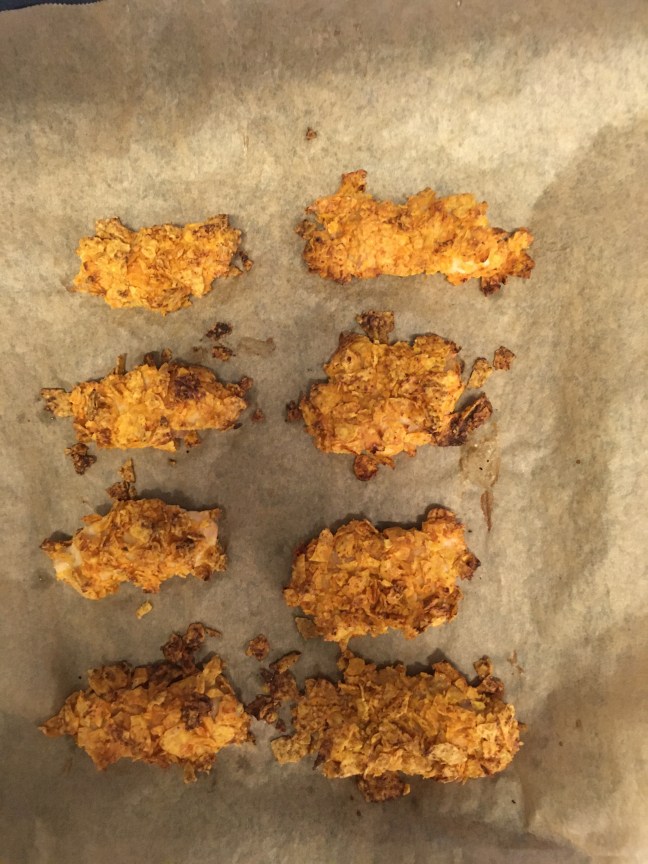
If we were having coffee, I would share that I made delicious crispy chicken with the staff intern at day activities on Tuesday. I made them with dorito chips for the crisp. I think I’d prefer them with slightly more spicy doritos, but I had intentionally picked the cheese-flavored ones, as I normally don’t like the paprika or chili-flavored ones.

If we were having coffee, I would share that I didn’t do as well on my step goal as I did last week, but I still managed to get to 10K steps once and reached over 8K steps on three other days.

If we were having coffee, I would share that I struggled a bit with health anxiety at the end of the week. Like I mentioned in passing in one of my A-to-Z posts, I’ve been convinced for years that, once I’d find a suitable living place, I would get a serious illness and die. This caused me to feel some intense anxiety when I had some health symptoms. Thankfully, I was able to talk it through with my staff.

If we were having coffee, I would tell you that I would originally have had a phone appt with my community psychiatric nurse from mental health last Friday. I waited for twenty minutes for her to call and then decided to call the secretary. Turns out my CPN was off sick and the secretary had forgotten to tell me. Thankfully, I didn’t have a face-to-face appointment.

Because I was struggling a bit, my staff arranged for me to have a phone check-in with the facility’s behavior specialist. She was pretty good at calming my nerves. She reminded me to look at today only. I won’t die today and I won’t be leaving the facility today. That was helpful.

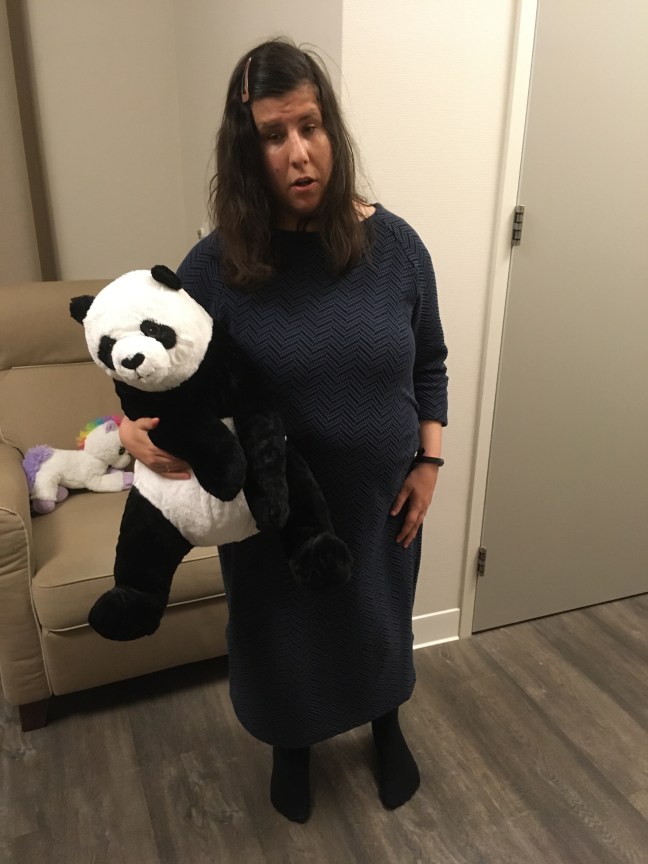
If we were having coffee, I would share that I’d been trying to record a video and then take a picture of myself for my husband. I reasoned he may like to see me now that he can’t come here. We don’t normally video call or anything, so he hadn’t seen my face in a month or so. Unfortunately, the picture I took showed my eyes and nose only. I wonder how other totally blind people learn to take pictures. Anyway, I finally had my staff take a picture of me. In this picture, I’m holding my stuffed panda. I often cuddle it when I miss my husband, because the panda is the largest soft toy I own. No, my husband isn’t fat like the panda, LOL.

How have you been?

Diet and Exercise: A Healthy Lifestyle for Wellness #AtoZChallenge

Welcome to my letter D post in the #AtoZChallenge. Usually when looking for inspiration this year, I have looked to The More or Less Definitive Guide to Self-Care by Anna Borges. Today though, no “D” topic inspired me. Besides, I had basically already made up my mind that I was going to write about diet. Then I decided to add exercise to today’s discussion, as I already have an “E” topic in mind.

Having a healthy lifestyle can be hard for most people and it’s especially hard for those of us struggling with mental health issues. When I suffer with major depression, for example, all I feel like is sleeping and eating and I certainly don’t feel like moving. I’m not telling you that you should force yourself to have a healthy lifestyle all the time. That’s not possible for most people and, when you suffer with serious mental health issues, it’s often not a priority. If it takes all your effort to get out of bed, I’m not telling you to exercise.

But generally, it can really be helpful for your wellbeing to mind your diet and physical activity level. I, for one, need to lose weight to get to a healthy BMI. However, that number on a BMI chart or even on the scale isn’t the main reason I try to eat a relatively healthy diet. It makes me feel better mentally if I get enough healthy food in me and don’t overeat. Getting enough veggies is a struggle with the poor quality of food we get here at the care facility, but I do try to eat enough fruit.

Besides nutrition, hydration is important too. I try to make sure I drink at least two liters of fluids a day. This has been harder now that my days are less structured due to the day center being closed, but I really need to get my hydration habit back up. I use an app called Water Reminder, which is free (with a one-time in-app purchase to remove ads and add some additional features).

It also certainly helps me to get moving. Now I must say that I’ve not been majorly depressed in a long time, so moving comes relatively easily to me. I particularly love walking, as regular readers of this blog will know. I also try to go on the elliptical a few times a week.

Do you try to develop or maintain a healthy lifestyle? Does it help with your mental health?

Cognitive Distortions: Change Your Thought Patterns to Feel Better #AtoZChallenge

I have been debating whether to continue the self-care theme for A to Z or not. I mean, I want to, but right now I’m not really motivated. I have a post in my drafts folder talking about coffee instead. Then I realized that, since I am struggling quite a bit today, I could really benefit from some self-care. For my letter C post, I am focusing on cognitive distortions. These are those dysfunctional thought patterns that often stand in the way of us feeling better.

While cognitive distortions are dysfunctional and often incorrect, they do make sense to our minds. Everyone employs cognitive distortions at times. Some thought patterns that aren’t reality-based, may even be helpful. For example, most drivers think they are less likely to end up in a car crash than other drivers, even though statistically only 50% of drivers can be less likely than others to end up in a car crash. This is called unrealistic optimism.

Many cognitive distortions though can be unhelpful. Examples of such cognitive distortions include:

  • Filtering: seeing the world through blue-tinted glasses. In other words, seeing the negative aspects of a situation only and overlooking the positive.
  • Polarized or black-and-white thinking.
  • Over-generalizing: drawing general conclusions based on limited experience.
  • Jumping to conclusions: thinking that you can read other people’s minds or predict the future.
  • Catastrophizing: always expecting the worst possible outcome.
  • Personalization: taking things that are not even remotely related to you personally. This can mean you apply random occurrences as being specifically about you, often in a negative way.
  • Fallacy of control: thinking either that everything is in your control or that nothing is. In reality, life is a complex combination of choice and circumstance.
  • Fallacy of fairness: mistakenly believing that everything should be based on what’s fair. Well, life isn’t fair.
  • Blaming: holding other people responsible for your feelings rather than taking ownership of them yourself.
  • Emotional reasoning: seeing your feelings as facts.
  • Fallacy of change: believing someone else or a situation will change if you’re patient enough. Basing your happiness on someone else’s or a situation’s changing rather than taking actions to change your own thoughts or behavior.

Now that I think of it, I can identify at least a couple of these cognitive distortions as reasons behind my recent struggling. For example, yesterday I had symptoms that signaled a UTI, but I catastrophized that I had some serious illness. This was based on the thought that I’ve had for years that, once I’d find a place to live in where I feel safe, I’d die. This is jumping to conclusions. Then I thought that, by thinking I had a serious illness, I was making it real through some kind of twisted law of attraction that I don’t even generally believe in. This is an example of the fallacy of control. In the end, I felt miserable and all because of some cognitive distortions.

Do you often find yourself employing cognitive distortions?

Breathe: Using Meditation for Self-Care #AtoZChallenge

I originally intended to write today’s post for the #AtoZChallenge yesterday and schedule it for this morning, but somehow I didn’t get down to writing it at all. I hadn’t even decided on a topic yet, although several floated through my mind. Eventually, I decided to continue with the self-care theme. B is for “breathe”.

Deep breathing is often hard for people at the best of times. It can be a real challenge if you’re anxious. That’s why you may benefit from breathing exercises while you’re calm. Then you will train your body to breathe properly, so that it comes more naturally when you’re stressed.

That being said, the first step to learning to breathe deeply into your belly is to be aware of your breathing. You can use meditation for this.

Beginner’s guided meditations often focus on being aware of your breathing without the need to change anything about it. You will learn to notice each inhale and exhale without judgment.

Once you are aware of your breathing, you can learn to control your breathing more consciously. Often, it is recommended that you take a long, but not too long, inbreath through your nose. Then you are advised to hold your breath for a few seconds and then do a long outbreath through your mouth.

Another common meditation practice is the body scan. This allows you to feel each sensation in your body systematically without judgment. Start by feeling your toes, feet and ankles. Then gradually move up through your legs, lower abdomen, upper abdomen and chest, hands and arms, shoulders, neck and finally your head. Most body scan meditations have you check in with your mental processes at the end. Remember, this is a check-in. You don’t need to change anything.

You can add other aspects of meditation to your practice, such as mantras or visualizations. I like to use affirmations as mantras. I also love visualizations, such as visualizing the colors of the rainbow.

There are tons of good meditation apps out there that offer guided meditations and often a timer to practise on your own. I have tried a few and must say my favorite is Insight Timer. This app has thousands of guided meditations by a variety of teachers. Most guided meditations are free. The premium plan offers additional content, such as courses. Right now, the app has a specific category called For Uncertain Times that’s geared towards coping with the COVID-19 crisis.

#IWSG: Writing in Times of Corona

Today is April 1 and aside from the start of the #AtoZChallenge, it’s also the monthly Insecure Writer’s Support Group (#IWSG) day. I skipped it last month, but today I want to join back in.

I did a lot of writing in the past month. What else is there to do? I mean, I could have spent my month reading, but I still usually read partly for the purpose of blogging about it. So I spent my month writing.

The world pretty much turned upside down in the month of March. Early on, I didn’t see a month full of writing on the horizon at all. Neither did I see COVID-19 coming. In the first week of March, the press at least here was still not taking COVID-19 too seriously. The first cases in the Netherlands were confirmed, but for the most part I still thought this was a far-off thing. A satirical site had a test online about when YOU would contract coronavirus. I had presumably contracted it two days before while trying to stockpile the last packages of fresh meat. I joked about it when having a meeting with my community psychiatric nurse and the facility’s behavior specialist on March 6. We even still shook hands then.

On March 16, schools and restaurants closed for three weeks. A week later, we went on “intelligent” lockdown. This means we are encouraged to stay home and gatherings are prohibited, but going outside isn’t strictly forbidden. My facility implemented a no-visitors policy on March 25.

Just yesterday, we were told that schools will remain closed until at least April 28. Restaurants are closed till June 1 I think.

So, while I’m in self-isolation, I do still try to occupy myself. It’s good that I like writing, huh? For the month of April, I have lots of things I want to write about. I’m participating in A to Z, of course, but I’ve already seen some other prompts that inspire me.

How are things in your part of the world?

ACCEPTS: Coping with Distress By Using DBT #AtoZChallenge

I haven’t decided on a theme for this year’s #AtoZChallenge, so I can basically write about whatever comes to mind. Right now, we’re in the midst of the COVID-19 crisis and we’ll most likely be by the end of April still. As such, today’s post is about self-care in times of distress.

Dialectical behavior therapy (DBT) is a commonly-used approach to treating emotion regulation issues such as those found in borderline personality disorder, but its strategies can be useful for anyone having a hard time coping with crisis. DBT’s founder Marsha M. Linehan was probably fond of acronyms, as DBT has many. One such acronym, which is particularly useful for coping with difficult emotions during times of distress, is ACCEPTS. ACCEPTS stands for the following.

Activities: find a hobby or sport to do. Yes, playing video games or watching Netflix counts. For me, reading is my hobby of choice.

Contributing: do some form of volunteer work or help a friend. The book The More or Less Definitive Guide to Self-Care by Anna Borges provides babysitting for a friend as an example. This is not likely possible in these times of lockdown, but helping out online probably also counts.

Comparison: look to a real or fictional situation that could be worse.

Emotions: try to channel the exact opposite of the emotion you’re trying to fight. For example, if you’re sad, watch funny YouTube videos. You can also train yourself to act opposite of the emotion. This doesn’t necessarily mean you need to put on a smile when you’re sad, though that might help. It also means, for example, doing the opposite of your initial response to your emotion. For example, if you’re feeling like sleeping it off, try exercise.

Push away: visualize building a wall between you and the negative emotion or imagine that it is a mass you can push away.

Thoughts: do something that requires your full cognitive attention. The More or Less Definitive Guide to Self-Care clarifies that you don’t need to do any sort of critical thinking. Borges instead provides the example of reading a book, focusing on each sentence intently. I prefer word games.

Sensation: provide yourself with a strong sensation to focus on. For example, hold some cubes of ice. I’ve seen some people even suggest smelling ammonia. That’s crazy to me (I initially thought ammonia was another acronym). Borges, however, says you can actually focus on pleasant sensations such as soft textures too. I love essential oils.

What are your favorite techniques of coping with distress?