Laughter and Humor for Self-Care #AtoZChallenge

Okay, I’m rather late posting my letter L post. I honestly wasn’t sure about the topic either, so this post may be brief again. Today I want to talk about laughter and humor as self-care strategies.

One strategy in dialectical behavior therapy, which I talked about in my post on ACCEPTS, is to put on a smile. Literally. Curl up the corners of your mouth and force a smile. This may seem fake and it is at times. However, it can actually help you feel better.

Now try making yourself laugh out loud! In The More or Less Definitive Guide to Self-Care, Anna Borges recommends making yourself actually laugh to feel better. Try saying “Ha,” then “ha ha” and so forth out loud. It will be sure to make you crackle up soon enough.

Another way to make yourself laugh is of course to use humor. We are all different in the types of humor we appreciate. I for one am a true wordplay lover. I can’t stand practical jokes and I don’t understand funny videos due to being blind, unless there is a strong verbal component. My humor can be a bit dark, while others prefer lightheartedness. Whatever humor you like, there’s always something out there on the Internet you’ll appreciate.

Let’s make each other laugh! Tell jokes or share other forms of humor in the comments!

Know Yourself: Self-Discovery for Self-Care #AtoZChallenge

Welcome to my letter K post in the #AtoZChallenge. This was a hard letter, but I managed to come up with something, though today’s post is brief. Today I will talk about how self-discovery can help you care better for yourself.

It may be hard to actually know who you are or what you need, but figuring this out is vital to actually meeting your own unique needs. I mean, there are lots of ways to take care of yourself – many more than I will discuss during this challenge -, but most of them are not suitable to everyone. So take time to observe yourself.

I find journaling is a great way of getting to know yourself. There are a lot of guided self-exploration journals out there. There are also tons of journals that claim to be about self-exploration but are really just random lists of prompts. The self-discovery journal I like best is the 23 Days Self-Discovery Journaling Challenge by Mari L. McCarthy. Her other journaling challenges are fab too!

Mindfulness can also help you discover who you are. So can going to therapy or counseling. Regardless of what approach you use, try to be non-judgmental. Like I once read on a website of a personality disorders treatment clinic, the best person you can become is yourself.

#WeekendCoffeeShare (April 12, 2020)

Happy Easter Sunday to everyone. I am once again joining in with #WeekendCoffeeShare. I just had some decaf and right after that had the only fizzy drink I like, called “Dubbelfrisss”. It is only slightly fizzy though. Have a drink with me and let’s catch up.

If we were having coffee, I would ask all my fellow #AtoZChallenge participants how you’re doing on the challenge. I am so far doing pretty well. The J and K are always hard letters for me, but as you can tell, I found a word for the letter J. I am almost decided on my letter K post too.

If we were having coffee, I would tell you about all the fun the littles (inner children) have had reading jokes and free stories. We are a member of an E-mail list called Laughing_Place, but rarely even read the E-mails sent out until this past week. We laughed out loud at some of the jokes. As Milou said, the littles also had lots of fun going on a seesaw. We went on it again on Friday.

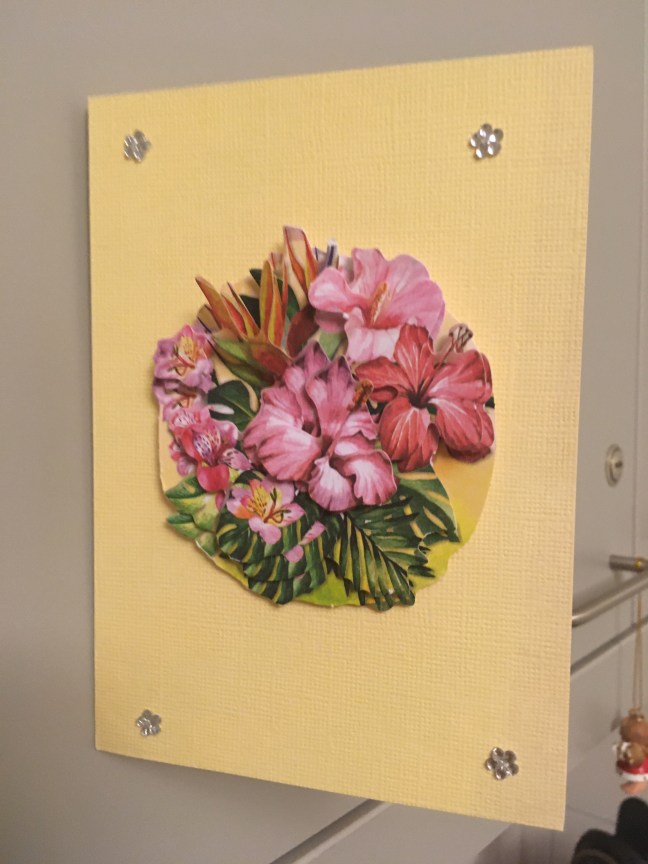
If we were having coffee, I would tell you that I got a lovely Easter card from a woman who lives at another home in our care facility. We can’t see each other much now that the day center is closed, but I talked to her from across her fence.
If we were having coffee, I would tell you about the blog upgrade I purchased. I have the Premium plan now. As you may be able to tell, I now have my own domain and all WordPress.com ads should be gone. I also got Google Analytics, which I’m having a love/hate relationship with. I’m pretty unsure about all the technical design stuff I can do now, as I’m not tech savvy at all. I’m still not entirely sure this was a wise purchase, but so far I’m not regretting it. I might once the 30-day refund period is over though.

I am thinking about starting my blog’s Facebook page back up. This upgrade also comes with cool social sharing options, so I’d bettter make use of them. I want to get a cover photo for my FB page then though and would love a logo for my blog. Any ideas are greatly appreciated.

If we were having coffee, I would share that I reached my daily step goal certainly on both Thursday and Friday and probably on Wednesday too. However, then my Fitbit wouldn’t cooperate, so it says I got 33 steps only. I in fact got nearly 13K steps on Thursday and nearly 12K on Friday.

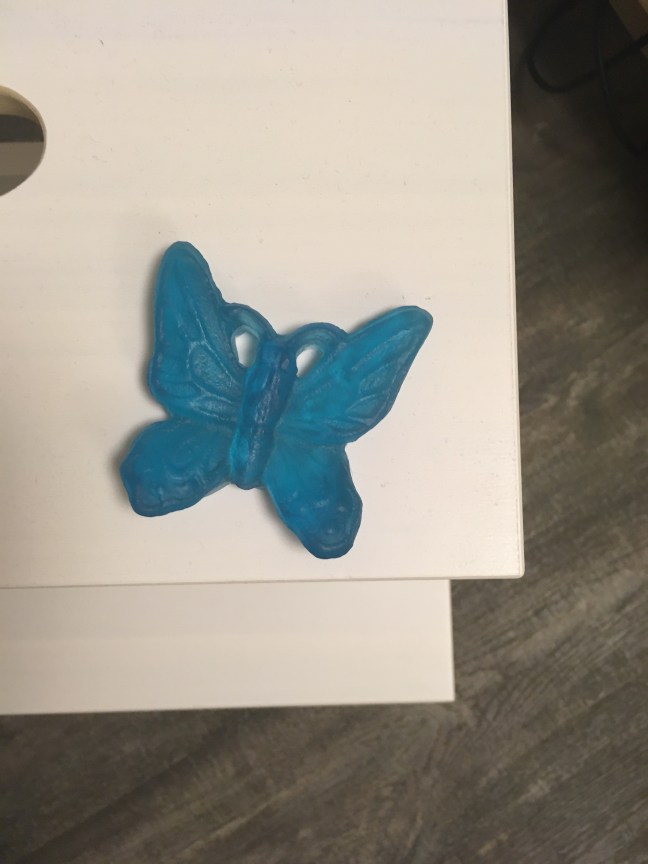
If we were having coffee, I would tell you that I made a soap for a staff who’s leaving in a week or so. She is a substitute for someone who’s on maternity leave and that other staffer will return on the 21st. The soap is a butterfly that’s been scented with lavender fragrance oil.
If we were having coffee, lastly I would tell you that there’s a new client at my home. I’m struggling a bit with it, but she seems nice.

What have you been up to lately?

A New Client Came to Our Home

Trigger warning: mentions eating disorder behaviors
So a new client came to our care home yesterday. It was completely unexpected also to the staff. They didn’t hear she was coming till Friday evening. She has some form of brain injury, dementia and she broke her hip, which is why she had to come here. She lived independently until this. She seems okay, but due to her dementia she needs a lot of support. This did upset some of us, particularly Rachelle. It completely wrecked with her sense of structure and also the trust she had in the staff.

Today we had an Easter dinner. We had had the choice between pizza or fries. We chose pizza, but weren’t sure about it after all, as everyone else got fries. This further upset us, particularly Agnes. Agnes was feeling off, so she wanted to binge, but the staff prevented her, saying she was full already. This led her to a teenage tantrum.

Then once we talked to her about the importance of sticking to a somewhat healthy diet, she wanted to purge. Thankfully we were able to talk her out of it. Then however Rachelle took over again, with me (Eleanor) being present too. We were able to articulate our feelings to some extent.

Part of the problem is Agnes wants to be independent and make her own choices, including unhealthy ones, but Rachelle really needs more support than we’re currently getting. Thisdispute between them was also triggered by the new client getting pracctically one-on-one support all day, while we were in our room by ourself a lot. There is an extra staffer for the new woman, but we still feel like a burden.

We talked to our assigned staff about maybe making some form of communication cards that don’t require speech, so that Rachelle (and others) can ask for help when we can’t quite talk. We also talked about us getting a more structured daily routine particularly on week-ends.

We’re not sure this will help, but we’ll see.

Eleanor with some others chiming in here and there

Journaling for Emotional Wellbeing #AtoZChallenge

Wow, did I seriously not think about journaling when ruminating over what word to pick for my letter J post? Well yeah, indeed I completely forgot. But now I know, so for today, I’m going to talk about one of my favorite yet most challenging self-care habits: journaling.

I started my first journal when I was about eleven. It was a handmade diary with Braille pages stuck in it. I didn’t keep it for long though. When I was thirteen, I started writing a regular diary on my computer. That one lasted for over three years, until I discovered the Internet and online journals. I always wished for my journals to be read by others, even though I never wanted my parents to be those other people. That happened with the online journal, which gradually morphed into a blog.

That being said, I need to learn to write in private again. Not just anything that goes on in my head, is suited for the whole wide world to read.

Journal keeping can have many benefits for your emotional wellbeing. It can help you identify patterns in your thinking, find triggers for negative feelings and be more grateful, among other things.

Remember, the diary is just one form of journaling. Usually in a diary, you write what you did during a day, including how you felt. There are other types of more focused journals, such as:

  • Dream journal, in which you write down your dreams after you wake up in the morning.
  • Goal-related journal, such as weight loss or smoking cessation journals. In this type of journal, you track your progress towards a goal. For those of us dealing with addictions, eating disorders, etc., a journal for tracking how many days you’re in recovery, may help too.
  • Gratitude journal, in which you write a list of daily gratefuls or otherwise express your gratitude. See my letter G post for more tips on this.

Some journaling “experts” recommend writing stream-of-consciousness style. Others recommend using prompts. You can combine the two by responding to a journaling prompt in stream-of-consciousness style too. There are many free and cheap books of journaling prompts. My favorite is the Journaling with Lisa Shea series. I have the whole series in one single eBook.

There are lots of ways to keep a journal. You can have a standard paper journal or a document (or more than one) on your computer, tablet or smartphone. There are also lots of apps that are aimed at helping you journal. I have tried dozens of those on my iPhone. My current favorite is Day One, which is available for all Apple products and I believe Android now too. Still, no matter how many products you try, you need to be the one sticking to a regular habit of journal keeping.

Do you have a journal (other than your blog)?

Intentions: Living Your Life with Purpose #AtoZChallenge

Welcome to day 9 in the #AtoZChallenge and my letter I post. I really wasn’t sure what to write for this post, so looked to The More or Less Definitive Guide to Self-Care by Anna Borges for inspiration. One of her letter I topics is “intentions”. This may seem fluffy to you and it feels that way to an extent to me, too. Today I am going to write about living your life with purpose.

When I think of this, I immediately think of the Purpose-Driven Life, which is some type of conservative Christian book about how Christians should live their life. Even though I haven’t read it, I know it has many things that will not apply to me as a progressive believer. Besides, I want to speak to people of all faiths and none at all, so this is not what I’m talking about.

Instead, I am talking about determining how you want to live your life. A purpose in life can really be whatever you want it to be. That doesn’t mean it should change very often – it really should not.

For living with intent, it requires that you focus on your core values. Determining these may be hard especially when you’re still young or unsure of yourself. However, though your life’s purpose shouldn’t change on a whim, it isn’t necessarily completely static either.

Focusing on who you want to be and what you want to achieve, can take the form of a single word or phrase. For example, I choose a word of the year each January. This year’s is Wellbeing. I know that most words of the year I’ve set in the past are related to emotional wellness. Of course, most people strive for happiness in their lives, so this may be an open door really. However, if you set a word such as “Success” or “Productive” as your focus word of the year, this reflects that other values, in this case achievement, are more important to your happiness. Remember, that’s okay too. Just because I am focused on emotional wellness, doesn’t mean you need to be too. In fact, I think my chosen intentions may come across a bit self-centered to some.

Once you have set an intention for your life, or for the next year, it should help you guide your path. If you reflect on your chosen theme regularly, it will become easier to let it guide your short and long-term goal setting.

Do you have a word of the year for this year or an intention for your life in general?

Hobbies and Interests: Finding Your Passion(s) #AtoZChallenge

Welcome to my letter H post in the #AtoZChallenge. Today I have another lighthearted topic for you. I am going to talk about finding your passions, your hobbies and interests.

I looked over my A to Z posts of last year a few days ago. I found that one of the major goals I set myself in my letter G post was to find a hobby other than blogging that I can do independently. I probably meant a craft, but I feel that other hobbies and interests can become a passion too.

Anything can really be a hobby. You also don’t need to stick to one or two hobbies for life. I mean, of course it can be problematic if you spend lots of money on a hobby that you don’t really like. For example, I spent probably over €1000 on card making supplies over the years, even though it never became a real passion. I probably have spent at least half of that on soaping supplies so far too, but at least I still like that hobby. I’m not great with it and never will be, but oh well.

You don’t need to be talented to find pleasure in a hobby. That being said, feeling you’re good at something and/or getting positive feedback from others, can help you stay motivated.

Anything can be a hobby. It doesn’t have to be art or crafts. It doesn’t have to be music or sports. These are all hobbies that you may enjoy more if you’re good at them. Reading, listening to music or watching movies can be hobbies too and they are things almost everyone can do.

Besides hobbies, your passions can also be interests. Again, anything goes. I have said before that I at one point had an unusual fascination for calendar calculation.

Most people do not find their passions in isolation. They strive to share their hobbies and interests with other people. No, that doesn’t just mean blogging or vlogging about them. (I know I’ve said that I do practically everything I do at least partly with the purpose of blogging about it.) It can also mean sharing with friends. Note that no passion is so weird there’s no-one out there who shares it or is interested in it at least. I mean, calendar calculation is a rather odd interest that no-one in my family or circle of friends shared, but I did enjoy surprising people with my ability. Besides, now, with the Internet, you can be sure to find people who do share your passion online.

Feel free to inspire me and share your passions in the comments.

Gratitude: Counting Your Blessings #AtoZChallenge

Welcome to my letter G post In the #AtoZChallenge. Today I want to talk about gratitude. Making a habit out of noticing what you have, can be very helpful for your mental health. Like most other self-care activities, it may be hard to do when you’re feeling low, so I recommend you start practising gratitude when you’re in a good or at least okay place. Then it will come more naturally when you’re feeling low.

On this blog, I aim to write gratitude lists regularly. These are usually lists of things I’ve been grateful for in the past week or so. However, you can also write a general gratitude list that lists things that are positive about your life. Such a list can look something like this:

  1. I am thankful for my physical health.
  2. I am thankful for my husband.
  3. I am thankful I have a home in the care facility I can feel safe in.
  4. I am thankful I am financially secure.
  5. I am thankful for my medication.

You can aim for a certain number of gratefuls, such as ten in the Ten Things of Thankful (#TToT) blog hop. I have done other types of posts of this kind on this blog and older blogs. Examples include 99 things I like, 20 things I’m grateful for in life, etc.

However, when you’re feeling low, it may help to just write what you’re thankful for and not set a specific number you must reach. After all, that might create stress that you do not need right now.

Another form of expressing gratitude is the thankful letter. You can write thankful letters to people you’re grateful for in real life and actually send or give them to said person. However, you can also write thankful letters to things or situations.

A variation to this theme is the love letter. Of course, it may be good to write a love letter to your significant other, but again you can write love letters to anything.

If you don’t write gratitude lists or thank you letters, there are other ways of counting your blessings. Saying to yourself or aloud to someone else that you’re grateful for something, may be enough.

How do you express gratitude?

Fun and Games for When You’re Bored #AtoZChallenge

Welcome to my letter F post in the #AtoZChallenge. I want to have a lighthearted topic for today. After all, I’m bored and don’t want to delve deep into some topic of self-care. Of course, dealing with boredom appropriately can be an act of self-care. I’m sharing a few fun activities to do when you’re bored.

1. Card games. I particularly love the game of “pesten” (“bullying” in English), which is a variation to the card game of mau mau and similar to Uno. It is played with a deck of 55 cards (52 of a regular pack plus three jokers). The goal is to get rid of all of your cards first, but you can bully the person next to you by the cards you play. For example, if you play an eight, the person next must pass his turn. If you play a two or joker, the next person must draw two or five cards from the stack, respectively. There are some other rules too that are pretty complicated particularly if there are more than two players in the game. For example, an ace means to turn around, so it’s often hard to remember whether we’re playing clockwise or counterclockwise. For this reason, I usually play the game with one other person.

I should really be trying to learn some other card games, as “pesten” is the only one I know. I guess playing solitaire is a good boredom killer if you’re by yourself.

2. Board games. I don’t play those often, but as a tween, I did. I particularly liked monopoly. I now have an audio-based version of monopoly on my iPhone. Still figuring it out though.

3. Word games and puzzles. I particularly like to make word strings, where the next word has to start with the last letter of the previous word. These can be themed, such as first names, animals, etc. I also like to do word puzzles on my phone. Most regular word games are not accessible with VoiceOver. However, I have an app called 7 Little Words that is.

4. Reading. We as a system like to read a variety of books depending on who out of our personalities is fronting. For example, the young alters like reading funny stories and jokes. Like we said yesterday, there are many free kids’ stories available in eBook format from both Amazon and Apple Books.

The teens and adults prefer young adult novels and occasionally fiction geared towards adults. We also love memoirs.

What fun activities can you think of to do when you’re bored?

Hihi it’s Milou

So I writed this some hours ago but didnt feel like posting it here cause bigs want to keep the blog big and serious and stuff but thats not what we meant this blog for when we first started it so I will just write.

Hihihi everyone its me Milou. I’m 8-years-old and I have lots of fun today. Today this staff person taked me to the playground and I went on a seesaw. Of course with the body being big now I not fitted in the seat but I sitted on a side thing that bigs can sit on and still use the seesaw.

Then I got me and Lisel whos 5 some fun books. We tried amazon first but that wouldnt work for some stupid reason so we got some stuff off Apple books. All the books were free so yay we can have as many as we wants. I got one called 100 jokes for kids and it had lots of funny jokes in it. I’m a little old for this kind of books but cause they’re in english they still are fun for me.

Here’s one joke I remember now.

Q: What happens when the cows refuse to get milked?

A: Udder chaos!

Milou age 8